

Close Menu
Meteorological Technology International
  • News
    • A-E
      • Agriculture
      • Automated Weather Stations
      • Aviation
      • Climate Measurement
      • Data
      • Developing Countries
      • Digital Applications
      • Early Warning Systems
      • Extreme Weather
    • G-P
      • Hydrology
      • Lidar
      • Lightning Detection
      • New Appointments
      • Nowcasting
      • Numerical Weather Prediction
      • Polar Weather
    • R-S
      • Radar
      • Rainfall
      • Remote Sensing
      • Renewable Energy
      • Satellites
      • Solar
      • Space Weather
      • Supercomputers
    • T-Z
      • Training
      • Transport
      • Weather Instruments
      • Wind
      • World Meteorological Organization
      • Meteorological Technology World Expo
  • Features
  • Online Magazines
    • January 2026
    • April 2025
    • January 2025
    • September 2024
    • April 2024
    • Archive Issues
    • Subscribe Free!
  • Opinion
  • Videos
  • Supplier Spotlight
  • Expo
LinkedIn X (Twitter) Facebook
  • Sign-up for Free Weekly E-Newsletter
  • Meet the Editors
  • Contact Us
  • Media Pack
LinkedIn Facebook
Subscribe
Meteorological Technology International
  • News
      • Agriculture
      • Automated Weather Stations
      • Aviation
      • Climate Measurement
      • Data
      • Developing Countries
      • Digital Applications
      • Early Warning Systems
      • Extreme Weather
      • Hydrology
      • Lidar
      • Lightning Detection
      • New Appointments
      • Nowcasting
      • Numerical Weather Prediction
      • Polar Weather
      • Radar
      • Rainfall
      • Remote Sensing
      • Renewable Energy
      • Satellites
      • Solar
      • Space Weather
      • Supercomputers
      • Training
      • Transport
      • Weather Instruments
      • Wind
      • World Meteorological Organization
      • Meteorological Technology World Expo
  • Features
  • Online Magazines
    1. April 2026
    2. January 2026
    3. September 2025
    4. April 2025
    5. January 2025
    6. September 2024
    7. April 2024
    8. January 2024
    9. Archive Issues
    10. Subscribe Free!
    Featured
    May 5, 2026

    In this Issue – April 2026

    By Web TeamMay 5, 2026
    Recent

    In this Issue – April 2026

    May 5, 2026

    In this Issue – January 2026

    November 27, 2025

    In this Issue – September 2025

    August 11, 2025
  • Opinion
  • Videos
  • Supplier Spotlight
  • Expo
Facebook LinkedIn
Subscribe
Meteorological Technology International
Automated Weather Stations

Solar-powered drone boats could play pivotal role in forecasting

Paul WillisBy Paul WillisDecember 10, 20192 Mins Read
Share LinkedIn Facebook Twitter Email
Share
LinkedIn Facebook Twitter Email

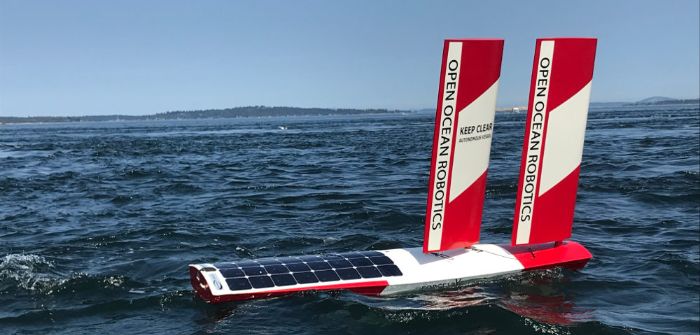
A new generation of drone boats powered by renewable energy could help revolutionize the forecasting of ocean-related weather.

A number of companies have begun producing ocean-going prototypes including the Canadian startup Open Ocean Robotics. The startup’s ocean drones can stay at sea for up to a year, continuously collecting data via onboard sensors that include 360° cameras and lidar.

The data can be relayed to the user in real time via satellite. According to Open Ocean Robotics its vessels could easily be fitted out with sensors to measure air temperature, windspeed, barometric pressure and wind direction for marine weather forecasting.

The company sees the drone boats as a potential replacement for the array of buoys used in the Tropical Atmosphere Ocean (TAO) project.

The project, which has been ongoing since the mid-1980s, has seen around 70 deep ocean buoys deployed in equatorial waters in the Pacific collecting data critical for forecasting weather and ocean-related weather events like El Nino. However, at least half of the TAO buoys are no longer operational.

Open Ocean Robotics has tested its drone boat in the waters off Vancouver Island on Canada’s west coast, with its biggest voyage to date a 54-hour journey in which the boat covered nearly 46 miles.

“We’ve demonstrated our vessel’s ability to voyage autonomously as well as remotely, go on multi-day missions, collect oceanographic data and transmit in by cellular or satellite communications,” CEO Julie Angus told Forbes.

The next stage is to take the boat in to deeper water, with plans to conduct sea trials during major storms this winter.

“Our boat will repeatedly capsize during these conditions, but its self-righting design will enable it to continue operating,” said Angus.


Previous ArticleInitiative launched to improve access to localized weather data in Africa
Next Article Weather Source deal gives Amazon customers access hyper-local forecasting

Read Similar Stories

Extreme Weather

Impacts of extreme weather and rising temperatures intensify across Latin America and Caribbean

May 15, 20263 Mins Read
Automated Weather Stations

UNESCO hands over nine automated weather stations to the Ghana Meteorological Agency

May 12, 20262 Mins Read
Automated Weather Stations

University of Vermont launches first station in statewide weather monitoring network

May 8, 20262 Mins Read
Latest News

Impacts of extreme weather and rising temperatures intensify across Latin America and Caribbean

May 15, 2026

Ventusky adds fire monitoring to its weather maps

May 14, 2026

“For over a century, precipitation gauges have measured too low” – Vaisala addresses the measurement gap

May 13, 2026

Receive breaking stories and features in your inbox each week, for free


Enter your email address:


Supplier Spotlights
  • EUMETSAT
Getting in Touch
  • Contact Us / Advertise
  • Meet the Editors
  • Media Pack
  • Free Weekly E-Newsletter
Our Social Channels
  • Facebook
  • LinkedIn
© 2026 UKi Media & Events a division of UKIP Media & Events Ltd
  • Cookie Policy
  • Privacy Policy
  • Terms and Conditions
  • Notice and Takedown Policy

Type above and press Enter to search. Press Esc to cancel.