


Close Menu
Meteorological Technology International
  • News
    • A-E
      • Agriculture
      • Automated Weather Stations
      • Aviation
      • Climate Measurement
      • Data
      • Developing Countries
      • Digital Applications
      • Early Warning Systems
      • Extreme Weather
    • G-P
      • Hydrology
      • Lidar
      • Lightning Detection
      • New Appointments
      • Nowcasting
      • Numerical Weather Prediction
      • Polar Weather
    • R-S
      • Radar
      • Rainfall
      • Remote Sensing
      • Renewable Energy
      • Satellites
      • Solar
      • Space Weather
      • Supercomputers
    • T-Z
      • Training
      • Transport
      • Weather Instruments
      • Wind
      • World Meteorological Organization
      • Meteorological Technology World Expo
  • Features
  • Online Magazines
    • January 2026
    • April 2025
    • January 2025
    • September 2024
    • April 2024
    • Archive Issues
    • Subscribe Free!
  • Opinion
  • Videos
  • Supplier Spotlight
  • Expo
LinkedIn X (Twitter) Facebook
  • Sign-up for Free Weekly E-Newsletter
  • Meet the Editors
  • Contact Us
  • Media Pack
LinkedIn Facebook
Subscribe
Meteorological Technology International
  • News
      • Agriculture
      • Automated Weather Stations
      • Aviation
      • Climate Measurement
      • Data
      • Developing Countries
      • Digital Applications
      • Early Warning Systems
      • Extreme Weather
      • Hydrology
      • Lidar
      • Lightning Detection
      • New Appointments
      • Nowcasting
      • Numerical Weather Prediction
      • Polar Weather
      • Radar
      • Rainfall
      • Remote Sensing
      • Renewable Energy
      • Satellites
      • Solar
      • Space Weather
      • Supercomputers
      • Training
      • Transport
      • Weather Instruments
      • Wind
      • World Meteorological Organization
      • Meteorological Technology World Expo
  • Features
  • Online Magazines
    1. January 2026
    2. September 2025
    3. April 2025
    4. January 2025
    5. September 2024
    6. April 2024
    7. January 2024
    8. September 2023
    9. April 2023
    10. Archive Issues
    11. Subscribe Free!
    Featured
    November 27, 2025

    In this Issue – January 2026

    By Hazel KingNovember 27, 2025
    Recent

    In this Issue – January 2026

    November 27, 2025

    In this Issue – September 2025

    August 11, 2025

    In this Issue – April 2025

    April 15, 2025
  • Opinion
  • Videos
  • Supplier Spotlight
  • Expo
Facebook LinkedIn
Subscribe
Meteorological Technology International
Aviation

NOAA and NASA research to improve weather and air quality models for wildfires

Helen NormanBy Helen NormanJuly 29, 20192 Mins Read
Share LinkedIn Facebook Twitter Email
Share
LinkedIn Facebook Twitter Email

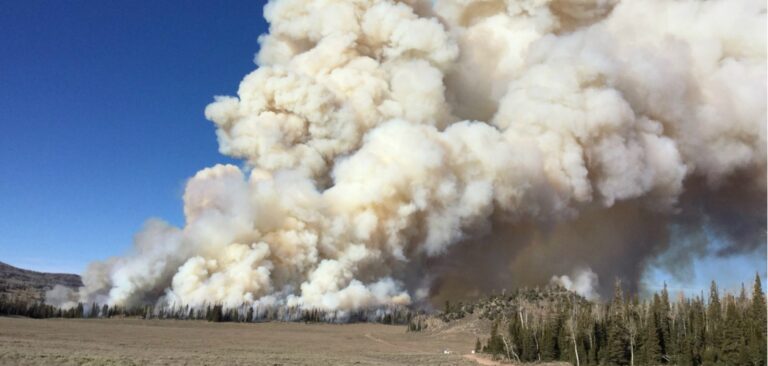
NOAA and NASA are joining forces on a research campaign that will use satellites, aircraft, drones, and ground stations to study smoke from wildfires and agricultural crop fires across the USA.

Hundreds of scientists will explore the chemistry of trace gases and aerosols in smoke to improve weather and air quality models, and provide better forecasts to first responders, and public health and land management officials.

“We’ve pulled together an outstanding team of scientists to examine the nature of fires and smoke,” said David Fahey, director of NOAA’s chemical sciences division. “Our long partnership with NASA has taken us literally around the planet and produced many major scientific discoveries. I expect this will be no different.”

Dubbed FIREX-AQ, the project builds on NOAA research from 2016 conducted at the United States Department of Agriculture Fire Science Laboratory in Missoula, Montana, where scientists analyzed smoke from different kinds of vegetation burned at different temperatures.

“Now, we’re taking what we learned in the laboratory to large fires happening in the field where the chemistry evolves over time and distance,” said mission scientist Carsten Warneke, a researcher from the Cooperative Institute for Research in Environmental Sciences working at NOAA.

NASA’s DC-8 airliner, equipped with sophisticated instrumentation, will chase wildfire smoke across western USA for the next month and will be joined by two NOAA Twin Otters, flying at lower altitudes, and also at night when fires smolder and smoke drains into the valleys.

From its base in Palmdale, California, the NASA Lockheed ER-2 will use remote-sensing instruments to collect measurements from much higher altitudes. Ground stations and mobile vans will observe smoke at the surface. All these measurements will be compared with data from NOAA and NASA satellites far overhead to learn how to extract more information from what satellites see.

Later, the DC-8 will sample smoke from agricultural management fires common in southern USA. Finally, scientists will study smoke from a large US Forest Service prescribed burn in Utah.

“Ultimately, the reason we want to understand complex smoke-atmosphere interactions is to provide better forecasts and longer lead times for communities downwind of fires,” said NASA program manager Barry Lefer.

Previous ArticleUS meteorologists raise concerns over interference from 5G networks
Next Article Biral visibility sensors installed at 45 Airports across China

Read Similar Stories

Climate Measurement

WMO signals increasing likelihood of El Niño developing in 2026

April 24, 20263 Mins Read
Radar

Alabama partners with Climavision to expand weather radar coverage statewide

April 24, 20262 Mins Read
Climate Measurement

China completes Antarctic meteorological research mission with Xuelong icebreaker

April 21, 20262 Mins Read
Latest News

WMO signals increasing likelihood of El Niño developing in 2026

April 24, 2026

Alabama partners with Climavision to expand weather radar coverage statewide

April 24, 2026

Extreme heat posing significant risks to ecosystems and agriculture, FAO-WMO report warns

April 22, 2026

Receive breaking stories and features in your inbox each week, for free


Enter your email address:


Supplier Spotlights
  • Meteorage
Getting in Touch
  • Contact Us / Advertise
  • Meet the Editors
  • Media Pack
  • Free Weekly E-Newsletter
Our Social Channels
  • Facebook
  • LinkedIn
© 2026 UKi Media & Events a division of UKIP Media & Events Ltd
  • Cookie Policy
  • Privacy Policy
  • Terms and Conditions
  • Notice and Takedown Policy

Type above and press Enter to search. Press Esc to cancel.