


Close Menu
Meteorological Technology International
  • News
    • A-E
      • Agriculture
      • Automated Weather Stations
      • Aviation
      • Climate Measurement
      • Data
      • Developing Countries
      • Digital Applications
      • Early Warning Systems
      • Extreme Weather
    • G-P
      • Hydrology
      • Lidar
      • Lightning Detection
      • New Appointments
      • Nowcasting
      • Numerical Weather Prediction
      • Polar Weather
    • R-S
      • Radar
      • Rainfall
      • Remote Sensing
      • Renewable Energy
      • Satellites
      • Solar
      • Space Weather
      • Supercomputers
    • T-Z
      • Training
      • Transport
      • Weather Instruments
      • Wind
      • World Meteorological Organization
      • Meteorological Technology World Expo
  • Features
  • Online Magazines
    • January 2026
    • April 2025
    • January 2025
    • September 2024
    • April 2024
    • Archive Issues
    • Subscribe Free!
  • Opinion
  • Videos
  • Supplier Spotlight
  • Expo
LinkedIn X (Twitter) Facebook
  • Sign-up for Free Weekly E-Newsletter
  • Meet the Editors
  • Contact Us
  • Media Pack
LinkedIn Facebook
Subscribe
Meteorological Technology International
  • News
      • Agriculture
      • Automated Weather Stations
      • Aviation
      • Climate Measurement
      • Data
      • Developing Countries
      • Digital Applications
      • Early Warning Systems
      • Extreme Weather
      • Hydrology
      • Lidar
      • Lightning Detection
      • New Appointments
      • Nowcasting
      • Numerical Weather Prediction
      • Polar Weather
      • Radar
      • Rainfall
      • Remote Sensing
      • Renewable Energy
      • Satellites
      • Solar
      • Space Weather
      • Supercomputers
      • Training
      • Transport
      • Weather Instruments
      • Wind
      • World Meteorological Organization
      • Meteorological Technology World Expo
  • Features
  • Online Magazines
    1. April 2026
    2. January 2026
    3. September 2025
    4. April 2025
    5. January 2025
    6. September 2024
    7. April 2024
    8. January 2024
    9. Archive Issues
    10. Subscribe Free!
    Featured
    May 5, 2026

    In this Issue – April 2026

    By Web TeamMay 5, 2026
    Recent

    In this Issue – April 2026

    May 5, 2026

    In this Issue – January 2026

    November 27, 2025

    In this Issue – September 2025

    August 11, 2025
  • Opinion
  • Videos
  • Supplier Spotlight
  • Expo
Facebook LinkedIn
Subscribe
Meteorological Technology International
Climate Measurement

CU Boulder to host new US cooperative institute for Earth system research

Dan SymondsBy Dan SymondsJuly 1, 20223 Mins Read
Share LinkedIn Facebook Twitter Email
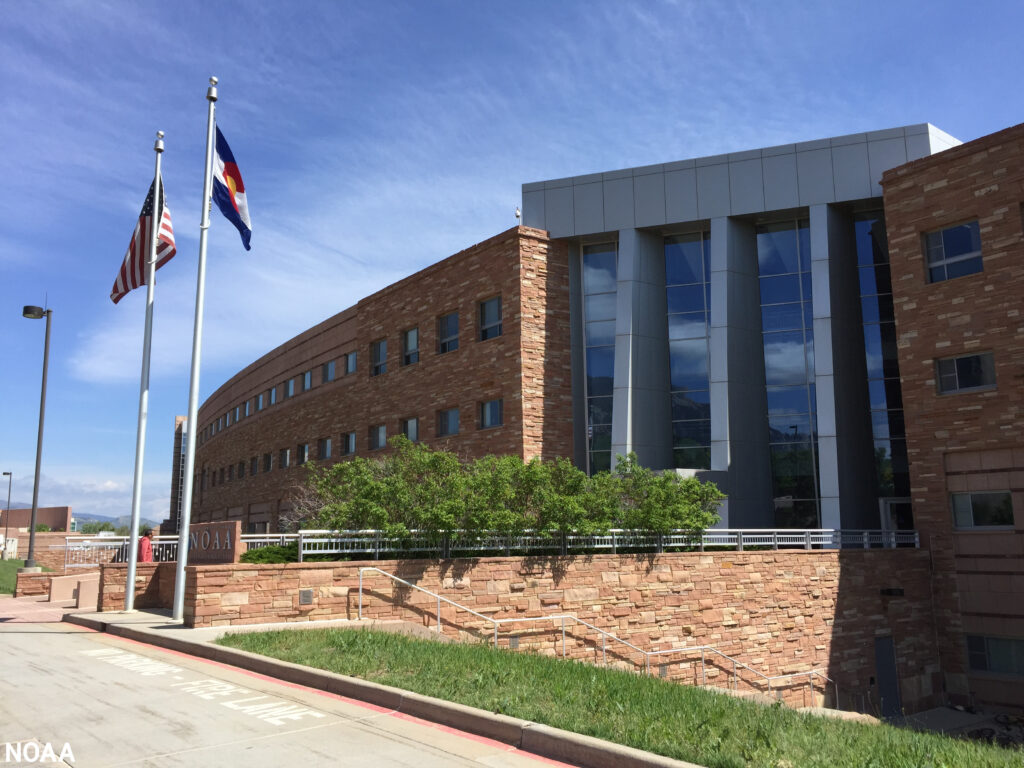
NOAA’s David Skaggs Research Center in Boulder has a blended workforce of federal, cooperative institute and contract employees - credit: NOAA
Share
LinkedIn Facebook Twitter Email

The University of Colorado Boulder (CU Boulder) has been selected by NOAA to host a cooperative institute focused on Earth system research and data science.

The new Cooperative Institute for Earth System Research and Data Science (CIESRDS) will conduct collaborative research in support of NOAA’s mission to understand and predict Earth’s changing environment from the deep sea to the outer edge of the atmosphere, and to manage and conserve America’s coastal and marine resources.

Massimo Ruzzene, acting vice chancellor for research and innovation and dean of the institutes at CU Boulder, said, “We’re thrilled to continue CU Boulder’s highly productive partnership with NOAA through our joint institute. For more than half a century, CIRES has been key to our shared focus on science in service to society. This reinvestment in our partnership will advance Earth system research at a critical time, benefit our students and early-career scientists, and add new resources dedicated to data science, which is already an area of strength for CU Boulder.”

The cooperative institute will continue to assist NOAA in advancing research that improves weather and climate prediction at all scales, prioritizing work that protects lives and property while building society’s resilience to environmental change.

Specifically, the institute will support NOAA’s ongoing work in the areas of weather research and forecasting, including space weather; climate and ecosystem science, and prediction of anticipated changes in Earth’s atmosphere due to greenhouse gas pollution, air quality degradation and stratospheric ozone depletion; regional science applications; and scientific outreach, education and diversity. An additional focus will be Earth System data science, stewardship and applications.

Up to US$565.8m may be made available to fund the institute over the course of the five-year award, which runs from September 1, 2022, to August 31, 2027, with actual funding contingent upon federal appropriations. NOAA has an option to renew the agreement for another five years based on successful performance.

The institute will be administered by the University of Colorado Boulder and will build upon the successes of the Cooperative Institute for Research in Environmental Science (CIRES), which was created by NOAA and the University of Colorado in 1967.

During the 54-year collaboration, University of Colorado researchers affiliated with CIRES who worked alongside federal scientists at NOAA’s David Skaggs Research Center have made significant contributions to NOAA’s Weather-Ready Nation initiative; to climate science, adaptation and mitigation; and to the use of artificial intelligence in investigating the vast flows of Earth systems data generated by NOAA’s observation and satellite networks.

Rick Spinrad, NOAA administrator, said, “The partnership between NOAA and the University of Colorado has been as fruitful as it has been durable. We are delighted that this relationship will continue to help us answer some of our nation’s most critical scientific questions and support the development of the next generation of scientists.”

Previous ArticleWMO-backed financing facility for climate action becomes operational
Next Article AGU opposes US Supreme Court decision to limit EPA powers on carbon emissions

Read Similar Stories

Weather Instruments

R.M. Young Company reengineers SNOdar snow-depth sensor

May 21, 20262 Mins Read
Climate Measurement

Cloud measurement campaign targets improved climate model accuracy

May 20, 20263 Mins Read
Videos

VIDEO: Meteosat-12 imagery over Europe and Africa made available via YouTube streams

May 19, 20262 Mins Read
Latest News

R.M. Young Company reengineers SNOdar snow-depth sensor

May 21, 2026

SMILE mission launches to study Earth’s magnetic shield and space weather

May 20, 2026

Cloud measurement campaign targets improved climate model accuracy

May 20, 2026

Receive breaking stories and features in your inbox each week, for free


Enter your email address:


Supplier Spotlights
  • MicroStep-MIS
Getting in Touch
  • Contact Us / Advertise
  • Meet the Editors
  • Media Pack
  • Free Weekly E-Newsletter
Our Social Channels
  • Facebook
  • LinkedIn
© 2026 UKi Media & Events a division of UKIP Media & Events Ltd
  • Cookie Policy
  • Privacy Policy
  • Terms and Conditions
  • Notice and Takedown Policy

Type above and press Enter to search. Press Esc to cancel.