


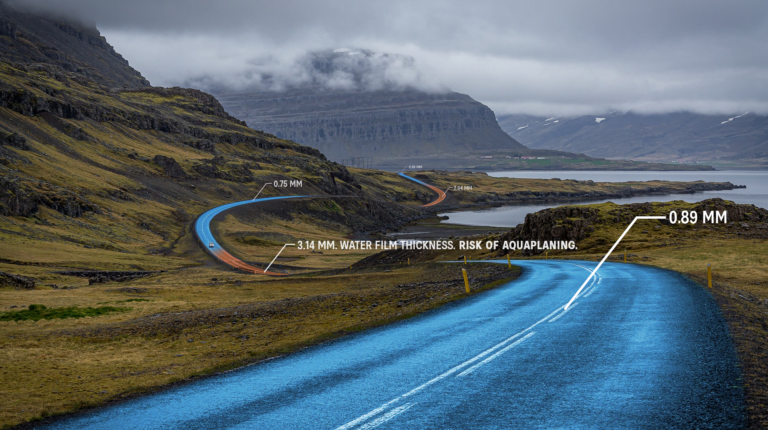
According to a McKinsey & Co. report, investors spent more than US$100bn between 2010 and 2020 on developing autonomous technologies. Yet experts see handling changing weather conditions as a major blind spot in the industry’s approach to self-driving cars.
One of these experts is Petri Marjava, head of automotive at Vaisala Xweather, an industry leader in providing road weather data and solutions to the auto industry.
 “Weather is by far the auto industry’s most overlooked variable when it comes to autonomous driving. We have learned to accept human error as an unfortunate part of mobility, but what if an accident is caused by a vehicle not knowing there is water on the road?” said Marjava (right). “Car makers have been focusing on systems capable of navigating in sunny, dry conditions, but vehicles need to be able to cope with rapidly changing weather phenomena.”
Close to one in four car accidents in Germany and the UK happen in adverse road weather conditions, according to United Nations Economic Commission for Europe (UNECE). For the USA, the number is one in five. Autonomous cars must be able to handle changing weather conditions if they are to be deemed safe for public roads.
 Waking up to road weather and road condition data
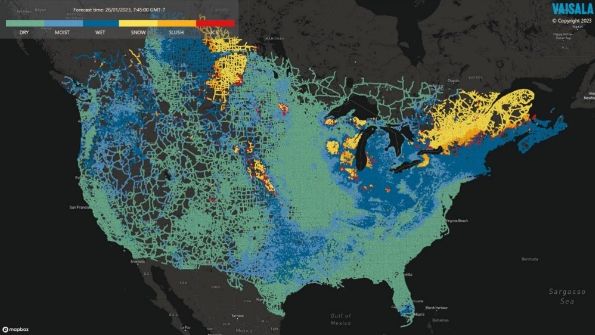
Weather intelligence is growing in importance for car makers. One of the front runners on this front is CARIAD, the Volkswagen Group automotive software company that serves Volkswagen, Audi, Porsche and Skoda, among others. CARIAD recently announced a cooperation with NIRA Dynamics and Vaisala Xweather for road condition and road weather data that will be used to develop advanced driver assistance systems (ADAS) and autonomous driving functions in VW Group vehicles.
NIRA operates in the connected vehicle data domain, with a special focus on using tire friction data to determine the condition of the road. For CARIAD, NIRA offers data from multiple sources including connected vehicles, road weather stations and weather forecasts to provide a real-time picture of the road status.
 Building trust
While improved safety and fewer accidents are among the biggest expected benefits of self-driving technology, Marjava said it will require a lot of time and education to gain the public’s trust and social acceptance. Building needs to start with an increased understanding of how these vehicles function. An easy first step would be making safety features more visible to the driver through the car’s infotainment system.
“The weather-related warnings given to drivers today are general alarms, like a snowflake symbol lighting up when the temperature falls below a certain point. By adding road weather data to the car’s navigation system, the driver could get real-time warnings for their route, highlighting sections of road that are icy, for example,” Marjava explained. “Drivers that get used to seeing real-time driving conditions warnings may be more willing to trust more advanced autonomous driving features.”
 The CEO of NIRA, Lisa Åbom, also sees the value of bringing road condition assisted features to the public one step at a time: “The information available today would enable assisted driving features like adaptive cruise control to adjust the distance to the car in front based on actual grip and pavement condition. The car’s systems will know what the road conditions are like and make better decisions. To build trust among drivers for autonomous features, the ADAS behavior has to become better.”
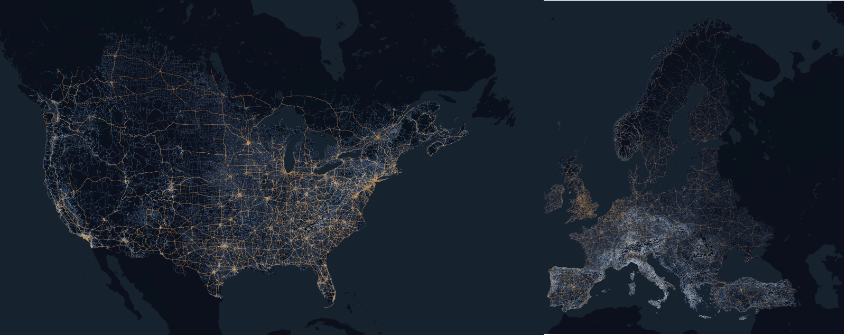
Marjava believes there is a limit to how many more sensors can be added to a car while still keeping the vehicle affordable: “By tapping into real-time weather information, the future of autonomous driving could be shaped not by indefinitely increasing the number of sensors but by using road weather insights. Sensors are most effective when providing information about the vehicle’s immediate surroundings, but knowing what is around the next corner or what will happen in the next hour – that’s where road weather data shines.”