


Close Menu
Meteorological Technology International
  • News
    • A-E
      • Agriculture
      • Automated Weather Stations
      • Aviation
      • Climate Measurement
      • Data
      • Developing Countries
      • Digital Applications
      • Early Warning Systems
      • Extreme Weather
    • G-P
      • Hydrology
      • Lidar
      • Lightning Detection
      • New Appointments
      • Nowcasting
      • Numerical Weather Prediction
      • Polar Weather
    • R-S
      • Radar
      • Rainfall
      • Remote Sensing
      • Renewable Energy
      • Satellites
      • Solar
      • Space Weather
      • Supercomputers
    • T-Z
      • Training
      • Transport
      • Weather Instruments
      • Wind
      • World Meteorological Organization
      • Meteorological Technology World Expo
  • Features
  • Online Magazines
    • January 2026
    • April 2025
    • January 2025
    • September 2024
    • April 2024
    • Archive Issues
    • Subscribe Free!
  • Opinion
  • Videos
  • Supplier Spotlight
  • Expo
LinkedIn X (Twitter) Facebook
  • Sign-up for Free Weekly E-Newsletter
  • Meet the Editors
  • Contact Us
  • Media Pack
LinkedIn Facebook
Subscribe
Meteorological Technology International
  • News
      • Agriculture
      • Automated Weather Stations
      • Aviation
      • Climate Measurement
      • Data
      • Developing Countries
      • Digital Applications
      • Early Warning Systems
      • Extreme Weather
      • Hydrology
      • Lidar
      • Lightning Detection
      • New Appointments
      • Nowcasting
      • Numerical Weather Prediction
      • Polar Weather
      • Radar
      • Rainfall
      • Remote Sensing
      • Renewable Energy
      • Satellites
      • Solar
      • Space Weather
      • Supercomputers
      • Training
      • Transport
      • Weather Instruments
      • Wind
      • World Meteorological Organization
      • Meteorological Technology World Expo
  • Features
  • Online Magazines
    1. April 2026
    2. January 2026
    3. September 2025
    4. April 2025
    5. January 2025
    6. September 2024
    7. April 2024
    8. January 2024
    9. Archive Issues
    10. Subscribe Free!
    Featured
    May 5, 2026

    In this Issue – April 2026

    By Web TeamMay 5, 2026
    Recent

    In this Issue – April 2026

    May 5, 2026

    In this Issue – January 2026

    November 27, 2025

    In this Issue – September 2025

    August 11, 2025
  • Opinion
  • Videos
  • Supplier Spotlight
  • Expo
Facebook LinkedIn
Subscribe
Meteorological Technology International
Climate Measurement

CREWS’ Scaling-up Framework to provide faster funding for developing early warning systems

Dan SymondsBy Dan SymondsJanuary 18, 20232 Mins Read
Share LinkedIn Facebook Twitter Email
Credit: Pixabay
Share
LinkedIn Facebook Twitter Email

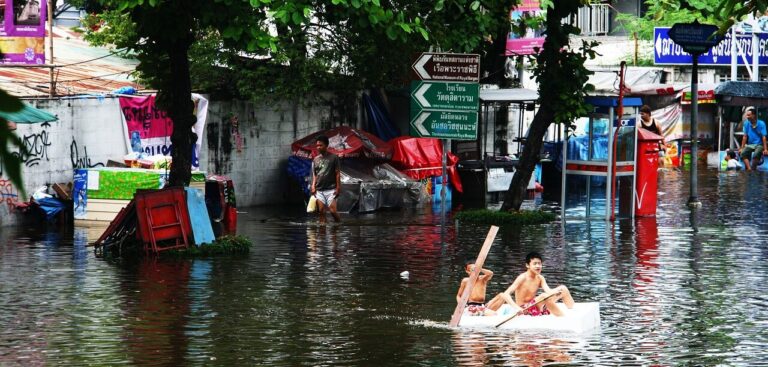
Developing countries that have implemented projects through the Climate Risk and Early Warning Systems (CREWS) initiative will soon have faster access to finance to further develop and scale early warning systems through the Green Climate Fund (GCF) Simplified Approval Process (SAP).

The SAP-CREWS Scaling-up Framework will enable countries with scalable programs related to data collection, hazard monitoring and predictions, early warning communication and community response capacities to potentially access GCF SAP funds earlier, through GCF ‘accredited entities’, if certain parameters and procedures are met. They will also benefit from technical assistance from a wide range of development partners.

The proposed Scaling-up Framework on Early Warning is being developed in consultation with partners such as the World Meteorological Organization (WMO), the UN Office for Disaster Risk Reduction (UNDRR), the World Bank, regional development banks such as the African Development Bank (AfDB), the UN Development Programme (UNDP) and the UN Environment Programme (UNEP) among others.

The Scaling-up Framework will also benefit from the Systematic Observations Financing Facility (SOFF), established so countries can sustain their networks of observation stations which provide foundational data for effective weather predictions and warnings.

Gerard Howe, CREWS chair and head of the Adaptation, Nature and Resilience Department at the UK’s Foreign Commonwealth and Development Office (FCDO), said, “The UN secretary-general in the margins of the recent UNFCCC COP27 in Sharm El-Sheikh, Egypt, presented a plan to have all people covered by early warning systems within five years. Reaching the plan’s goal requires scaled-up financing, along with strong and effective collaboration and partnerships.”

With this in mind, Howe referred to the Scaling-up Framework on Early Warning as “a potentially key contribution to the success of the UN Early Warning for All plan.”

A virtual workshop was held on January 12, 2023 to define the criteria that would facilitate access to additional financing for countries.

Wenjian Zhang, WMO assistant secretary-general, said, “Early warning systems are effective tools to minimize the loss and damage due to extreme events and to adapt to climate change, yet one third of the world’s people, mainly in least developed countries and small island developing states, are still not covered by early warning systems.”

The Scaling-up Framework for Early Warning is expected to be operational by the third quarter of 2023.

Previous ArticleEastern Australia plagued by wetter than average conditions in 2022, according to BoM summary
Next Article Jainey K. Bavishi begins role as deputy NOAA administrator

Read Similar Stories

Climate Measurement

Global warming reached 1.37°C in 2025 as heat accumulation hits record rate

June 12, 20263 Mins Read
Climate Measurement

Cambridge AI tool converts satellite archives into accessible Earth intelligence

June 10, 20262 Mins Read
Climate Measurement

ECMWF prepares release of new ORAS6 ocean reanalysis system

June 10, 20263 Mins Read
Latest News

NOAA’s SOLAR-1 satellite becomes operational, boosting space weather forecasting capability

June 16, 2026

Global warming reached 1.37°C in 2025 as heat accumulation hits record rate

June 12, 2026

NSF NCAR researchers develop advanced model for neighborhood-scale low-altitude wind prediction

June 11, 2026

Receive breaking stories and features in your inbox each week, for free


Enter your email address:


Supplier Spotlights
  • Sommer GmbH
Getting in Touch
  • Contact Us / Advertise
  • Meet the Editors
  • Media Pack
  • Free Weekly E-Newsletter
Our Social Channels
  • Facebook
  • LinkedIn
© 2026 UKi Media & Events a division of UKIP Media & Events Ltd
  • Cookie Policy
  • Privacy Policy
  • Terms and Conditions
  • Notice and Takedown Policy

Type above and press Enter to search. Press Esc to cancel.