


Close Menu
Meteorological Technology International
  • News
    • A-E
      • Agriculture
      • Automated Weather Stations
      • Aviation
      • Climate Measurement
      • Data
      • Developing Countries
      • Digital Applications
      • Early Warning Systems
      • Extreme Weather
    • G-P
      • Hydrology
      • Lidar
      • Lightning Detection
      • New Appointments
      • Nowcasting
      • Numerical Weather Prediction
      • Polar Weather
    • R-S
      • Radar
      • Rainfall
      • Remote Sensing
      • Renewable Energy
      • Satellites
      • Solar
      • Space Weather
      • Supercomputers
    • T-Z
      • Training
      • Transport
      • Weather Instruments
      • Wind
      • World Meteorological Organization
      • Meteorological Technology World Expo
  • Features
  • Online Magazines
    • January 2026
    • April 2025
    • January 2025
    • September 2024
    • April 2024
    • Archive Issues
    • Subscribe Free!
  • Opinion
  • Videos
  • Supplier Spotlight
  • Expo
LinkedIn X (Twitter) Facebook
  • Sign-up for Free Weekly E-Newsletter
  • Meet the Editors
  • Contact Us
  • Media Pack
LinkedIn Facebook
Subscribe
Meteorological Technology International
  • News
      • Agriculture
      • Automated Weather Stations
      • Aviation
      • Climate Measurement
      • Data
      • Developing Countries
      • Digital Applications
      • Early Warning Systems
      • Extreme Weather
      • Hydrology
      • Lidar
      • Lightning Detection
      • New Appointments
      • Nowcasting
      • Numerical Weather Prediction
      • Polar Weather
      • Radar
      • Rainfall
      • Remote Sensing
      • Renewable Energy
      • Satellites
      • Solar
      • Space Weather
      • Supercomputers
      • Training
      • Transport
      • Weather Instruments
      • Wind
      • World Meteorological Organization
      • Meteorological Technology World Expo
  • Features
  • Online Magazines
    1. April 2026
    2. January 2026
    3. September 2025
    4. April 2025
    5. January 2025
    6. September 2024
    7. April 2024
    8. January 2024
    9. Archive Issues
    10. Subscribe Free!
    Featured
    May 5, 2026

    In this Issue – April 2026

    By Web TeamMay 5, 2026
    Recent

    In this Issue – April 2026

    May 5, 2026

    In this Issue – January 2026

    November 27, 2025

    In this Issue – September 2025

    August 11, 2025
  • Opinion
  • Videos
  • Supplier Spotlight
  • Expo
Facebook LinkedIn
Subscribe
Meteorological Technology International
Early Warning Systems

Biral launches self-contained BTD-200 lightning detection system

Dan SymondsBy Dan SymondsSeptember 25, 20192 Mins Read
Share LinkedIn Facebook Twitter Email
Share
LinkedIn Facebook Twitter Email

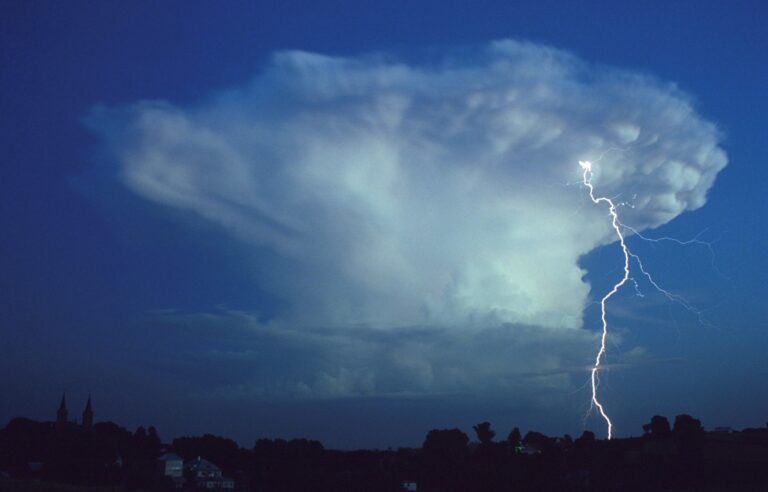
Meteorological equipment manufacturer Biral has launched its BTD-200 self-contained lightning warning system to help businesses protect their workers against lightning strikes.

Statistics show that between 30 and 60 people are struck by lightning each year in the UK and on average, three (5-10%) of these strikes are fatal. Because of this, workplaces have a duty of care to ensure the health, safety and welfare of their workers under the Health and Safety at Work Act 1974, so if staff are working outdoors in exposed areas, a lightning safety plan should be in place.

The only reliable and consistent way of issuing a lightning warning is with a dedicated lightning detection system. Approximately 90% of thunderstorms are already producing lightning by the time they are within 12 miles (20km) of an airport or business, so a professional, real-time lightning warning system should provide adequate notice of an approaching storm. However, in the case of the remaining 10%, the first flash will occur nearby or overhead – which is the most dangerous. Therefore, it is important not to rely on systems that only detect lightning as it occurs, as these cannot provide any advanced warning of the threat of overhead lightning and its implicit danger.

The innovative BTD-200 lightning warning system from Biral is able to do both. It detects distant lightning up to 22 miles away, as well as warning about a developing strong electric field overhead, even if there is no lightning being produced.

The Lightning Works software will then alert the staff and managers to these threats in real time, allowing them to review and manage the situation and to alert staff to the potential danger. It can also activate warning sounders automatically if required.

The BTD-200 lightning warning system represents the next generation of lightning detection and warning systems and has evolved from proven technology currently used by airports and national meteorological organizations globally.

Previous ArticleOpportunities for technological leapfrogging in Africa
Next Article NRG Systems to distribute ZX Lidars via global network

Read Similar Stories

Developing Countries

Fiji launches $15.4m initiative to expand early warning systems to vulnerable communities

May 28, 20262 Mins Read
Early Warning Systems

G7 countries pledge additional funding for CREWS early warning initiative

May 7, 20263 Mins Read
Features

FEATURE: Local thunderstorm detection for real-time decision support

May 6, 20266 Mins Read
Latest News

Global warming reached 1.37°C in 2025 as heat accumulation hits record rate

June 12, 2026

NSF NCAR researchers develop advanced model for neighborhood-scale low-altitude wind prediction

June 11, 2026

Cambridge AI tool converts satellite archives into accessible Earth intelligence

June 10, 2026

Receive breaking stories and features in your inbox each week, for free


Enter your email address:


Supplier Spotlights
  • GAMIC GmbH
Getting in Touch
  • Contact Us / Advertise
  • Meet the Editors
  • Media Pack
  • Free Weekly E-Newsletter
Our Social Channels
  • Facebook
  • LinkedIn
© 2026 UKi Media & Events a division of UKIP Media & Events Ltd
  • Cookie Policy
  • Privacy Policy
  • Terms and Conditions
  • Notice and Takedown Policy

Type above and press Enter to search. Press Esc to cancel.