


Close Menu
Meteorological Technology International
  • News
    • A-E
      • Agriculture
      • Automated Weather Stations
      • Aviation
      • Climate Measurement
      • Data
      • Developing Countries
      • Digital Applications
      • Early Warning Systems
      • Extreme Weather
    • G-P
      • Hydrology
      • Lidar
      • Lightning Detection
      • New Appointments
      • Nowcasting
      • Numerical Weather Prediction
      • Polar Weather
    • R-S
      • Radar
      • Rainfall
      • Remote Sensing
      • Renewable Energy
      • Satellites
      • Solar
      • Space Weather
      • Supercomputers
    • T-Z
      • Training
      • Transport
      • Weather Instruments
      • Wind
      • World Meteorological Organization
      • Meteorological Technology World Expo
  • Features
  • Online Magazines
    • January 2026
    • April 2025
    • January 2025
    • September 2024
    • April 2024
    • Archive Issues
    • Subscribe Free!
  • Opinion
  • Videos
  • Supplier Spotlight
  • Expo
LinkedIn X (Twitter) Facebook
  • Sign-up for Free Weekly E-Newsletter
  • Meet the Editors
  • Contact Us
  • Media Pack
LinkedIn Facebook
Subscribe
Meteorological Technology International
  • News
      • Agriculture
      • Automated Weather Stations
      • Aviation
      • Climate Measurement
      • Data
      • Developing Countries
      • Digital Applications
      • Early Warning Systems
      • Extreme Weather
      • Hydrology
      • Lidar
      • Lightning Detection
      • New Appointments
      • Nowcasting
      • Numerical Weather Prediction
      • Polar Weather
      • Radar
      • Rainfall
      • Remote Sensing
      • Renewable Energy
      • Satellites
      • Solar
      • Space Weather
      • Supercomputers
      • Training
      • Transport
      • Weather Instruments
      • Wind
      • World Meteorological Organization
      • Meteorological Technology World Expo
  • Features
  • Online Magazines
    1. January 2026
    2. September 2025
    3. April 2025
    4. January 2025
    5. September 2024
    6. April 2024
    7. January 2024
    8. September 2023
    9. April 2023
    10. Archive Issues
    11. Subscribe Free!
    Featured
    November 27, 2025

    In this Issue – January 2026

    By Hazel KingNovember 27, 2025
    Recent

    In this Issue – January 2026

    November 27, 2025

    In this Issue – September 2025

    August 11, 2025

    In this Issue – April 2025

    April 15, 2025
  • Opinion
  • Videos
  • Supplier Spotlight
  • Expo
Facebook LinkedIn
Subscribe
Meteorological Technology International
Remote Sensing

Earthquake sensors could be used to warn of flooding and damage potential

Dan SymondsBy Dan SymondsOctober 19, 20223 Mins Read
Share LinkedIn Facebook Twitter Email
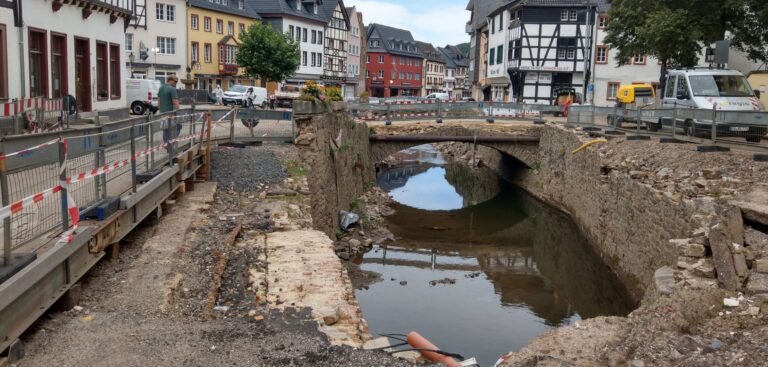
Photo credit: Michael Dietze
Share
LinkedIn Facebook Twitter Email

Seismic sensors already in place to detect earthquakes could sense floods and act as an early warning system to minimize damage and save lives, according to new research.

Many floods in river valleys are monitored by river gauges, which can coarsely track a flood’s water level. However, gauges may be sparse, update infrequently and risk being washed away by a flood. Seismic stations are installed at a safe distance from streams and sense not only ground shaking due to earthquakes but also vibrations from explosions, landslides, storms and floods.

Previous research into seismic flood monitoring has been limited to detecting a flood and indirectly tracking its evolution, particularly for glacial floods. The new study goes one step further, using seismic signals to estimate flood velocity, water level and debris.

Michael Dietze, lead study author and a scientist at the University of Göttingen in Germany, said, “This study paves the way for real-time flood anatomy, with values that can be used by partners.”

The researchers focused on a 2021 flood in Germany that killed nearly 200 people. It used an existing earthquake seismometer station near the flood’s path as a flood detection and tracking tool. This seismic data was the only systematic source of quantitative information about how the flood evolved because three existing water-level stations along the main river were destroyed early on.

The team found that the seismometer illustrated the track of the flood for one hour as floodwaters plowed through the steep, winding Ahr valley, south of Cologne. By combining mathematical models, the researchers were able to estimate the speed at which the flood moved, extract information about the rising water level and estimate the amount of debris, such as gravel, cars and oil tanks, that was being swept away by the flood.

Measuring the ‘seismic footprint’ of a flood – its magnitude, velocity and trajectory – in real time could be used for future flood protection, providing information necessary to optimize models of flood behavior for warning and rescue initiatives.

“If the data stream from that station had been available and analyzed as our research now shows, essential real-time information on the magnitude and velocity of the flood would have been available,” said Dietze. “As 10% of Europe’s surface area is prone to rapid flooding by rivers confined in valleys, we may want to start thinking about new ways of flood early warning. The current network of water-level stations is not enough to be adequately prepared for future events.”

Dietze and his colleagues are currently working on a plan to identify further areas at risk of flooding and equip them with low-cost ‘watchtower’ seismometer pairs. Using two or more seismic sensors rather than a single sensor as in the study would provide scientists with more robust information, Dietze said. Installing such ‘watchtowers’ would cost a fraction of a percent of the damage caused by future floods, according to the researchers.

“The catastrophic flood that hit the Ahrtal in Germany in July 2021 revealed to residents, politicians, emergency services and scientists how much we need to learn to improve current flood warning systems,” Dietze said.

To view the study, published in the AGU journal Geophysical Research Letters, click here.

Previous ArticleUK Centre for Ecology & Hydrology installs off-grid power systems to support remote GHG monitoring
Next Article NOAA seeks applicants for 2023 urban heat island initiative

Read Similar Stories

Agriculture

Extreme heat posing significant risks to ecosystems and agriculture, FAO-WMO report warns

April 22, 20263 Mins Read
Radar

EWR Radar Systems wins US Air Force contract for portable Doppler radar support

April 20, 20262 Mins Read
Extreme Weather

AI model improves real-time prediction of wildfire spread

April 16, 20263 Mins Read
Latest News

Extreme heat posing significant risks to ecosystems and agriculture, FAO-WMO report warns

April 22, 2026

Atmospheric G2 secures Japan weather forecasting license

April 21, 2026

China completes Antarctic meteorological research mission with Xuelong icebreaker

April 21, 2026

Receive breaking stories and features in your inbox each week, for free


Enter your email address:


Supplier Spotlights
  • AIRMAR Technology Corporation
Getting in Touch
  • Contact Us / Advertise
  • Meet the Editors
  • Media Pack
  • Free Weekly E-Newsletter
Our Social Channels
  • Facebook
  • LinkedIn
© 2026 UKi Media & Events a division of UKIP Media & Events Ltd
  • Cookie Policy
  • Privacy Policy
  • Terms and Conditions
  • Notice and Takedown Policy

Type above and press Enter to search. Press Esc to cancel.