


Close Menu
Meteorological Technology International
  • News
    • A-E
      • Agriculture
      • Automated Weather Stations
      • Aviation
      • Climate Measurement
      • Data
      • Developing Countries
      • Digital Applications
      • Early Warning Systems
      • Extreme Weather
    • G-P
      • Hydrology
      • Lidar
      • Lightning Detection
      • New Appointments
      • Nowcasting
      • Numerical Weather Prediction
      • Polar Weather
    • R-S
      • Radar
      • Rainfall
      • Remote Sensing
      • Renewable Energy
      • Satellites
      • Solar
      • Space Weather
      • Supercomputers
    • T-Z
      • Training
      • Transport
      • Weather Instruments
      • Wind
      • World Meteorological Organization
      • Meteorological Technology World Expo
  • Features
  • Online Magazines
    • January 2026
    • April 2025
    • January 2025
    • September 2024
    • April 2024
    • Archive Issues
    • Subscribe Free!
  • Opinion
  • Videos
  • Supplier Spotlight
  • Expo
LinkedIn X (Twitter) Facebook
  • Sign-up for Free Weekly E-Newsletter
  • Meet the Editors
  • Contact Us
  • Media Pack
LinkedIn Facebook
Subscribe
Meteorological Technology International
  • News
      • Agriculture
      • Automated Weather Stations
      • Aviation
      • Climate Measurement
      • Data
      • Developing Countries
      • Digital Applications
      • Early Warning Systems
      • Extreme Weather
      • Hydrology
      • Lidar
      • Lightning Detection
      • New Appointments
      • Nowcasting
      • Numerical Weather Prediction
      • Polar Weather
      • Radar
      • Rainfall
      • Remote Sensing
      • Renewable Energy
      • Satellites
      • Solar
      • Space Weather
      • Supercomputers
      • Training
      • Transport
      • Weather Instruments
      • Wind
      • World Meteorological Organization
      • Meteorological Technology World Expo
  • Features
  • Online Magazines
    1. January 2026
    2. September 2025
    3. April 2025
    4. January 2025
    5. September 2024
    6. April 2024
    7. January 2024
    8. September 2023
    9. April 2023
    10. Archive Issues
    11. Subscribe Free!
    Featured
    November 27, 2025

    In this Issue – January 2026

    By Hazel KingNovember 27, 2025
    Recent

    In this Issue – January 2026

    November 27, 2025

    In this Issue – September 2025

    August 11, 2025

    In this Issue – April 2025

    April 15, 2025
  • Opinion
  • Videos
  • Supplier Spotlight
  • Expo
Facebook LinkedIn
Subscribe
Meteorological Technology International
News

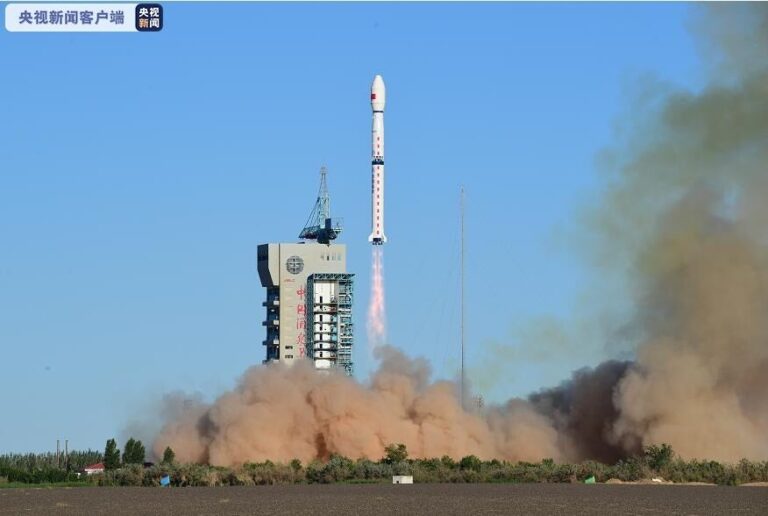
China’s Fengyun-3E meteorological satellite is successfully launched

Helen NormanBy Helen NormanJuly 8, 20212 Mins Read
Share LinkedIn Facebook Twitter Email
China
Image: CCTV News
Share
LinkedIn Facebook Twitter Email

The new Fengyun-3E meteorological satellite (FY-3E) was successfully launched on July 4 (UTC) at the Jiuquan Satellite Launch Center in Gansu province, China. The satellite is the first early morning orbit meteorological satellite for civil use in the world.

Operated by the China Meteorological Administration (CMA) and the National Satellite Meteorological Center, FY-3E will join the Chinese FY-3C and FY-3D satellites to realize coverage of early morning, morning and afternoon orbits.

Together they will provide global data coverage for numerical weather prediction (NWP) at six-hour intervals, and effectively ramp up global NWP accuracy and time efficiency, bearing vital significance to improving the global Earth observing system.

The overall Fengyun 3 series of weather satellites carry a host of instruments, including a visible and infrared radiometer, an infrared atmospheric sounder, a microwave temperature sounder, a microwave humidity sounder, a medium resolution spectral imager, a solar backscattering UV sounder, a total ozone unit, a microwave radiation imager, an atmospheric sounding interferometer, an Earth radiation measurement, a space environment monitor, and a solar irradiation monitor.

It is expected that FY-3E will help improve disaster preparedness. The satellite can realize the monitoring of a wide range of factors, such as 3D atmosphere, ocean surface wind fields, glimmer at night, the Sun, and the ionosphere. It will enhance monitoring and analysis capacity of weather and climate, atmospheric environment, and space weather.

To date, CMA has launched 19 Fengyun meteorological satellites, with nine of them in orbit, forming a well-developed networking observation of polar-orbiting and geostationary satellites.

CMA will now undertake significant in-orbit testing procedures on the FY-3E satellite.

Previous ArticleNASA Sea Level Change Team study projects surge in coastal flooding from 2030s
Next Article Nevis Technology’s helideck monitoring system achieves CAA certification

Read Similar Stories

Space Weather

Northumbria University secures £4m to study Earth’s radiation belts

April 16, 20262 Mins Read
Extreme Weather

AI model improves real-time prediction of wildfire spread

April 16, 20263 Mins Read
Satellites

AI tool uses weather satellite data to map ocean currents in near real time

April 14, 20263 Mins Read
Latest News

EWR Radar Systems wins US Air Force contract for portable Doppler radar support

April 20, 2026

Northumbria University secures £4m to study Earth’s radiation belts

April 16, 2026

AI model improves real-time prediction of wildfire spread

April 16, 2026

Receive breaking stories and features in your inbox each week, for free


Enter your email address:


Supplier Spotlights
  • Synoptic Data PBC
Getting in Touch
  • Contact Us / Advertise
  • Meet the Editors
  • Media Pack
  • Free Weekly E-Newsletter
Our Social Channels
  • Facebook
  • LinkedIn
© 2026 UKi Media & Events a division of UKIP Media & Events Ltd
  • Cookie Policy
  • Privacy Policy
  • Terms and Conditions
  • Notice and Takedown Policy

Type above and press Enter to search. Press Esc to cancel.