


Close Menu
Meteorological Technology International
  • News
    • A-E
      • Agriculture
      • Automated Weather Stations
      • Aviation
      • Climate Measurement
      • Data
      • Developing Countries
      • Digital Applications
      • Early Warning Systems
      • Extreme Weather
    • G-P
      • Hydrology
      • Lidar
      • Lightning Detection
      • New Appointments
      • Nowcasting
      • Numerical Weather Prediction
      • Polar Weather
    • R-S
      • Radar
      • Rainfall
      • Remote Sensing
      • Renewable Energy
      • Satellites
      • Solar
      • Space Weather
      • Supercomputers
    • T-Z
      • Training
      • Transport
      • Weather Instruments
      • Wind
      • World Meteorological Organization
      • Meteorological Technology World Expo
  • Features
  • Online Magazines
    • January 2026
    • April 2025
    • January 2025
    • September 2024
    • April 2024
    • Archive Issues
    • Subscribe Free!
  • Opinion
  • Videos
  • Supplier Spotlight
  • Expo
LinkedIn X (Twitter) Facebook
  • Sign-up for Free Weekly E-Newsletter
  • Meet the Editors
  • Contact Us
  • Media Pack
LinkedIn Facebook
Subscribe
Meteorological Technology International
  • News
      • Agriculture
      • Automated Weather Stations
      • Aviation
      • Climate Measurement
      • Data
      • Developing Countries
      • Digital Applications
      • Early Warning Systems
      • Extreme Weather
      • Hydrology
      • Lidar
      • Lightning Detection
      • New Appointments
      • Nowcasting
      • Numerical Weather Prediction
      • Polar Weather
      • Radar
      • Rainfall
      • Remote Sensing
      • Renewable Energy
      • Satellites
      • Solar
      • Space Weather
      • Supercomputers
      • Training
      • Transport
      • Weather Instruments
      • Wind
      • World Meteorological Organization
      • Meteorological Technology World Expo
  • Features
  • Online Magazines
    1. April 2026
    2. January 2026
    3. September 2025
    4. April 2025
    5. January 2025
    6. September 2024
    7. April 2024
    8. January 2024
    9. Archive Issues
    10. Subscribe Free!
    Featured
    May 5, 2026

    In this Issue – April 2026

    By Web TeamMay 5, 2026
    Recent

    In this Issue – April 2026

    May 5, 2026

    In this Issue – January 2026

    November 27, 2025

    In this Issue – September 2025

    August 11, 2025
  • Opinion
  • Videos
  • Supplier Spotlight
  • Expo
Facebook LinkedIn
Subscribe
Meteorological Technology International
Satellites

ESA approves second satellite launch for HydroGNSS mission

Dan SymondsBy Dan SymondsApril 21, 20232 Mins Read
Share LinkedIn Facebook Twitter Email
Credit: SSTL-ESA-NOC
Share
LinkedIn Facebook Twitter Email

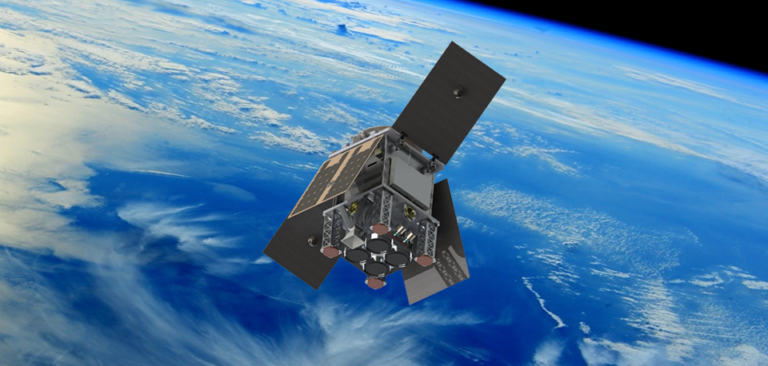
The European Space Agency (ESA) has approved the launch of a second identical Hydro Global Navigation Satellite System (HydroGNSS) satellite, which will form a HydroGNSS constellation supporting even more frequent and accurate global monitoring of Earth.

With the development of the first HydroGNSS satellite already underway, this second twin satellite will now be built in parallel so that they can be launched together with lift-off planned for 2024.

The pioneering HydroGNSS mission concept was selected by ESA as its second Scout mission – a new program aiming to deliver innovative science and technology through a novel agile framework embracing the concept of ‘New Space’.

The UK’s National Oceanography Centre (NOC) has co-led ESA HydroGNSS as part of the original proposing team and is currently leading the development of two of the operational HydroGNSS processors.

The announcement comes after more than 20 years of collaborative development between NOC and HydroGNSS partners including Surrey Satellite Technology (UK), Sapienza University of Rome (Italy), University of Rome Tor-Vergata (Italy), CNR-IFAC (Italy), IEEC (Spain), FMI (Finland), University of Nottingham (UK) and TUW (Austria).

ESA HydroGNSS will provide a unique view of Earth’s oceans using an innovative technique called GNSS-reflectometry based on reflected navigation signals. NOC scientists will calibrate satellite data and translate them into essential climate variables such as ocean winds and sea ice extent.

Giuseppe Foti, NOC’s principal investigator of the ESA HydroGNSS mission, said, “HydroGNSS is an ambitious international project offering a clear opportunity for further strengthening collaboration between intergovernmental organizations, industry and science partners across Europe and beyond, while at the same time demonstrating our growing ability to deliver new science in a cost-effective and agile manner.”

Previous ArticleIMBIE report confirms rapid and recent loss of polar ice
Next Article Sharp warming of UK cities depicted in new visualizations

Read Similar Stories

Extreme Weather

Wildfires can create ‘burn scar heat islands’ that alter weather patterns, study finds

May 6, 20263 Mins Read
Early Warning Systems

China expands MAZU early warning system for developing countries

April 30, 20262 Mins Read
Space Weather

Northumbria University secures £4m to study Earth’s radiation belts

April 16, 20262 Mins Read
Latest News

Wildfires can create ‘burn scar heat islands’ that alter weather patterns, study finds

May 6, 2026

FEATURE: Local thunderstorm detection for real-time decision support

May 6, 2026

In this Issue – April 2026

May 5, 2026

Receive breaking stories and features in your inbox each week, for free


Enter your email address:


Supplier Spotlights
  • EWR Radar Systems
Getting in Touch
  • Contact Us / Advertise
  • Meet the Editors
  • Media Pack
  • Free Weekly E-Newsletter
Our Social Channels
  • Facebook
  • LinkedIn
© 2026 UKi Media & Events a division of UKIP Media & Events Ltd
  • Cookie Policy
  • Privacy Policy
  • Terms and Conditions
  • Notice and Takedown Policy

Type above and press Enter to search. Press Esc to cancel.