


Close Menu
Meteorological Technology International
  • News
    • A-E
      • Agriculture
      • Automated Weather Stations
      • Aviation
      • Climate Measurement
      • Data
      • Developing Countries
      • Digital Applications
      • Early Warning Systems
      • Extreme Weather
    • G-P
      • Hydrology
      • Lidar
      • Lightning Detection
      • New Appointments
      • Nowcasting
      • Numerical Weather Prediction
      • Polar Weather
    • R-S
      • Radar
      • Rainfall
      • Remote Sensing
      • Renewable Energy
      • Satellites
      • Solar
      • Space Weather
      • Supercomputers
    • T-Z
      • Training
      • Transport
      • Weather Instruments
      • Wind
      • World Meteorological Organization
      • Meteorological Technology World Expo
  • Features
  • Online Magazines
    • January 2026
    • April 2025
    • January 2025
    • September 2024
    • April 2024
    • Archive Issues
    • Subscribe Free!
  • Opinion
  • Videos
  • Supplier Spotlight
  • Expo
LinkedIn X (Twitter) Facebook
  • Sign-up for Free Weekly E-Newsletter
  • Meet the Editors
  • Contact Us
  • Media Pack
LinkedIn Facebook
Subscribe
Meteorological Technology International
  • News
      • Agriculture
      • Automated Weather Stations
      • Aviation
      • Climate Measurement
      • Data
      • Developing Countries
      • Digital Applications
      • Early Warning Systems
      • Extreme Weather
      • Hydrology
      • Lidar
      • Lightning Detection
      • New Appointments
      • Nowcasting
      • Numerical Weather Prediction
      • Polar Weather
      • Radar
      • Rainfall
      • Remote Sensing
      • Renewable Energy
      • Satellites
      • Solar
      • Space Weather
      • Supercomputers
      • Training
      • Transport
      • Weather Instruments
      • Wind
      • World Meteorological Organization
      • Meteorological Technology World Expo
  • Features
  • Online Magazines
    1. April 2026
    2. January 2026
    3. September 2025
    4. April 2025
    5. January 2025
    6. September 2024
    7. April 2024
    8. January 2024
    9. Archive Issues
    10. Subscribe Free!
    Featured
    May 5, 2026

    In this Issue – April 2026

    By Web TeamMay 5, 2026
    Recent

    In this Issue – April 2026

    May 5, 2026

    In this Issue – January 2026

    November 27, 2025

    In this Issue – September 2025

    August 11, 2025
  • Opinion
  • Videos
  • Supplier Spotlight
  • Expo
Facebook LinkedIn
Subscribe
Meteorological Technology International
Automated Weather Stations

Saildrone to launch fleet of ocean drones to gather crucial data on 2021 hurricane season

Helen NormanBy Helen NormanJune 3, 20213 Mins Read
Share LinkedIn Facebook Twitter Email
Hurricane season
Share
LinkedIn Facebook Twitter Email

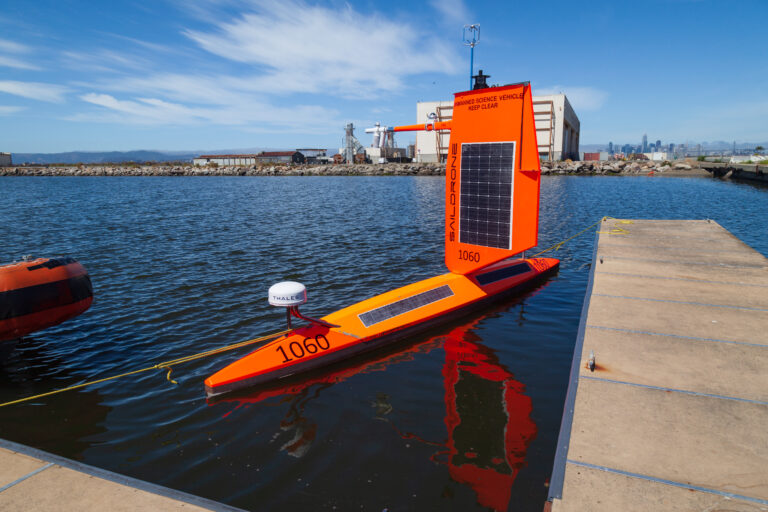
Saildrone has announced a new mission to deploy five uncrewed surface vehicles (USVs) from the US Virgin Islands in August to gather key data throughout the 2021 Tropical Atlantic hurricane season.

The USVs will be equipped with specially designed ‘hurricane wings’ to enable them to operate in extreme conditions. Saildrones have been designed to withstand winds over 70mph and waves over 10ft.

The five saildrones will sail into the paths of hurricanes to provide valuable real-time observations for numerical hurricane prediction models and to collect new insights into how these large and destructive weather cells grow and intensify. The mission aims to improve understanding and predictability of tropical cyclone intensity changes and advance knowledge of the ocean-atmosphere interactions that fuel them.

The saildrones will provide new in situ data to NOAA’s Pacific Marine Environmental Laboratory (PMEL) and Atlantic Oceanographic and Meteorological Laboratory (AOML) – Saildrone’s scientific partners in this mission.

The data will also be valuable to other groups, including the US National Weather Service, which will use the data to improve forecasting, and the National Environmental Satellite, Data and Information Service (NESDIS), which will work to align data findings from other observing platforms, such as gliders.

“The biggest gap in our understanding of hurricanes are the processes by which they intensify so quickly, as well as the ability to accurately predict how strong they will become. We know that the exchange of heat between the ocean and the atmosphere is one of the key physical processes providing energy to a storm, but to improve understanding, we need to collect in situ observations during a storm. Of course, that is extremely difficult given the danger of these storms. We hope that data collected with saildrones will help us to improve the model physics, and then, in turn, we will be able to improve hurricane intensity forecasts,” explained Dr Jun Zhang, a scientist in the Hurricane Research Division at NOAA/AOML.

The vehicles will transmit meteorological and oceanographic data in real time including air temperature and relative humidity, barometric pressure, wind speed and direction, water temperature and salinity, sea surface temperature, and wave height and duration. The data will also be sent to the WMO’s Global Telecommunication System (GTS) and disseminated to all of the major forecast centers – some 20 agencies worldwide, including NOAA.

“PMEL has been working with Saildrone to develop the platform for specific ocean conditions since 2015. Sending a robotic vehicle into the eye of a hurricane, that’s never been done before. It’s an incredibly complex engineering challenge that could have a significant positive impact on our ability to predict extreme weather, for the benefit of communities facing these events,” said Christian Meinig, director of Engineering at NOAA/PMEL.

This mission is expected to create a foundation for PMEL and AOML to deploy a larger fleet of saildrones as part of a major field campaign for hurricane observations.

Previous ArticleCopernicus Marine Service to contribute to digital twin of the ocean project
Next Article Leosphere launches dual scanning lidar offering for wind measurement

Read Similar Stories

Developing Countries

Tropical cyclones threaten energy security in Bangladesh, study finds

May 29, 20262 Mins Read
Climate Measurement

Record-level global temperatures expected to persist over next five years

May 28, 20263 Mins Read
Automated Weather Stations

Vaisala launches AWS810 Airport Edition automatic weather station

May 26, 20262 Mins Read
Latest News

Tropical cyclones threaten energy security in Bangladesh, study finds

May 29, 2026

Fiji launches $15.4m initiative to expand early warning systems to vulnerable communities

May 28, 2026

Record-level global temperatures expected to persist over next five years

May 28, 2026

Receive breaking stories and features in your inbox each week, for free


Enter your email address:


Supplier Spotlights
  • Synoptic Data PBC
Getting in Touch
  • Contact Us / Advertise
  • Meet the Editors
  • Media Pack
  • Free Weekly E-Newsletter
Our Social Channels
  • Facebook
  • LinkedIn
© 2026 UKi Media & Events a division of UKIP Media & Events Ltd
  • Cookie Policy
  • Privacy Policy
  • Terms and Conditions
  • Notice and Takedown Policy

Type above and press Enter to search. Press Esc to cancel.