


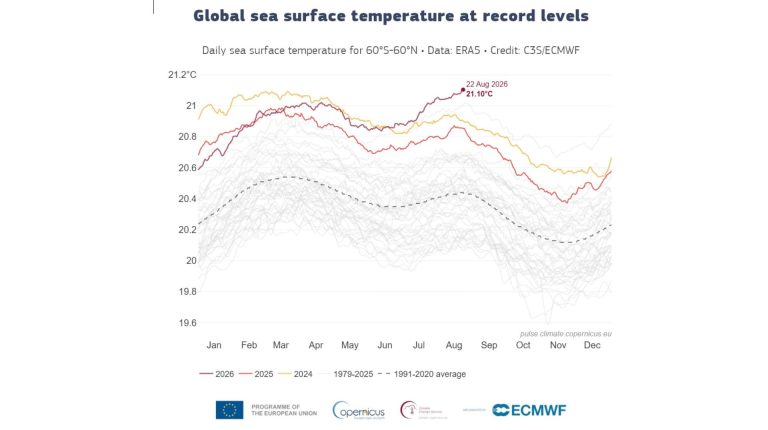
The daily global average sea surface temperature has reached its highest level on record, according to the Copernicus Climate Change Service (C3S), which confirmed a reading of 21.1°C on August 22 – surpassing the previous record of 21.09°C set in March 2024. The C3S ERA5 dataset, on which the record is based, extends back to 1979.
The timing is notable: global ocean temperatures typically peak in March or April, following the austral summer, making the August record unusual. It also exceeds the previous highest August value – 20.98°C – recorded in 2023. The daily record follows a series of monthly sea-surface temperature records and near-records across the extra-polar ocean (60°S to 60°N) throughout 2026.
C3S attributes the record to the combination of long-term ocean warming and a developing El Niño event in the tropical Pacific. According to the World Meteorological Organization, El Niño is expected to strengthen in the coming months, and C3S’s seasonal forecasting system suggests the event could reach intensity levels not observed in several decades.
Samantha Burgess, strategic lead for climate at ECMWF, said, “This record is another clear signal of an ocean under growing stress. El Niño is adding heat to the system, but it is doing so on top of decades of human-driven warming. As ocean temperatures continue to rise, the risks to marine ecosystems and coastal communities also increase. The consequences are already visible: the number of marine heat wave days globally has more than tripled since the early 1990s, putting increasing pressure on marine ecosystems and the communities that depend on them.”
Rising ocean temperatures contribute to sea-level rise through thermal expansion, and increase the frequency and intensity of marine heat waves, which can damage coral reefs and seagrass meadows and disrupt fisheries and aquaculture. A warmer ocean also transfers more heat and moisture into the atmosphere, potentially intensifying rainfall and storm systems, while becoming less efficient at absorbing atmospheric carbon dioxide.
ECMWF scientists are continuing to monitor whether the exceedance is temporary or persistent. The ERA5 dataset measures sea-surface temperature at approximately 10m depth, known as foundation temperature, which may differ from other SST products measuring at different depths.
In related news, oceans hit record-high temperatures for July, Copernicus reports