


Close Menu
Meteorological Technology International
  • News
    • A-E
      • Agriculture
      • Automated Weather Stations
      • Aviation
      • Climate Measurement
      • Data
      • Developing Countries
      • Digital Applications
      • Early Warning Systems
      • Extreme Weather
    • G-P
      • Hydrology
      • Lidar
      • Lightning Detection
      • New Appointments
      • Nowcasting
      • Numerical Weather Prediction
      • Polar Weather
    • R-S
      • Radar
      • Rainfall
      • Remote Sensing
      • Renewable Energy
      • Satellites
      • Solar
      • Space Weather
      • Supercomputers
    • T-Z
      • Training
      • Transport
      • Weather Instruments
      • Wind
      • World Meteorological Organization
      • Meteorological Technology World Expo
  • Features
  • Online Magazines
    • January 2026
    • April 2025
    • January 2025
    • September 2024
    • April 2024
    • Archive Issues
    • Subscribe Free!
  • Opinion
  • Videos
  • Supplier Spotlight
  • Expo
LinkedIn X (Twitter) Facebook
  • Sign-up for Free Weekly E-Newsletter
  • Meet the Editors
  • Contact Us
  • Media Pack
LinkedIn Facebook
Subscribe
Meteorological Technology International
  • News
      • Agriculture
      • Automated Weather Stations
      • Aviation
      • Climate Measurement
      • Data
      • Developing Countries
      • Digital Applications
      • Early Warning Systems
      • Extreme Weather
      • Hydrology
      • Lidar
      • Lightning Detection
      • New Appointments
      • Nowcasting
      • Numerical Weather Prediction
      • Polar Weather
      • Radar
      • Rainfall
      • Remote Sensing
      • Renewable Energy
      • Satellites
      • Solar
      • Space Weather
      • Supercomputers
      • Training
      • Transport
      • Weather Instruments
      • Wind
      • World Meteorological Organization
      • Meteorological Technology World Expo
  • Features
  • Online Magazines
    1. April 2026
    2. January 2026
    3. September 2025
    4. April 2025
    5. January 2025
    6. September 2024
    7. April 2024
    8. January 2024
    9. Archive Issues
    10. Subscribe Free!
    Featured
    May 5, 2026

    In this Issue – April 2026

    By Web TeamMay 5, 2026
    Recent

    In this Issue – April 2026

    May 5, 2026

    In this Issue – January 2026

    November 27, 2025

    In this Issue – September 2025

    August 11, 2025
  • Opinion
  • Videos
  • Supplier Spotlight
  • Expo
Facebook LinkedIn
Subscribe
Meteorological Technology International
Climate Measurement

Copernicus report finds European air quality improving despite pollution episodes

Alex PackBy Alex PackJune 30, 20263 Mins Read
Share LinkedIn Facebook Twitter Email
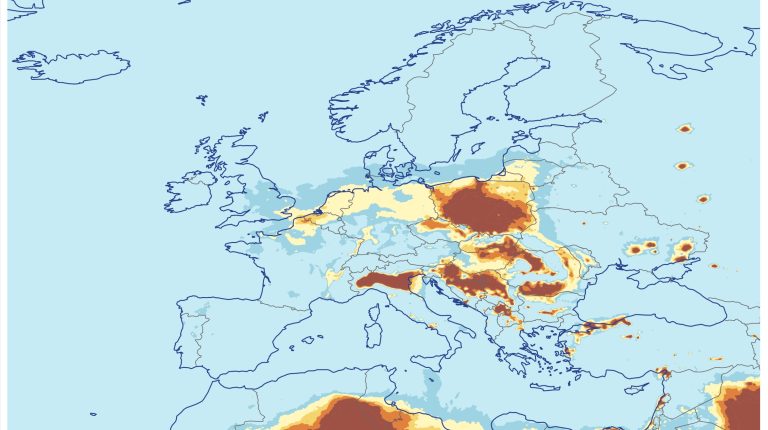
Map showing the number of days with PM2.5 concentrations above 50 μg.m-3 for 2025. Source: CAMS.
Number of days with PM2.5 concentrations above 50 μg.m-3 for 2025. Credit: CAMS
Share
LinkedIn Facebook Twitter Email

Most air quality indicators across Europe continue to improve as emissions of regulated pollutants decline, according to the latest Assessment Report on European Air Quality, published by the Copernicus Atmosphere Monitoring Service (CAMS). However, the report states that some parts of Europe still experience local air pollution situations, and that large-scale pollution episodes persist, driven by a combination of emissions and seasonal weather conditions such as summer heatwaves or winter temperature inversions.

The report draws on CAMS European air quality reanalysis data, which assimilates observations from monitoring stations across Europe into CAMS modeling systems. It covers trends and major pollution events for ozone, nitrogen dioxide (NO2), and coarse and fine particulate matter (PM10 and PM2.5).

Laurence Rouil, CAMS director, said the report is designed to help national authorities, policymakers and air quality experts understand long-term trends and the origins of pollution episodes. “Europe continues to make steady progress in improving air quality thanks to sustained efforts to reduce emissions from transport, industry, residential heating and other key sectors,” Rouil said. “At the same time, our report highlights and explains situations when the combination of emissions and meteorological conditions can still trigger significant large-scale episodes with exceedances of the limit values set for health and environment protection.”

Since 2015, emissions of sulphur oxides and nitrogen oxides have fallen by approximately 3-5% per year across the EU, with the largest reductions in industry and road transportation. Industrial SOx emissions have fallen by 59%, and industrial NOx emissions by 39%, while road transportation emissions have dropped 40% for NOx and 34% for PM2.5.

According to the European State of the Climate 2025 report, 2025 was the third warmest year on record in Europe. High temperatures, intense sunlight and stagnant atmospheric conditions favored ozone formation in summer, while colder-than-average winter conditions, largely driven by heating emissions, contributed to elevated particulate matter.

The CAMS report analyzes four major 2025 pollution episodes: elevated PM2.5 levels in February linked to residential heating, particularly in Eastern Europe; ozone episodes during June and August heatwaves, the most significant occurring between August 8-17 across Western, Central and Southern Europe; record wildfires in Portugal and Spain between August 11–19, which CAMS was able to attribute to particulate matter concentrations for the first time using source attribution tools; and long-range Saharan dust transportation, including a major March intrusion that significantly raised PM10 levels across Southern, Western and Central Europe.

Paul Hamer, senior scientist at the Norwegian Institute for Air Research (NILU) and the report’s main author, said the August wildfires illustrated the connection between such events and air quality: “In addition to elevating the levels of particulate matter at the surface level, the fire plumes also contributed to the increase in surface ozone levels in northern Portugal and Spain, because the release of significant amount of ozone precursors which react in sunlight as the smoke travels.”

Related news, ECWMF adds cloud radar data into global forecasting system in world first

Previous ArticleECWMF adds cloud radar data into global forecasting system in world first

Read Similar Stories

Data

ECMWF adds three new partners to Machine Learning Project

June 25, 20262 Mins Read
Data

ICPAC delivers early warnings 90% faster thanks to data center improvements

June 24, 20263 Mins Read
Climate Measurement

Tekever secures Canadian wildfire detection contract with Phoenix Heli-Flight

June 17, 20262 Mins Read
Latest News

Copernicus report finds European air quality improving despite pollution episodes

June 30, 2026

ECWMF adds cloud radar data into global forecasting system in world first

June 25, 2026

WMO awards prestigious IMO Prize to Florence Rabier

June 25, 2026

Receive breaking stories and features in your inbox each week, for free


Enter your email address:


Supplier Spotlights
  • ELDES S.r.l.
Getting in Touch
  • Contact Us / Advertise
  • Meet the Editors
  • Media Pack
  • Free Weekly E-Newsletter
Our Social Channels
  • Facebook
  • LinkedIn
© 2026 UKi Media & Events a division of UKIP Media & Events Ltd
  • Cookie Policy
  • Privacy Policy
  • Terms and Conditions
  • Notice and Takedown Policy

Type above and press Enter to search. Press Esc to cancel.