


Close Menu
Meteorological Technology International
  • News
    • A-E
      • Agriculture
      • Automated Weather Stations
      • Aviation
      • Climate Measurement
      • Data
      • Developing Countries
      • Digital Applications
      • Early Warning Systems
      • Extreme Weather
    • G-P
      • Hydrology
      • Lidar
      • Lightning Detection
      • New Appointments
      • Nowcasting
      • Numerical Weather Prediction
      • Polar Weather
    • R-S
      • Radar
      • Rainfall
      • Remote Sensing
      • Renewable Energy
      • Satellites
      • Solar
      • Space Weather
      • Supercomputers
    • T-Z
      • Training
      • Transport
      • Weather Instruments
      • Wind
      • World Meteorological Organization
      • Meteorological Technology World Expo
  • Features
  • Online Magazines
    • January 2026
    • April 2025
    • January 2025
    • September 2024
    • April 2024
    • Archive Issues
    • Subscribe Free!
  • Opinion
  • Videos
  • Supplier Spotlight
  • Expo
LinkedIn X (Twitter) Facebook
  • Sign-up for Free Weekly E-Newsletter
  • Meet the Editors
  • Contact Us
  • Media Pack
LinkedIn Facebook
Subscribe
Meteorological Technology International
  • News
      • Agriculture
      • Automated Weather Stations
      • Aviation
      • Climate Measurement
      • Data
      • Developing Countries
      • Digital Applications
      • Early Warning Systems
      • Extreme Weather
      • Hydrology
      • Lidar
      • Lightning Detection
      • New Appointments
      • Nowcasting
      • Numerical Weather Prediction
      • Polar Weather
      • Radar
      • Rainfall
      • Remote Sensing
      • Renewable Energy
      • Satellites
      • Solar
      • Space Weather
      • Supercomputers
      • Training
      • Transport
      • Weather Instruments
      • Wind
      • World Meteorological Organization
      • Meteorological Technology World Expo
  • Features
  • Online Magazines
    1. January 2026
    2. September 2025
    3. April 2025
    4. January 2025
    5. September 2024
    6. April 2024
    7. January 2024
    8. September 2023
    9. April 2023
    10. Archive Issues
    11. Subscribe Free!
    Featured
    November 27, 2025

    In this Issue – January 2026

    By Hazel KingNovember 27, 2025
    Recent

    In this Issue – January 2026

    November 27, 2025

    In this Issue – September 2025

    August 11, 2025

    In this Issue – April 2025

    April 15, 2025
  • Opinion
  • Videos
  • Supplier Spotlight
  • Expo
Facebook LinkedIn
Subscribe
Meteorological Technology International
Climate Measurement

Final integration phase underway for first Meteosat Third Generation imaging satellite

Dan SymondsBy Dan SymondsSeptember 15, 20223 Mins Read
Share LinkedIn Facebook Twitter Email
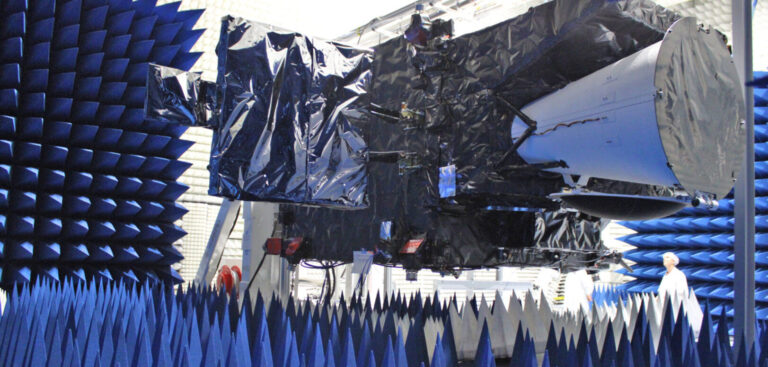
Pic: Thales Alenia Space
Share
LinkedIn Facebook Twitter Email

Thales Alenia Space, a joint venture between Thales and Leonardo, is currently carrying out the final integration phase of the first Meteosat Third Generation satellite (MTG-I1).

MTG-I1 will soon depart for the Guiana Space Centre in Kourou, French Guiana, where its launch is scheduled for the end of 2022 on board an Ariane 5 rocket.

MTG-I1 is the first imaging satellite in the Meteosat Third Generation (MTG) program, which aims to improve weather forecasting in Europe and Africa. Designed as a follow-on to the Meteosat Second Generation (MSG) series, the MTG program is a collaborative venture between the European Space Agency (ESA) and EUMETSAT to ensure the continuity of high-resolution weather monitoring beyond 2040. Built by Thales Alenia Space in cooperation with German spaceflight company OHB, the MTG satellites will operate in geostationary orbit 36,000km above the Earth and will have a life span of 8.5 years.

The MTG program comprises six satellites: four imaging satellites (MTG-I) and two atmospheric sounding satellites (MTG-S) capable of providing 3D maps of the atmosphere.

The MTG-I1 satellite is equipped with a flexible combined imager (FCI) that can provide a full image of the Earth every 10 minutes (versus 15 minutes for the previous generation) and includes a fast mode capable of providing images of Europe every 2.5 minutes. With a spatial resolution of 0.5-1km, the satellite will improve the reliability of weather forecasts over a timescale of minutes to hours.

The MTG-I1 is also equipped with an extremely sophisticated lightning imager (LI), the first of its kind in Europe. Developed by Leonardo, the LI, made of four cameras, will be able to detect cloud-to-cloud and cloud-to-ground flashes in all potential scenarios (for example during both night and day).

This first satellite in the MTG series will become operational in orbit during 2023 and will be joined by three other imaging satellites and two sounding satellites between 2024 and 2030. Together, they will form a geostationary constellation operated by EUMETSAT that will represent a big step forward in terms of the monitoring of extreme weather.

Pierre Armand, MTG program director for Thales Alenia Space, said, “The MTG constellation will revolutionize weather forecasting and deepen our understanding of the climatic changes taking place today. By integrating spectral and lightning imagery data, the MTG program will enable earlier prediction of severe storms and other significant weather events, which pose a growing threat to communities.”
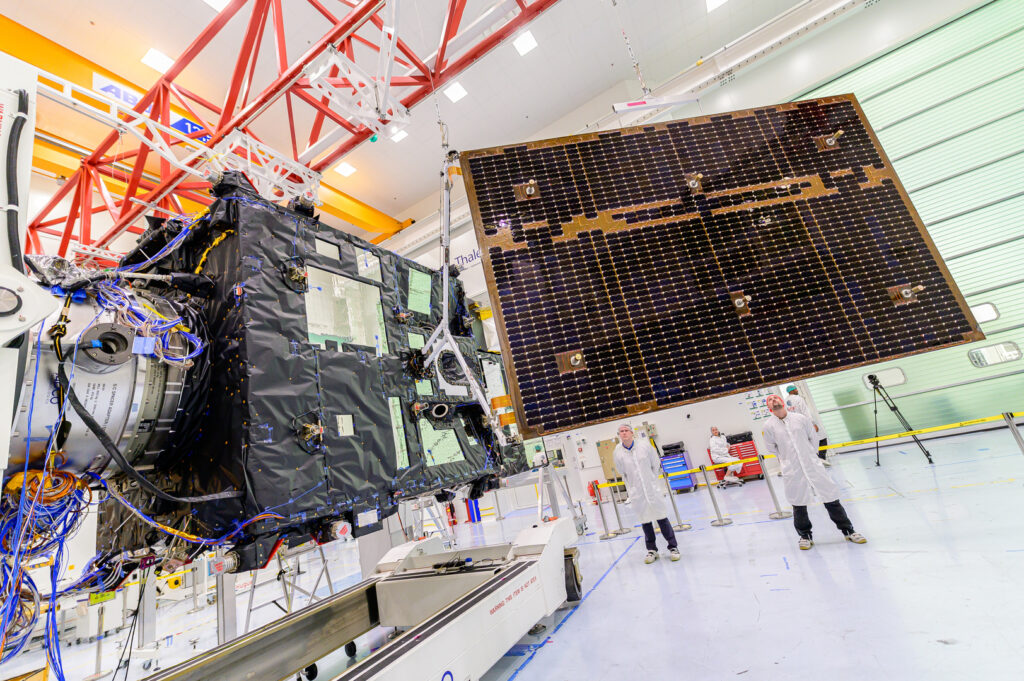
PIC: Thales Alenia Space
Previous ArticleMobile weather station developed for US Air Force enters final phase of development
Next Article Weather station installed on Penn State campus as part of wider observation network

Read Similar Stories

Climate Measurement

Study identifies atmospheric trigger behind flash droughts in Puerto Rico

April 15, 20263 Mins Read
Satellites

AI tool uses weather satellite data to map ocean currents in near real time

April 14, 20263 Mins Read
Climate Measurement

New tool speeds up climate model evaluation

April 13, 20262 Mins Read
Latest News

Northumbria University secures £4m to study Earth’s radiation belts

April 16, 2026

AI model improves real-time prediction of wildfire spread

April 16, 2026

Study identifies atmospheric trigger behind flash droughts in Puerto Rico

April 15, 2026

Receive breaking stories and features in your inbox each week, for free


Enter your email address:


Supplier Spotlights
  • Sommer GmbH
Getting in Touch
  • Contact Us / Advertise
  • Meet the Editors
  • Media Pack
  • Free Weekly E-Newsletter
Our Social Channels
  • Facebook
  • LinkedIn
© 2026 UKi Media & Events a division of UKIP Media & Events Ltd
  • Cookie Policy
  • Privacy Policy
  • Terms and Conditions
  • Notice and Takedown Policy

Type above and press Enter to search. Press Esc to cancel.