

Close Menu
Meteorological Technology International
  • News
    • A-E
      • Agriculture
      • Automated Weather Stations
      • Aviation
      • Climate Measurement
      • Data
      • Developing Countries
      • Digital Applications
      • Early Warning Systems
      • Extreme Weather
    • G-P
      • Hydrology
      • Lidar
      • Lightning Detection
      • New Appointments
      • Nowcasting
      • Numerical Weather Prediction
      • Polar Weather
    • R-S
      • Radar
      • Rainfall
      • Remote Sensing
      • Renewable Energy
      • Satellites
      • Solar
      • Space Weather
      • Supercomputers
    • T-Z
      • Training
      • Transport
      • Weather Instruments
      • Wind
      • World Meteorological Organization
      • Meteorological Technology World Expo
  • Features
  • Online Magazines
    • January 2026
    • April 2025
    • January 2025
    • September 2024
    • April 2024
    • Archive Issues
    • Subscribe Free!
  • Opinion
  • Videos
  • Supplier Spotlight
  • Expo
LinkedIn X (Twitter) Facebook
  • Sign-up for Free Weekly E-Newsletter
  • Meet the Editors
  • Contact Us
  • Media Pack
LinkedIn Facebook
Subscribe
Meteorological Technology International
  • News
      • Agriculture
      • Automated Weather Stations
      • Aviation
      • Climate Measurement
      • Data
      • Developing Countries
      • Digital Applications
      • Early Warning Systems
      • Extreme Weather
      • Hydrology
      • Lidar
      • Lightning Detection
      • New Appointments
      • Nowcasting
      • Numerical Weather Prediction
      • Polar Weather
      • Radar
      • Rainfall
      • Remote Sensing
      • Renewable Energy
      • Satellites
      • Solar
      • Space Weather
      • Supercomputers
      • Training
      • Transport
      • Weather Instruments
      • Wind
      • World Meteorological Organization
      • Meteorological Technology World Expo
  • Features
  • Online Magazines
    1. January 2026
    2. September 2025
    3. April 2025
    4. January 2025
    5. September 2024
    6. April 2024
    7. January 2024
    8. September 2023
    9. April 2023
    10. Archive Issues
    11. Subscribe Free!
    Featured
    November 27, 2025

    In this Issue – January 2026

    By Hazel KingNovember 27, 2025
    Recent

    In this Issue – January 2026

    November 27, 2025

    In this Issue – September 2025

    August 11, 2025

    In this Issue – April 2025

    April 15, 2025
  • Opinion
  • Videos
  • Supplier Spotlight
  • Expo
Facebook LinkedIn
Subscribe
Meteorological Technology International
Climate Measurement

NOAA and World View to advance study of stratosphere

Henry WillisBy Henry WillisAugust 21, 20203 Mins Read
Share LinkedIn Facebook Twitter Email
Share
LinkedIn Facebook Twitter Email

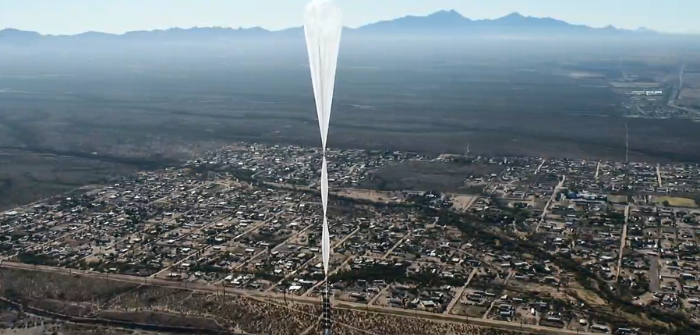
The National Oceanic and Atmospheric Administration (NOAA) and World View Enterprises, an Arizona-based company that specializes in gathering data during long-duration, high-altitude balloon flights, are teaming up to take a uniquely detailed look at the composition of Earth’s stratosphere.

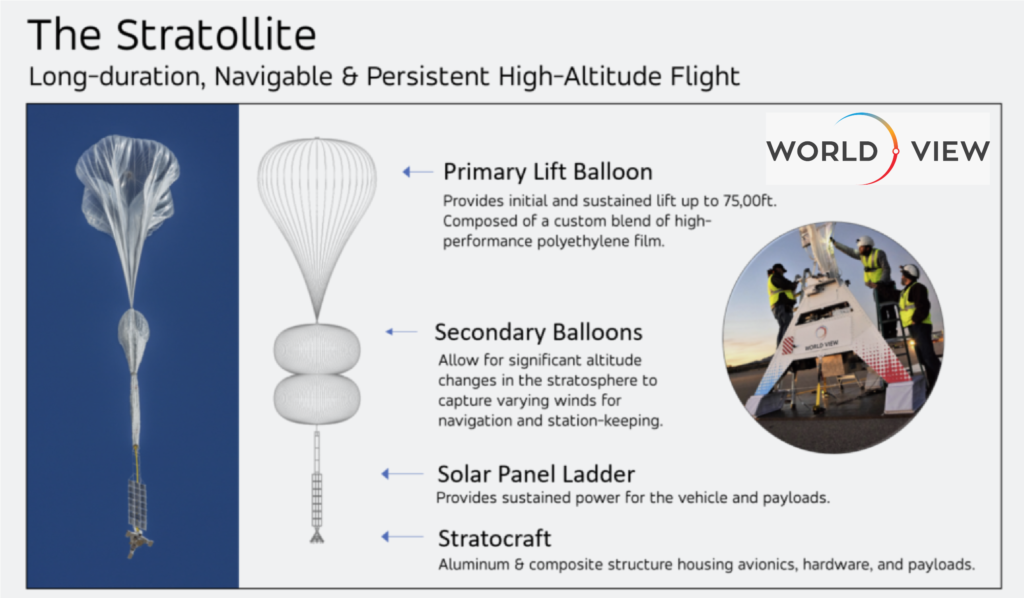
Under the agreement, World View Stratollite balloons will carry a miniaturized NOAA instrument to measure atmospheric particles on a series of flights in 2021 that will last weeks and cover thousands of miles at altitudes above 55,000ft. The flights will allow NOAA’s Chemical Sciences Laboratory (CSL) to explore the potential of using new autonomous platforms to acquire key scientific data in the stratosphere for extended periods over large geographic regions.

CSL is embarking on an expanded research effort to better understand the distribution and characteristics of stratospheric aerosols under background conditions, as well as improving the capacity to investigate injections of gases and aerosols from volcanic eruptions and very large fires. World View is donating space for the instrument on its balloon platform to NOAA at no cost.

“There really is no other platform right now that can allow us to make detailed, uninterrupted measurements in the stratosphere for this length of time,” said David Fahey, director of the NOAA Chemical Sciences Laboratory. “We’re not only going to be evaluating high-altitude balloons as a potential research platform. We also anticipate capturing important observations about the stratosphere on both sides of the equator during these flights.”

Scientists currently study the stratosphere from instruments on satellites, aircraft or weather balloons. Endurance high-altitude balloons, such as the Stratollite, might provide higher resolution measurements than satellites and would afford longer observational periods than aircraft or small weather balloons.

World View’s platform carries a wide variety of commercial instruments, such as sensors, telescopes and communications arrays. Using winds at different altitudes, the vehicle can be navigated to and from desired locations and loiter above them for long durations. They can be quickly launched on demand and return back to Earth after each mission.

NOAA CSL’s Portable Optical Particle Spectrometer (POPS) will be added to the World View Stratollite for several flights. The POPS uses an onboard laser to measure tiny suspended particles that influence stratospheric chemistry and reflect incoming sunlight. The miniaturized instrument, designed by CSL researchers in Boulder, Colorado, weighs 1.3 lb and is about the size of a lunch box.

POPS aerosol data collected in Boulder over the course of a full year of conventional weather balloon launches yielded 11 vertical profiles or days of data between altitudes of 50,000ft and 75,000ft, said Elizabeth Asher, a CIRES scientist working at CSL.

“By comparison, we expect one flight with World View could generate on the order of 40 days’ worth of data in this altitude range,” Asher said.

As is typical with NOAA research data, it will be available for public use and research after six months.
Previous ArticleNOAA awards grants to weather prediction projects
Next Article MOSAiC weather research team reaches North Pole

Read Similar Stories

Extreme Weather

Researchers investigate links between air pollution, extreme weather and climate

May 1, 20262 Mins Read
Radar

Météo-France begins construction of France’s tallest weather radar tower in Sembadel

April 29, 20262 Mins Read
Climate Measurement

European climate report highlights record heat, glacier loss and rising extremes

April 27, 20263 Mins Read
Latest News

Researchers investigate links between air pollution, extreme weather and climate

May 1, 2026

China expands MAZU early warning system for developing countries

April 30, 2026

Météo-France begins construction of France’s tallest weather radar tower in Sembadel

April 29, 2026

Receive breaking stories and features in your inbox each week, for free


Enter your email address:


Supplier Spotlights
  • ZX Lidars
Getting in Touch
  • Contact Us / Advertise
  • Meet the Editors
  • Media Pack
  • Free Weekly E-Newsletter
Our Social Channels
  • Facebook
  • LinkedIn
© 2026 UKi Media & Events a division of UKIP Media & Events Ltd
  • Cookie Policy
  • Privacy Policy
  • Terms and Conditions
  • Notice and Takedown Policy

Type above and press Enter to search. Press Esc to cancel.