

Close Menu
Meteorological Technology International
  • News
    • A-E
      • Agriculture
      • Automated Weather Stations
      • Aviation
      • Climate Measurement
      • Data
      • Developing Countries
      • Digital Applications
      • Early Warning Systems
      • Extreme Weather
    • G-P
      • Hydrology
      • Lidar
      • Lightning Detection
      • New Appointments
      • Nowcasting
      • Numerical Weather Prediction
      • Polar Weather
    • R-S
      • Radar
      • Rainfall
      • Remote Sensing
      • Renewable Energy
      • Satellites
      • Solar
      • Space Weather
      • Supercomputers
    • T-Z
      • Training
      • Transport
      • Weather Instruments
      • Wind
      • World Meteorological Organization
      • Meteorological Technology World Expo
  • Features
  • Online Magazines
    • January 2026
    • April 2025
    • January 2025
    • September 2024
    • April 2024
    • Archive Issues
    • Subscribe Free!
  • Opinion
  • Videos
  • Supplier Spotlight
  • Expo
LinkedIn X (Twitter) Facebook
  • Sign-up for Free Weekly E-Newsletter
  • Meet the Editors
  • Contact Us
  • Media Pack
LinkedIn Facebook
Subscribe
Meteorological Technology International
  • News
      • Agriculture
      • Automated Weather Stations
      • Aviation
      • Climate Measurement
      • Data
      • Developing Countries
      • Digital Applications
      • Early Warning Systems
      • Extreme Weather
      • Hydrology
      • Lidar
      • Lightning Detection
      • New Appointments
      • Nowcasting
      • Numerical Weather Prediction
      • Polar Weather
      • Radar
      • Rainfall
      • Remote Sensing
      • Renewable Energy
      • Satellites
      • Solar
      • Space Weather
      • Supercomputers
      • Training
      • Transport
      • Weather Instruments
      • Wind
      • World Meteorological Organization
      • Meteorological Technology World Expo
  • Features
  • Online Magazines
    1. January 2026
    2. September 2025
    3. April 2025
    4. January 2025
    5. September 2024
    6. April 2024
    7. January 2024
    8. September 2023
    9. April 2023
    10. Archive Issues
    11. Subscribe Free!
    Featured
    November 27, 2025

    In this Issue – January 2026

    By Hazel KingNovember 27, 2025
    Recent

    In this Issue – January 2026

    November 27, 2025

    In this Issue – September 2025

    August 11, 2025

    In this Issue – April 2025

    April 15, 2025
  • Opinion
  • Videos
  • Supplier Spotlight
  • Expo
Facebook LinkedIn
Subscribe
Meteorological Technology International
Data

Ground level ozone in China increases

James MuirBy James MuirMay 13, 20202 Mins Read
Share LinkedIn Facebook Twitter Email
Share
LinkedIn Facebook Twitter Email

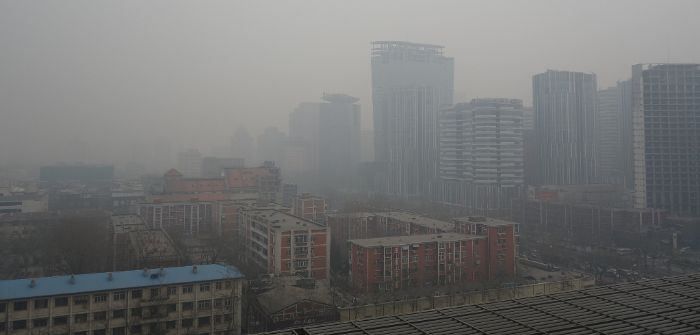
Ground level ozone has increased in China while nitrogen dioxide and particulate matter pollution has fallen, according to researchers.

Two studies published by the American Geophysical Union (AGU) found that nitrogen dioxide pollution over northern China, Western Europe and the USA decreased by 60% in early 2020 and particulate matter was down 35% in northern China.

The researchers say such drops are unprecedented since quality monitoring from satellites began in the 1990s, and the only comparable events were short-term reductions in China at the time of the 2008 Beijing Olympics.

While nitrogen dioxide decreased, there was an increase in surface ozone, a secondary pollutant formed when sunlight and high temperature catalyze chemical reactions in the lower atmosphere.

Surface ozone is destroyed by nitrogen oxide in highly polluted areas, so according to the researchers, even though air quality has improved in many regions, surface ozone is still a problem.

Guy Brasseur, an atmospheric scientist at the Max Planck Institute for Meteorology who was the lead author of one of the studies, said, “It means that by just reducing the nitrogen dioxide and the particles, you won’t solve the ozone problem.”

Satellite measurements for air quality were taken to estimate changes in nitrogen dioxide over major epicenters of the outbreak.

Nitrogen dioxide pollution decreased by 40% on average over Chinese cities, 20% in Europe and 38% in the US compared to the same time in 2019.

The second study looked at air quality changes in northern China, analyzing levels of nitrogen dioxide and other types of air pollution measured by 800 ground-level air quality monitoring stations.

Brasseur and his team found particulate matter fell on average 35% and nitrogen dioxide by 60% after lockdowns began on January 23. They also found average surface ozone concentration increased by a factor of 1.5-2 over the same time period.

Previous ArticleDroplet acquires Micro Pulse Lidar portfolio
Next Article Vertical wind distribution data provided by EUMETSAT

Read Similar Stories

Agriculture

Extreme heat posing significant risks to ecosystems and agriculture, FAO-WMO report warns

April 22, 20263 Mins Read
Data

Atmospheric G2 secures Japan weather forecasting license

April 21, 20262 Mins Read
Climate Measurement

China completes Antarctic meteorological research mission with Xuelong icebreaker

April 21, 20262 Mins Read
Latest News

Extreme heat posing significant risks to ecosystems and agriculture, FAO-WMO report warns

April 22, 2026

Atmospheric G2 secures Japan weather forecasting license

April 21, 2026

China completes Antarctic meteorological research mission with Xuelong icebreaker

April 21, 2026

Receive breaking stories and features in your inbox each week, for free


Enter your email address:


Supplier Spotlights
  • Geolux d.o.o.
Getting in Touch
  • Contact Us / Advertise
  • Meet the Editors
  • Media Pack
  • Free Weekly E-Newsletter
Our Social Channels
  • Facebook
  • LinkedIn
© 2026 UKi Media & Events a division of UKIP Media & Events Ltd
  • Cookie Policy
  • Privacy Policy
  • Terms and Conditions
  • Notice and Takedown Policy

Type above and press Enter to search. Press Esc to cancel.