


Close Menu
Meteorological Technology International
  • News
    • A-E
      • Agriculture
      • Artificial Intelligence
      • Automated Weather Stations
      • Aviation
      • Climate Measurement
      • Data
      • Developing Countries
      • Digital Applications
      • Early Warning Systems
      • Extreme Weather
    • G-P
      • Hydrology
      • Lidar
      • Lightning Detection
      • New Appointments
      • Nowcasting
      • Numerical Weather Prediction
      • Polar Weather
    • R-S
      • Radar
      • Rainfall
      • Remote Sensing
      • Renewable Energy
      • Satellites
      • Solar
      • Space Weather
      • Supercomputers
    • T-Z
      • Training
      • Transport
      • Weather Instruments
      • Wind
      • World Meteorological Organization
      • Meteorological Technology World Expo
  • Features
  • Online Magazines
    • January 2026
    • April 2025
    • January 2025
    • September 2024
    • April 2024
    • Archive Issues
    • Subscribe Free!
  • Opinion
  • Videos
  • Supplier Spotlight
  • Expo
LinkedIn X (Twitter) Facebook
  • Sign-up for Free Weekly E-Newsletter
  • Meet the Editors
  • Contact Us
  • Media Pack
LinkedIn Facebook
Subscribe
Meteorological Technology International
  • News
      • Agriculture
      • Artificial Intelligence
      • Automated Weather Stations
      • Aviation
      • Climate Measurement
      • Data
      • Developing Countries
      • Digital Applications
      • Early Warning Systems
      • Extreme Weather
      • Hydrology
      • Lidar
      • Lightning Detection
      • New Appointments
      • Nowcasting
      • Numerical Weather Prediction
      • Polar Weather
      • Radar
      • Rainfall
      • Remote Sensing
      • Renewable Energy
      • Satellites
      • Solar
      • Space Weather
      • Supercomputers
      • Training
      • Transport
      • Weather Instruments
      • Wind
      • World Meteorological Organization
      • Meteorological Technology World Expo
  • Features
  • Online Magazines
    1. April 2026
    2. January 2026
    3. September 2025
    4. April 2025
    5. January 2025
    6. September 2024
    7. April 2024
    8. January 2024
    9. Archive Issues
    10. Subscribe Free!
    Featured
    May 5, 2026

    In this Issue – April 2026

    By Web TeamMay 5, 2026
    Recent

    In this Issue – April 2026

    May 5, 2026

    In this Issue – January 2026

    November 27, 2025

    In this Issue – September 2025

    August 11, 2025
  • Opinion
  • Videos
  • Supplier Spotlight
  • Expo
Facebook LinkedIn
Subscribe
Meteorological Technology International
Digital Applications

Copernicus launches Fire Emissions Watch tool for global wildfire data

Alex PackBy Alex PackJuly 31, 20262 Mins Read
Share LinkedIn Facebook Twitter Email
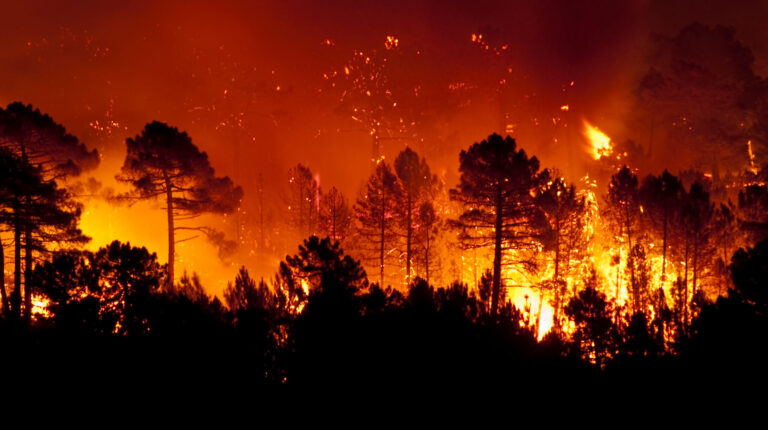
Copernicus launches Fire Emissions Watch tool for global wildfire data.
Share
LinkedIn Facebook Twitter Email

The Copernicus Atmosphere Monitoring Service (CAMS), implemented by the European Centre for Medium-Range Weather Forecasts (ECMWF), has launched Fire Emissions Watch, a new online application that provides near-real-time access to global fire emissions data.

The tool launches as major wildfires burn across western Europe, exposing millions of people to hazardous air pollution and forcing large-scale evacuations. CAMS data shows that 2026 is shaping up to be one of the most severe wildfire years on record across parts of Europe, with France recording its highest year-to-date fire emissions, exceeding the previous record set in 2022. France’s July carbon emissions reached 0.89 megatonnes of carbon, surpassing the previous record of 0.64 megatonnes.

In July 2026, wildfires in Canada made the largest contribution to global fire emissions, with widespread smoke transportation across the Canadian Arctic, North America and the North Atlantic.

Fire Emissions Watch allows users to explore daily, monthly and year-to-date emissions data, visualize smoke transportation, compare fire activity across countries and regions, and replay biomass burning events as they unfolded, including the ongoing fires in France and Spain. Data can be examined at multiple scales, from individual grid cells and custom-drawn areas to provinces, countries and the globe, with charts and graphics available to download.

“It is very apt that this product should launch at such a critical moment for fires across the globe, with thousands of people displaced and millions exposed to hazardous air pollution,” said CAMS director Laurence Rouil. “The application transforms the wealth of information contained within the CAMS Global Fire Assimilation System into an intuitive and accessible tool. Whether users want to understand the fires affecting their local area or examine global biomass burning trends over the past two decades, Fire Emissions Watch makes that information available in just a few clicks.”

The tool also allows users to revisit major historical fire events dating back to 2003, including the 2003 European heat wave, the 2019 Amazon fires and the record-breaking 2023 Canadian wildfire season.

Fire Emissions Watch is built on the CAMS Global Fire Assimilation System, which uses satellite observations from the MODIS and VIIRS instruments, combined with ECMWF‘s Integrated Forecasting System, to estimate fire emissions and initialize atmospheric composition forecasts.

In related news, climate models misrepresent key cloud behavior during El Niño, study finds

Previous ArticleClimate models misrepresent key cloud behavior during El Niño, study finds

Read Similar Stories

Artificial Intelligence

CMA launches MAZU-FengYun Satellite AI Box to strengthen global early warning systems

July 24, 20262 Mins Read
Early Warning Systems

NOAA and SpectraRep to evaluate broadcast datacasting for weather radio resiliency

July 23, 20262 Mins Read
Artificial Intelligence

Machine learning opens new possibilities for global atmospheric reanalysis

July 22, 20263 Mins Read
Latest News

Copernicus launches Fire Emissions Watch tool for global wildfire data

July 31, 2026

Climate models misrepresent key cloud behavior during El Niño, study finds

July 30, 2026

NOAA to move weather forecasting supercomputing to Google Cloud

July 28, 2026

Receive breaking stories and features in your inbox each week, for free


Enter your email address:


Supplier Spotlights
  • REMTECH
Getting in Touch
  • Contact Us / Advertise
  • Meet the Editors
  • Media Pack
  • Free Weekly E-Newsletter
Our Social Channels
  • Facebook
  • LinkedIn
© 2026 UKi Media & Events a division of UKIP Media & Events Ltd
  • Cookie Policy
  • Privacy Policy
  • Terms and Conditions
  • Notice and Takedown Policy

Type above and press Enter to search. Press Esc to cancel.