


Close Menu
Meteorological Technology International
  • News
    • A-E
      • Agriculture
      • Artificial Intelligence
      • Automated Weather Stations
      • Aviation
      • Climate Measurement
      • Data
      • Developing Countries
      • Digital Applications
      • Early Warning Systems
      • Extreme Weather
    • G-P
      • Hydrology
      • Lidar
      • Lightning Detection
      • New Appointments
      • Nowcasting
      • Numerical Weather Prediction
      • Polar Weather
    • R-S
      • Radar
      • Rainfall
      • Remote Sensing
      • Renewable Energy
      • Satellites
      • Solar
      • Space Weather
      • Supercomputers
    • T-Z
      • Training
      • Transport
      • Weather Instruments
      • Wind
      • World Meteorological Organization
      • Meteorological Technology World Expo
  • Features
  • Online Magazines
    • September 2026
    • January 2026
    • April 2025
    • January 2025
    • September 2024
    • April 2024
    • Archive Issues
    • Subscribe Free!
  • Opinion
  • Videos
  • Supplier Spotlight
  • Expo
LinkedIn X (Twitter) Facebook
  • Sign-up for Free Weekly E-Newsletter
  • Meet the Editors
  • Contact Us
  • Media Pack
LinkedIn Facebook
Subscribe
Meteorological Technology International
  • News
      • Agriculture
      • Artificial Intelligence
      • Automated Weather Stations
      • Aviation
      • Climate Measurement
      • Data
      • Developing Countries
      • Digital Applications
      • Early Warning Systems
      • Extreme Weather
      • Hydrology
      • Lidar
      • Lightning Detection
      • New Appointments
      • Nowcasting
      • Numerical Weather Prediction
      • Polar Weather
      • Radar
      • Rainfall
      • Remote Sensing
      • Renewable Energy
      • Satellites
      • Solar
      • Space Weather
      • Supercomputers
      • Training
      • Transport
      • Weather Instruments
      • Wind
      • World Meteorological Organization
      • Meteorological Technology World Expo
  • Features
  • Online Magazines
    1. September 2026
    2. April 2026
    3. January 2026
    4. September 2025
    5. April 2025
    6. January 2025
    7. September 2024
    8. April 2024
    9. January 2024
    10. Archive Issues
    11. Subscribe Free!
    Featured
    August 4, 2026

    In this Issue – September 2026

    By Web TeamAugust 4, 2026
    Recent

    In this Issue – September 2026

    August 4, 2026

    In this Issue – April 2026

    May 5, 2026

    In this Issue – January 2026

    November 27, 2025
  • Opinion
  • Videos
  • Supplier Spotlight
  • Expo
Facebook LinkedIn
Subscribe
Meteorological Technology International
Early Warning Systems

New handbook highlights need to protect radio spectrum for weather, climate and water services

Hazel KingBy Hazel KingSeptember 29, 20263 Mins Read
Share LinkedIn Facebook Twitter Email
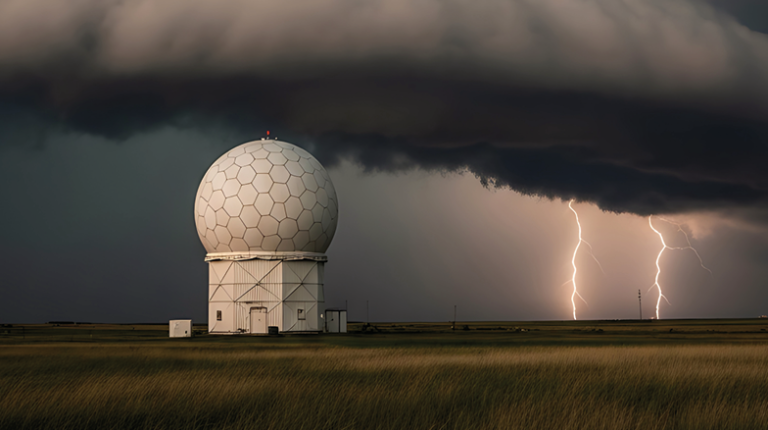
Credit: WMO-ITU 2026
Share
LinkedIn Facebook Twitter Email

A joint handbook from the International Telecommunication Union (ITU) and the World Meteorological Organization (WMO) is highlighting the importance of access to radio frequency spectrum essential for weather forecasts, early warnings, climate monitoring and water management.

The Use of Radio Spectrum for Meteorology: Weather, Climate, Water and Related Environmental Applications handbook offers updated guidance on the use and protection of radio frequencies that support critical meteorological systems. These systems enable observations of the atmosphere, oceans and land, and the transmission of data that supports life-saving early warnings, reliable weather forecasting and long-term climate monitoring.

“The radio-frequency spectrum is a finite natural resource,” said WMO secretary-general Celeste Saulo. “Meteorology relies on specific bands – determined not by choice, but by the physical properties of the atmosphere itself: they enable observations that no other frequencies can provide. These bands must be protected. Protect the spectrum that lets us observe the atmosphere, and we protect forecasts and early warnings on which every country depends.”​

Reduce interference

The ITU/WMO handbook, formally released on September 28, 2026, at the opening of the Global ITU/WMO Seminar on Spectrum Use for Meteorology, also highlights the potential impact of radio-frequency interference on the accuracy and availability of essential environmental data.

“Preventing harmful radio interference is a matter of public safety and can save lives,” said Doreen Bogdan-Martin, secretary-general of ITU. “Interference-free spectrum keeps weather forecasts accurate, emergency alerts and warnings timely, and climate data reliable so communities can prepare, respond and build resilience.”

Some satellite sensors measure very weak naturally occurring signals at specific frequencies, making protection from harmful interference particularly important. Weather radar, lightning location systems, aircraft and marine observations, hydrological monitoring systems and other platforms also rely on these frequency bands to collect and exchange data.

Protecting a critical global resource

Experts at the ITU/WMO event in Geneva, Switzerland, which runs until September 30, are reviewing recent and upcoming international spectrum decisions relevant to meteorological and Earth observation services, including outcomes of the latest ITU World Radiocommunication Conferences.

The event comes as the demand for wireless communications, satellite services and environmental data continues to grow, underscoring the importance of ensuring continued access to and protection of radio-frequency spectrum for Earth observation.

Radio frequency interference can degrade the accuracy and availability of vital data needed for early warning systems, weather forecasting and climate monitoring. Such impacts can affect the ability of governments and communities to prepare for and respond to environmental hazards.

Bringing technical, operational and regulatory guidance together in one resource, the new handbook supports informed decision-making on spectrum management and promotes collaboration between the meteorological and radiocommunication communities.

Don’t miss the WMO Technical Conference on Instruments and Methods of Observation (TECO-2026), October 5-8, held in conjunction with Meteorological Technology World Expo, October 6-8, at RAI Amsterdam. Visit the Meteorological Technology World Expo website for details and to register for your free visitor pass
Related news: New European early warning systems move from emergency alert to actionable insight

Previous ArticleEUMETSAT assumes operational responsibility for Sentinel-4, with service expected in 2027

Read Similar Stories

Early Warning Systems

NOAA flood tool covers nearly 100% of the US

September 25, 20262 Mins Read
Early Warning Systems

New European early warning systems move from emergency alert to actionable insight

September 23, 20263 Mins Read
Satellites

Tomorrow.io reveals five-instrument design for DeepSky weather satellites

September 11, 20263 Mins Read
Latest News

New handbook highlights need to protect radio spectrum for weather, climate and water services

September 29, 2026

EUMETSAT assumes operational responsibility for Sentinel-4, with service expected in 2027

September 28, 2026

OPINION: European sovereign cloud for hydro-meteorological services

September 28, 2026

Receive breaking stories and features in your inbox each week, for free


Enter your email address:


Supplier Spotlights
  • Senseca
Getting in Touch
  • Contact Us / Advertise
  • Meet the Editors
  • Media Pack
  • Free Weekly E-Newsletter
Our Social Channels
  • Facebook
  • LinkedIn
© 2026 UKi Media & Events a division of UKIP Media & Events Ltd
  • Cookie Policy
  • Privacy Policy
  • Terms and Conditions
  • Notice and Takedown Policy

Type above and press Enter to search. Press Esc to cancel.