


Close Menu
Meteorological Technology International
  • News
    • A-E
      • Agriculture
      • Automated Weather Stations
      • Aviation
      • Climate Measurement
      • Data
      • Developing Countries
      • Digital Applications
      • Early Warning Systems
      • Extreme Weather
    • G-P
      • Hydrology
      • Lidar
      • Lightning Detection
      • New Appointments
      • Nowcasting
      • Numerical Weather Prediction
      • Polar Weather
    • R-S
      • Radar
      • Rainfall
      • Remote Sensing
      • Renewable Energy
      • Satellites
      • Solar
      • Space Weather
      • Supercomputers
    • T-Z
      • Training
      • Transport
      • Weather Instruments
      • Wind
      • World Meteorological Organization
      • Meteorological Technology World Expo
  • Features
  • Online Magazines
    • January 2026
    • April 2025
    • January 2025
    • September 2024
    • April 2024
    • Archive Issues
    • Subscribe Free!
  • Opinion
  • Videos
  • Supplier Spotlight
  • Expo
LinkedIn X (Twitter) Facebook
  • Sign-up for Free Weekly E-Newsletter
  • Meet the Editors
  • Contact Us
  • Media Pack
LinkedIn Facebook
Subscribe
Meteorological Technology International
  • News
      • Agriculture
      • Automated Weather Stations
      • Aviation
      • Climate Measurement
      • Data
      • Developing Countries
      • Digital Applications
      • Early Warning Systems
      • Extreme Weather
      • Hydrology
      • Lidar
      • Lightning Detection
      • New Appointments
      • Nowcasting
      • Numerical Weather Prediction
      • Polar Weather
      • Radar
      • Rainfall
      • Remote Sensing
      • Renewable Energy
      • Satellites
      • Solar
      • Space Weather
      • Supercomputers
      • Training
      • Transport
      • Weather Instruments
      • Wind
      • World Meteorological Organization
      • Meteorological Technology World Expo
  • Features
  • Online Magazines
    1. January 2026
    2. September 2025
    3. April 2025
    4. January 2025
    5. September 2024
    6. April 2024
    7. January 2024
    8. September 2023
    9. April 2023
    10. Archive Issues
    11. Subscribe Free!
    Featured
    November 27, 2025

    In this Issue – January 2026

    By Hazel KingNovember 27, 2025
    Recent

    In this Issue – January 2026

    November 27, 2025

    In this Issue – September 2025

    August 11, 2025

    In this Issue – April 2025

    April 15, 2025
  • Opinion
  • Videos
  • Supplier Spotlight
  • Expo
Facebook LinkedIn
Subscribe
Meteorological Technology International
Extreme Weather

PERiLS project to obtain tornado measurements for second year

Dan SymondsBy Dan SymondsFebruary 9, 20233 Mins Read
Share LinkedIn Facebook Twitter Email
Credit: Mike Coniglio - NOAA
Share
LinkedIn Facebook Twitter Email

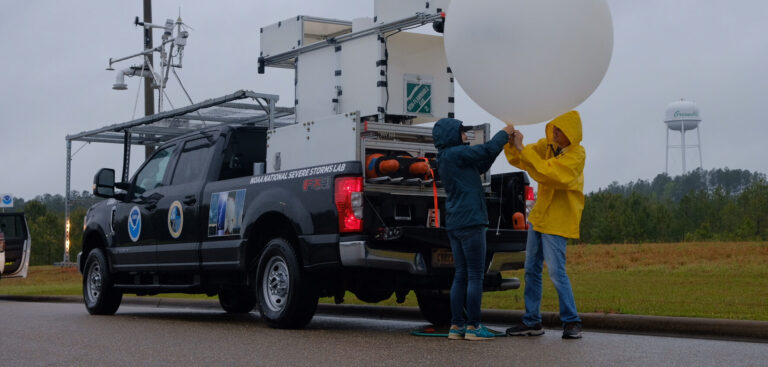
A campaign funded by the US National Science Foundation (NSF) and NOAA has begun deploying dozens of instruments to measure the atmosphere near and inside storms.

The Propagation, Evolution and Rotation in Linear Storms (PERiLS) project will take place across seven states with the aim of better understanding tornadoes in the southeastern USA. It is the second year that the program has been launched and is one of the largest and most comprehensive severe storm field projects in the USA to date.

Researchers will focus on quasi-linear convective systems (squall lines) that produce tornadoes. They will gather data from February 8-May 8, 2023, in predefined areas from the Missouri Bootheel southward to the Gulf Coast, and from the mid-and lower-Mississippi Valley eastward to the foothills of the Appalachian Mountains.

Karen Kosiba, NSF principal investigator and managing director of the University of Illinois Urbana-Champaign’s Flexible Array of Radars and Mesonets Facility, said, “The rapid evolution of storms in the southeast poses a unique challenge for researchers and forecasters. PERiLS scientists hope to learn more about the complex ways in which these tornadoes form. If we can learn how, why, when and where they will form, then we can make better predictions, more precise and longer-lead time warnings and save lives.”

The project involves the coordination of 30 teams in the field using a variety of equipment including mobile radars, uncrewed aerial systems, trucks with instruments attached and different kinds of portable devices designed to measure lightning and the atmosphere within and around storms.

“We are collecting an unprecedented data set to better understand tornadic storms in the Southeast, the environments in which they form and the damage they leave behind,” said Anthony Lyza, PERiLS coordinating scientist and postdoctoral research associate with NOAA’s Cooperative Institute for Severe and High-Impact Weather Research and Operations (CIWRO) at the University of Oklahoma.

The researchers will have additional help from about 55 NOAA National Weather Service (NWS) meteorologists who will join them in the field, gathering data ahead of storms and assisting with damage surveys after the storms. In addition, several NWS forecast offices will launch supplemental weather balloons as needed to support the project.

NWS forecasters in the region will have access to the experimental data collected by the scientists to use in real-time. Brian Carcione, chief of the Science and Training Branch at NOAA’s NWS Southern Region Headquarters, said, “Severe storms in the Southeast typically develop and change quickly. Access to additional radar and atmospheric data from the PERiLS campaign will be valuable to our forecasters when developing a forecast and issuing life-saving warnings.”

Previous ArticleUAE met agency seeks proposals for rain enhancement program
Next Article NOC publishes open-access software for calculating air-sea exchanges

Read Similar Stories

Agriculture

Extreme heat posing significant risks to ecosystems and agriculture, FAO-WMO report warns

April 22, 20263 Mins Read
Extreme Weather

AI model improves real-time prediction of wildfire spread

April 16, 20263 Mins Read
Climate Measurement

Study identifies atmospheric trigger behind flash droughts in Puerto Rico

April 15, 20263 Mins Read
Latest News

Extreme heat posing significant risks to ecosystems and agriculture, FAO-WMO report warns

April 22, 2026

Atmospheric G2 secures Japan weather forecasting license

April 21, 2026

China completes Antarctic meteorological research mission with Xuelong icebreaker

April 21, 2026

Receive breaking stories and features in your inbox each week, for free


Enter your email address:


Supplier Spotlights
  • AIRMAR Technology Corporation
Getting in Touch
  • Contact Us / Advertise
  • Meet the Editors
  • Media Pack
  • Free Weekly E-Newsletter
Our Social Channels
  • Facebook
  • LinkedIn
© 2026 UKi Media & Events a division of UKIP Media & Events Ltd
  • Cookie Policy
  • Privacy Policy
  • Terms and Conditions
  • Notice and Takedown Policy

Type above and press Enter to search. Press Esc to cancel.