


Close Menu
Meteorological Technology International
  • News
    • A-E
      • Agriculture
      • Automated Weather Stations
      • Aviation
      • Climate Measurement
      • Data
      • Developing Countries
      • Digital Applications
      • Early Warning Systems
      • Extreme Weather
    • G-P
      • Hydrology
      • Lidar
      • Lightning Detection
      • New Appointments
      • Nowcasting
      • Numerical Weather Prediction
      • Polar Weather
    • R-S
      • Radar
      • Rainfall
      • Remote Sensing
      • Renewable Energy
      • Satellites
      • Solar
      • Space Weather
      • Supercomputers
    • T-Z
      • Training
      • Transport
      • Weather Instruments
      • Wind
      • World Meteorological Organization
      • Meteorological Technology World Expo
  • Features
  • Online Magazines
    • January 2026
    • April 2025
    • January 2025
    • September 2024
    • April 2024
    • Archive Issues
    • Subscribe Free!
  • Opinion
  • Videos
  • Supplier Spotlight
  • Expo
LinkedIn X (Twitter) Facebook
  • Sign-up for Free Weekly E-Newsletter
  • Meet the Editors
  • Contact Us
  • Media Pack
LinkedIn Facebook
Subscribe
Meteorological Technology International
  • News
      • Agriculture
      • Automated Weather Stations
      • Aviation
      • Climate Measurement
      • Data
      • Developing Countries
      • Digital Applications
      • Early Warning Systems
      • Extreme Weather
      • Hydrology
      • Lidar
      • Lightning Detection
      • New Appointments
      • Nowcasting
      • Numerical Weather Prediction
      • Polar Weather
      • Radar
      • Rainfall
      • Remote Sensing
      • Renewable Energy
      • Satellites
      • Solar
      • Space Weather
      • Supercomputers
      • Training
      • Transport
      • Weather Instruments
      • Wind
      • World Meteorological Organization
      • Meteorological Technology World Expo
  • Features
  • Online Magazines
    1. April 2026
    2. January 2026
    3. September 2025
    4. April 2025
    5. January 2025
    6. September 2024
    7. April 2024
    8. January 2024
    9. Archive Issues
    10. Subscribe Free!
    Featured
    May 5, 2026

    In this Issue – April 2026

    By Web TeamMay 5, 2026
    Recent

    In this Issue – April 2026

    May 5, 2026

    In this Issue – January 2026

    November 27, 2025

    In this Issue – September 2025

    August 11, 2025
  • Opinion
  • Videos
  • Supplier Spotlight
  • Expo
Facebook LinkedIn
Subscribe
Meteorological Technology International
Extreme Weather

WMO warns of wildfire impact on air quality and human health as heatwaves increase

Dan SymondsBy Dan SymondsSeptember 7, 20223 Mins Read
Share LinkedIn Facebook Twitter Email
Photo credit: Pixabay
Share
LinkedIn Facebook Twitter Email

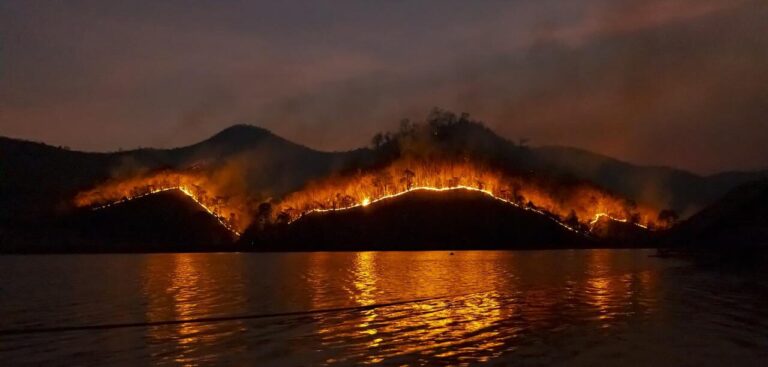
An anticipated rise in the frequency, intensity and duration of heatwaves and an associated increase in wildfires is likely to worsen air quality, harming human health and ecosystems in a further ‘climate penalty’, warns the World Meteorological Organization (WMO)’s latest Air Quality and Climate Bulletin report.

The WMO Air Quality and Climate Bulletin 2022 has a particular focus on the impact of wildfire smoke in 2021, with hot and dry conditions exacerbating the spread of wildfires across western North America and Siberia, producing widespread increases in particulate small matter (PM2.5) levels harmful to health.

Prof. Petteri Taalas, WMO secretary-general, said, “As the globe warms, wildfires and associated air pollution are expected to increase, even under a low-emissions scenario. In addition to human health impacts, this will also affect ecosystems as air pollutants settle from the atmosphere to Earth’s surface.

“We have seen this in the heatwaves in Europe and China this year when stable high atmospheric conditions, sunlight and low wind speeds were conducive to high pollution levels. This is a foretaste of the future because we expect a further increase in the frequency, intensity and duration of heatwaves, which could lead to even worse air quality, a phenomenon known as the ‘climate penalty’,” he continues.

The ‘climate penalty’ refers specifically to the climate change amplification effect on ground-level ozone production, which negatively affects the air people breathe. The regions with the strongest projected climate penalty – mainly in Asia – are home to roughly one-quarter of the world’s population. Climate change could exacerbate surface ozone pollution episodes, leading to detrimental health impacts for hundreds of millions of people.

The Air Quality and Climate Bulletin, the second in an annual series, and an accompanying animation on atmospheric deposition were published ahead of the International Day of Clean Air for Blue Skies on September 7.

The bulletin is based on input from experts in WMO’s Global Atmosphere Watch network, which monitors air quality and greenhouse gas concentrations and can therefore quantify the efficacy of the policies designed to limit climate change and improve air quality.

Wildfires in 2021

The European Union’s Copernicus Atmosphere Monitoring Service (CAMS) measures global particulate matter. PM2.5 (particulate matter with a diameter of 2.5 micrometers or smaller) is a severe health hazard if inhaled over long periods. Sources include emissions from fossil fuel combustion, wildfires and wind-blown desert dust.

Intense wildfires generated anomalously high PM2.5 concentrations in Siberia and Canada and the western USA in July and August 2021. PM2.5 concentrations in eastern Siberia reached levels not observed before, driven mainly by increasingly high temperatures and dry soil conditions.

The annual total estimated emissions in western North America ranked among the top five years of the period 2003 to 2021, with PM2.5 concentrations well above limits recommended by the World Health Organization.

At the global scale, observations of the annual total burned area show a downward trend over the last two decades as a result of decreasing numbers of fires in savannas and grasslands (2021 WMO Aerosol Bulletin). However, at continental scales, some regions are experiencing increasing trends, including parts of western North America, the Amazon and Australia.

To view the complete WMO Air Quality and Climate Bulletin 2022, click here.

Previous ArticleLeaders call for improved early warning systems across Southern Africa
Next Article Met Office declares summer 2022 the joint hottest on record for England

Read Similar Stories

Automated Weather Stations

UNESCO hands over nine automated weather stations to the Ghana Meteorological Agency

May 12, 20262 Mins Read
Extreme Weather

Wildfires can create ‘burn scar heat islands’ that alter weather patterns, study finds

May 6, 20263 Mins Read
Digital Applications

AI models lag behind traditional systems in predicting extreme weather

May 5, 20262 Mins Read
Latest News

Ventusky adds fire monitoring to its weather maps

May 14, 2026

“For over a century, precipitation gauges have measured too low” – Vaisala addresses the measurement gap

May 13, 2026

UNESCO hands over nine automated weather stations to the Ghana Meteorological Agency

May 12, 2026

Receive breaking stories and features in your inbox each week, for free


Enter your email address:


Supplier Spotlights
  • ROTRONIC AG
Getting in Touch
  • Contact Us / Advertise
  • Meet the Editors
  • Media Pack
  • Free Weekly E-Newsletter
Our Social Channels
  • Facebook
  • LinkedIn
© 2026 UKi Media & Events a division of UKIP Media & Events Ltd
  • Cookie Policy
  • Privacy Policy
  • Terms and Conditions
  • Notice and Takedown Policy

Type above and press Enter to search. Press Esc to cancel.