


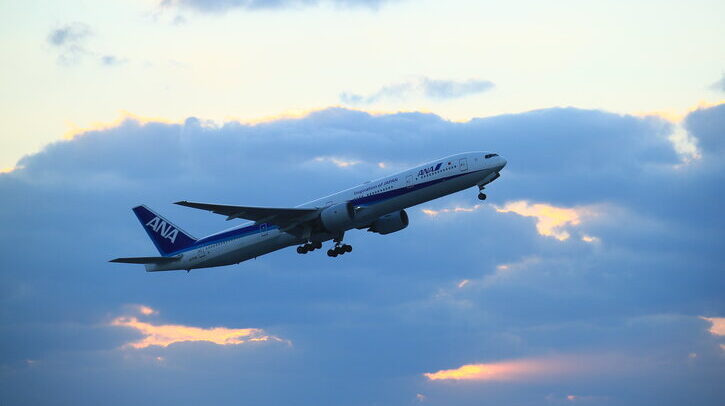
As turbulence concerns continue to grow due to ongoing global warming, All Nippon Airways (ANA) has become the first airline in the world to implement BlueWX’s AI-based turbulence prediction service developed.
The turbulence prediction model, developed using deep learning techniques and a decade of turbulence data, has an 86% accuracy rate. Operational trials involving 2,500 ANA pilots confirmed its reliability, leading to its formal integration into ANA’s weather data infrastructure.
“For airlines, turbulence prediction is a long-standing challenge,” said Hiroyuki Kometani, ANA’s executive vice president of operation division, “At ANA, we have successfully developed this capability in collaboration with BlueWX, utilizing the latest AI and deep learning techniques. The implementation of this new system will ensure a more reliable and comfortable air travel experience for all our passengers.”
The turbulence prediction system has been in development since 2019 as part of a joint initiative between ANA and Keio University. Trial use began in 2021, with continuous updates improving the model’s accuracy and performance.
“As turbulence exacerbates due partly to ongoing global warming and becomes a major safety concern for the air transport industry, we are honored to start providing our leading-edge, AI-powered turbulence prediction for ANA flight operations,” commented Kaz Watanabe, chief executive officer of BlueWX. “ANA’s decision to use our service highlights the accuracy and reliability of our service, and we look forward to contributing to the crew and passengers of ANA and other airlines in the world in terms of flight safety and comfort.”
According to BlueWX, it plans to expand distribution of its turbulence prediction service to other airlines and distribution partners worldwide, aiming to improve flight safety and operational efficiency across the aviation industry.
The company is also developing wind speed and direction forecast models to help optimize flight routes and support the aviation industry’s efforts to achieve carbon neutrality by 2050.
In related news, xxx