


Close Menu
Meteorological Technology International
  • News
    • A-E
      • Agriculture
      • Automated Weather Stations
      • Aviation
      • Climate Measurement
      • Data
      • Developing Countries
      • Digital Applications
      • Early Warning Systems
      • Extreme Weather
    • G-P
      • Hydrology
      • Lidar
      • Lightning Detection
      • New Appointments
      • Nowcasting
      • Numerical Weather Prediction
      • Polar Weather
    • R-S
      • Radar
      • Rainfall
      • Remote Sensing
      • Renewable Energy
      • Satellites
      • Solar
      • Space Weather
      • Supercomputers
    • T-Z
      • Training
      • Transport
      • Weather Instruments
      • Wind
      • World Meteorological Organization
      • Meteorological Technology World Expo
  • Features
  • Online Magazines
    • January 2026
    • April 2025
    • January 2025
    • September 2024
    • April 2024
    • Archive Issues
    • Subscribe Free!
  • Opinion
  • Videos
  • Supplier Spotlight
  • Expo
LinkedIn X (Twitter) Facebook
  • Sign-up for Free Weekly E-Newsletter
  • Meet the Editors
  • Contact Us
  • Media Pack
LinkedIn Facebook
Subscribe
Meteorological Technology International
  • News
      • Agriculture
      • Automated Weather Stations
      • Aviation
      • Climate Measurement
      • Data
      • Developing Countries
      • Digital Applications
      • Early Warning Systems
      • Extreme Weather
      • Hydrology
      • Lidar
      • Lightning Detection
      • New Appointments
      • Nowcasting
      • Numerical Weather Prediction
      • Polar Weather
      • Radar
      • Rainfall
      • Remote Sensing
      • Renewable Energy
      • Satellites
      • Solar
      • Space Weather
      • Supercomputers
      • Training
      • Transport
      • Weather Instruments
      • Wind
      • World Meteorological Organization
      • Meteorological Technology World Expo
  • Features
  • Online Magazines
    1. January 2026
    2. September 2025
    3. April 2025
    4. January 2025
    5. September 2024
    6. April 2024
    7. January 2024
    8. September 2023
    9. April 2023
    10. Archive Issues
    11. Subscribe Free!
    Featured
    November 27, 2025

    In this Issue – January 2026

    By Hazel KingNovember 27, 2025
    Recent

    In this Issue – January 2026

    November 27, 2025

    In this Issue – September 2025

    August 11, 2025

    In this Issue – April 2025

    April 15, 2025
  • Opinion
  • Videos
  • Supplier Spotlight
  • Expo
Facebook LinkedIn
Subscribe
Meteorological Technology International
Oceans

Rising sea levels shown to threaten US coastal housing markets

Dan SymondsBy Dan SymondsMarch 23, 20223 Mins Read
Share LinkedIn Facebook Twitter Email
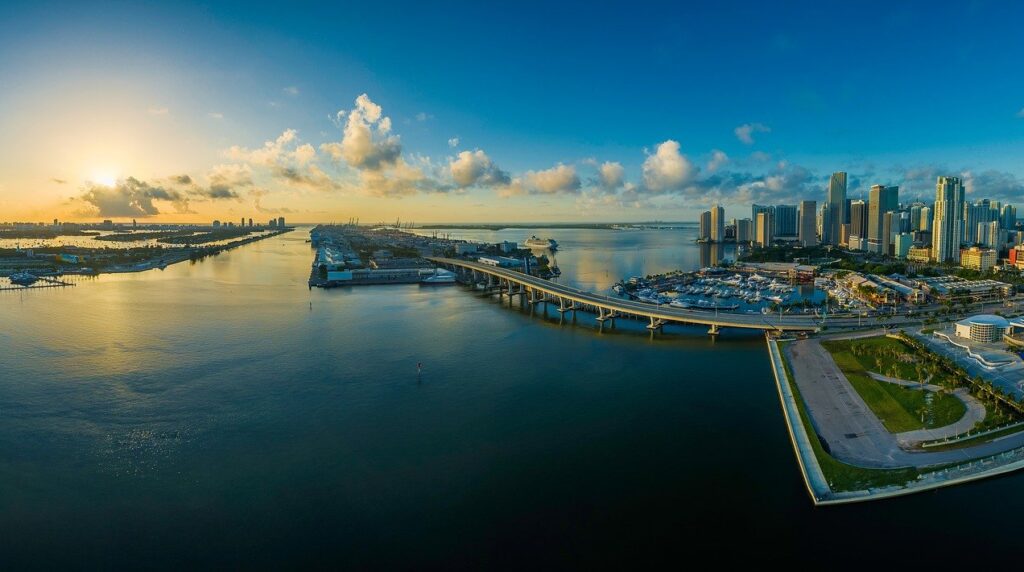
Miami was one of four coastal metro areas examined in the study - credit: Pixabay
Share
LinkedIn Facebook Twitter Email

A new study has demonstrated how coastal properties across the USA will become more prone to flooding in the coming decades as sea levels continue to rise.

Researchers at the Federal Reserve Bank of Kansas City, Missouri, CIRES and NOAA’s National Centers for Environmental Information examined how rising sea levels could impact four US coastal metro areas: Atlantic City, New Jersey; Miami, Florida; Galveston, Texas; and Newport–San Pedro, California.

Given that approximately 40% of the US population lives in coastal communities, the study team set out to create an easy-to-replicate way to estimate the impact of sea level rise on thousands of homes in areas of concern.

Earth’s warming is expected to exacerbate rising coastal waters in the short and long term. Since 1880, sea level has risen by 8-9in (21-24cm), and in 2020 global sea level set a new record high: 3.6in (91.3mm) above 1993 levels, according to NOAA. In addition to sea-level-rise (SLR) projections, the researchers used data on housing characteristics, local topography, tidal conditions and elevation to quantify the potential impacts of sea level rise.

Their methodology relied on publicly available data to show: 1) refined measurements of property inundation (the amount of water that occurs above normally dry ground as a result of flooding) elevation; 2) estimated timing of SLR inundation; and 3) SLR risk that accounted for variations in climate conditions.

“Our results provide an important perspective on the timing of future losses, the associated uncertainty and [the] asymmetry of risk from sea level rise inundation,” the research team stated.

The social, economic and financial costs due to SLR are expected to differ depending on many issues, including the extent of global greenhouse gas (GHG) emissions. The researchers offered a range of possible outcomes for the various locations regarding the timing, number of homes likely to be impacted and estimated value of those losses.

Examining single-family residences, townhomes and two- to four-unit residential buildings, the researchers identified the current elevation above sea level for about 590,000 homes in four metro areas, selected for their geographic diversity.

Using digital elevation models (DEMs) in the NOAA Sea-Level Rise Viewer and the nearest local sea-level projections from Permanent Service for Mean Sea Level tidal stations, they determined which residences might be most prone to inundation.

The team based its calculations on a scenario of medium GHG emissions, known in the scientific community as RCP4.5 (Representative Concentration Pathway 4.5). The researchers also considered low- and high-risk factors to account for potential accelerated ice sheet loss, which could change outcomes in coastal communities. They estimated the number of impaired residential units rather than the relatively less-stable market (financial) values.

“Our risk-matching methods could be used by other researchers and practitioners to assess SLR risk in other coastal markets (e.g. commercial real-estate) or for various housing strata and populations (e.g. owner-occupied versus renters),” the authors concluded.

The team published their findings in the journal Environmental Systems and Decisions.

Previous ArticleClimateAi researchers achieve AI breakthrough in predicting local weather events
Next Article Sentinel-6 Michael Freilich becomes reference satellite for all sea level measurements

Read Similar Stories

Data

Atmospheric G2 secures Japan weather forecasting license

April 21, 20262 Mins Read
Climate Measurement

China completes Antarctic meteorological research mission with Xuelong icebreaker

April 21, 20262 Mins Read
Climate Measurement

Study identifies atmospheric trigger behind flash droughts in Puerto Rico

April 15, 20263 Mins Read
Latest News

Extreme heat posing significant risks to ecosystems and agriculture, FAO-WMO report warns

April 22, 2026

Atmospheric G2 secures Japan weather forecasting license

April 21, 2026

China completes Antarctic meteorological research mission with Xuelong icebreaker

April 21, 2026

Receive breaking stories and features in your inbox each week, for free


Enter your email address:


Supplier Spotlights
  • MicroStep-MIS
Getting in Touch
  • Contact Us / Advertise
  • Meet the Editors
  • Media Pack
  • Free Weekly E-Newsletter
Our Social Channels
  • Facebook
  • LinkedIn
© 2026 UKi Media & Events a division of UKIP Media & Events Ltd
  • Cookie Policy
  • Privacy Policy
  • Terms and Conditions
  • Notice and Takedown Policy

Type above and press Enter to search. Press Esc to cancel.