


Close Menu
Meteorological Technology International
  • News
    • A-E
      • Agriculture
      • Automated Weather Stations
      • Aviation
      • Climate Measurement
      • Data
      • Developing Countries
      • Digital Applications
      • Early Warning Systems
      • Extreme Weather
    • G-P
      • Hydrology
      • Lidar
      • Lightning Detection
      • New Appointments
      • Nowcasting
      • Numerical Weather Prediction
      • Polar Weather
    • R-S
      • Radar
      • Rainfall
      • Remote Sensing
      • Renewable Energy
      • Satellites
      • Solar
      • Space Weather
      • Supercomputers
    • T-Z
      • Training
      • Transport
      • Weather Instruments
      • Wind
      • World Meteorological Organization
      • Meteorological Technology World Expo
  • Features
  • Online Magazines
    • January 2026
    • April 2025
    • January 2025
    • September 2024
    • April 2024
    • Archive Issues
    • Subscribe Free!
  • Opinion
  • Videos
  • Supplier Spotlight
  • Expo
LinkedIn X (Twitter) Facebook
  • Sign-up for Free Weekly E-Newsletter
  • Meet the Editors
  • Contact Us
  • Media Pack
LinkedIn Facebook
Subscribe
Meteorological Technology International
  • News
      • Agriculture
      • Automated Weather Stations
      • Aviation
      • Climate Measurement
      • Data
      • Developing Countries
      • Digital Applications
      • Early Warning Systems
      • Extreme Weather
      • Hydrology
      • Lidar
      • Lightning Detection
      • New Appointments
      • Nowcasting
      • Numerical Weather Prediction
      • Polar Weather
      • Radar
      • Rainfall
      • Remote Sensing
      • Renewable Energy
      • Satellites
      • Solar
      • Space Weather
      • Supercomputers
      • Training
      • Transport
      • Weather Instruments
      • Wind
      • World Meteorological Organization
      • Meteorological Technology World Expo
  • Features
  • Online Magazines
    1. January 2026
    2. September 2025
    3. April 2025
    4. January 2025
    5. September 2024
    6. April 2024
    7. January 2024
    8. September 2023
    9. April 2023
    10. Archive Issues
    11. Subscribe Free!
    Featured
    November 27, 2025

    In this Issue – January 2026

    By Hazel KingNovember 27, 2025
    Recent

    In this Issue – January 2026

    November 27, 2025

    In this Issue – September 2025

    August 11, 2025

    In this Issue – April 2025

    April 15, 2025
  • Opinion
  • Videos
  • Supplier Spotlight
  • Expo
Facebook LinkedIn
Subscribe
Meteorological Technology International
News

Sentinel-6 Michael Freilich ocean-observing satellite starts providing science data

Helen NormanBy Helen NormanJune 22, 20213 Mins Read
Share LinkedIn Facebook Twitter Email
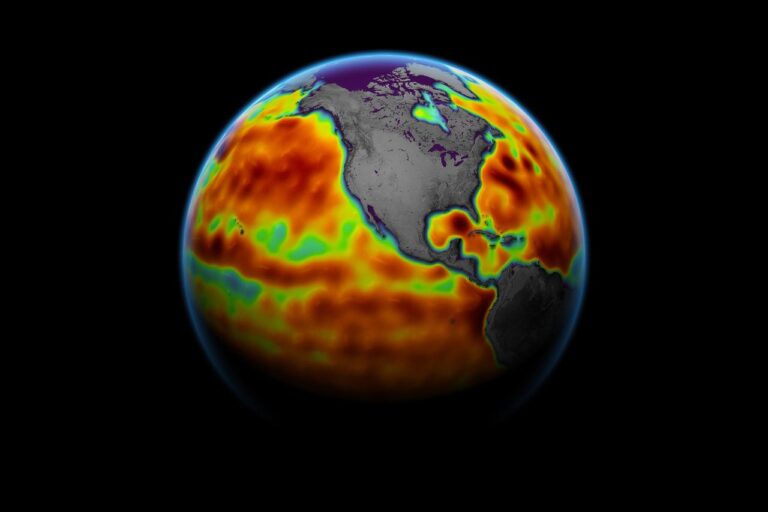
This map shows sea level measured by the Sentinel-6 Michael Freilich satellite from June 5-15. Red areas are regions where sea level is higher than normal, and blue areas indicate areas where it's lower than normal. Credit: NASA Earth Observatory
Share
LinkedIn Facebook Twitter Email

Sentinel-6 Michael Freilich, a US-European collaboration to measure sea surface height and other key ocean features, such as ocean surface windspeed and wave height, released its first science measurements to users on June 22.

After six months of check-out and calibration in orbit, the Sentinel-6 Michael Freilich satellite, which launched from Vandenberg Air Force Base in California on November 21, 2020, has made two sea surface height data streams available to the public.

One of the sea surface height data streams is accurate to 2.3in (5.8cm) and will be available within hours of when the instruments on board Sentinel-6 Michael Freilich collect it. A second stream of data, accurate to 1.4in (3.5cm), will be released two days after collection.

According to NASA, the difference in when the products become available balances accuracy with delivery timeliness for tasks like forecasting the weather and helping to monitor the formation of hurricanes. More data sets, which will be accurate to about 1.2in (2.9cm), are slated for distribution later this year and are intended for research activities and climate science including tracking global mean sea level rise.

The satellite collects measurements for about 90% of the world’s oceans. It is one of two satellites that compose the Copernicus Sentinel-6/Jason-CS (Continuity of Service) mission.

The second satellite, Sentinel-6B, is slated for launch in 2025. Together, they are the latest in a series of spacecraft starting with TOPEX/Poseidon in 1992 and continuing with the Jason series of satellites that have been gathering precise ocean height measurements for nearly 30 years.

Shortly after launch, Sentinel-6 Michael Freilich moved into position, trailing the current reference sea level satellite Jason-3 by 30 seconds. Scientists and engineers then spent time cross-calibrating the data collected by both satellites to ensure the continuity of measurements between the two. Once they are assured of the data quality, Sentinel-6 Michael Freilich will then become the primary sea level satellite.

“It’s a relief knowing that the satellite is working and that the data looks good,” said Josh Willis, project scientist at NASA’s Jet Propulsion Laboratory (JPL) in Southern California. “Several months from now, Sentinel-6 Michael Freilich will take over for its predecessor, Jason-3, and this data release is the first step in that process.”

Sentinel-6/Jason-CS is being jointly developed by the European Space Agency (ESA), EUMETSAT, NASA and NOAA, with funding support from the European Commission and technical support from France’s National Centre for Space Studies. JPL is contributing three science instruments for each Sentinel-6 satellite: the Advanced Microwave Radiometer, the Global Navigation Satellite System – Radio Occultation, and the Laser Retroreflector Array.

Previous ArticleCREWS to invest US$28m in funding for early warning systems in developing regions
Next Article NOAA names Richard W Spinrad as its 11th administrator

Read Similar Stories

Space Weather

Northumbria University secures £4m to study Earth’s radiation belts

April 16, 20262 Mins Read
Extreme Weather

AI model improves real-time prediction of wildfire spread

April 16, 20263 Mins Read
Satellites

AI tool uses weather satellite data to map ocean currents in near real time

April 14, 20263 Mins Read
Latest News

ForecastWatch expands with launch of new independent platform for weather forecast verification

April 28, 2026

European climate report highlights record heat, glacier loss and rising extremes

April 27, 2026

WMO signals increasing likelihood of El Niño developing in 2026

April 24, 2026

Receive breaking stories and features in your inbox each week, for free


Enter your email address:


Supplier Spotlights
  • AIRMAR Technology Corporation
Getting in Touch
  • Contact Us / Advertise
  • Meet the Editors
  • Media Pack
  • Free Weekly E-Newsletter
Our Social Channels
  • Facebook
  • LinkedIn
© 2026 UKi Media & Events a division of UKIP Media & Events Ltd
  • Cookie Policy
  • Privacy Policy
  • Terms and Conditions
  • Notice and Takedown Policy

Type above and press Enter to search. Press Esc to cancel.