


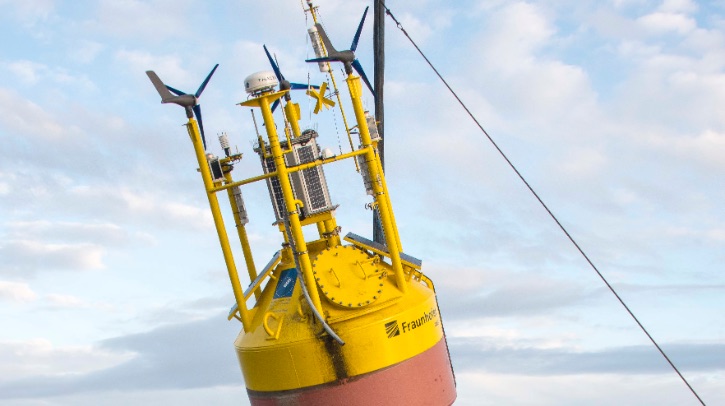
Bundesamt für Seeschifffahrt und Hydrographie (BSH), the Federal Maritime and Hydrographic Agency of Germany, is to add smart monitoring buoys to its monitoring network. The buoys are intended to help the BSH optimize its monitoring network by enabling it to operate even more effectively and cost-effectively. 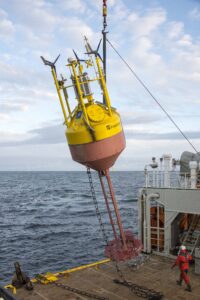
Collecting meteorological data
Developed by the Fraunhofer Institute and adapted to the BSH‘s specific needs, the modern monitoring buoys provide data on temperature, salinity and oxygen, among other things. The data can be transmitted directly from the seabed to the BSH via satellite. Power is supplied by photovoltaic modules and wind generators on the buoy.
Helge Heegewaldt, president of BSH, said, “In the future, BSH ships will be able to deploy the buoys – they can be maintained onshore and are less expensive to operate. They also provide data from a range of up to 250m above the sea level down to the seabed.”
Deploying the buoys
As the first tests were successful, and the first buoy is scheduled to be fully operational this year. The smart monitoring buoys will be deployed in the North Sea and Baltic Sea to supplement the existing stationary measurement platforms already there.
In related news, SUN Fleet, a fleet of uncrewed surface vehicles, recently joined the Global Ocean Observing System to monitor numerous GOOS essential ocean variables and measure important air-sea exchanges in remote areas and under harsh conditions. Read the full story here