


Close Menu
Meteorological Technology International
  • News
    • A-E
      • Agriculture
      • Automated Weather Stations
      • Aviation
      • Climate Measurement
      • Data
      • Developing Countries
      • Digital Applications
      • Early Warning Systems
      • Extreme Weather
    • G-P
      • Hydrology
      • Lidar
      • Lightning Detection
      • New Appointments
      • Nowcasting
      • Numerical Weather Prediction
      • Polar Weather
    • R-S
      • Radar
      • Rainfall
      • Remote Sensing
      • Renewable Energy
      • Satellites
      • Solar
      • Space Weather
      • Supercomputers
    • T-Z
      • Training
      • Transport
      • Weather Instruments
      • Wind
      • World Meteorological Organization
      • Meteorological Technology World Expo
  • Features
  • Online Magazines
    • January 2026
    • April 2025
    • January 2025
    • September 2024
    • April 2024
    • Archive Issues
    • Subscribe Free!
  • Opinion
  • Videos
  • Supplier Spotlight
  • Expo
LinkedIn X (Twitter) Facebook
  • Sign-up for Free Weekly E-Newsletter
  • Meet the Editors
  • Contact Us
  • Media Pack
LinkedIn Facebook
Subscribe
Meteorological Technology International
  • News
      • Agriculture
      • Automated Weather Stations
      • Aviation
      • Climate Measurement
      • Data
      • Developing Countries
      • Digital Applications
      • Early Warning Systems
      • Extreme Weather
      • Hydrology
      • Lidar
      • Lightning Detection
      • New Appointments
      • Nowcasting
      • Numerical Weather Prediction
      • Polar Weather
      • Radar
      • Rainfall
      • Remote Sensing
      • Renewable Energy
      • Satellites
      • Solar
      • Space Weather
      • Supercomputers
      • Training
      • Transport
      • Weather Instruments
      • Wind
      • World Meteorological Organization
      • Meteorological Technology World Expo
  • Features
  • Online Magazines
    1. January 2026
    2. September 2025
    3. April 2025
    4. January 2025
    5. September 2024
    6. April 2024
    7. January 2024
    8. September 2023
    9. April 2023
    10. Archive Issues
    11. Subscribe Free!
    Featured
    November 27, 2025

    In this Issue – January 2026

    By Hazel KingNovember 27, 2025
    Recent

    In this Issue – January 2026

    November 27, 2025

    In this Issue – September 2025

    August 11, 2025

    In this Issue – April 2025

    April 15, 2025
  • Opinion
  • Videos
  • Supplier Spotlight
  • Expo
Facebook LinkedIn
Subscribe
Meteorological Technology International
Extreme Weather

NASA ECOSTRESS data incorporated into new wildfire response tool

Helen NormanBy Helen NormanAugust 2, 20212 Mins Read
Share LinkedIn Facebook Twitter Email
Share
LinkedIn Facebook Twitter Email

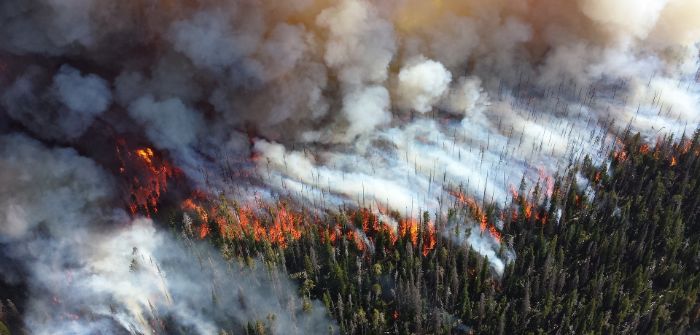
NASA’s ECOsystem Spaceborne Thermal Radiometer Experiment on Space Station (ECOSTRESS) is aiding in the fight against fires in the Western US, according to the NASA Jet Propulsion Laboratory.

The instrument, which is on the International Space Station, is uniquely positioned to provide wildfire responders with a high-resolution look at fire progression.

As of July 28, 2021, the size of the Bootleg Fire in southern Oregon, US, was more than 410,000 acres, making it the largest wildfire currently burning in the US. Wildfire responders have managed to contain about 53% of the fire, and new data from ECOSTRESS is helping.

ECOSTRESS measures surface temperature from the vantage point of the International Space Station, and its ability to observe fires of the Northwest US often twice per day at a high spatial resolution (around 70m) makes it ideal for tracking fires. Researchers on the RADR-Fire team at Pacific Northwest National Laboratory have been experimenting with ECOSTRESS data as part of a new tool now being implemented for first responders like the US Forest Service.

The capabilities of ECOSTRESS are unique. Satellites that acquire data more frequently don’t have high-enough resolution to track the fine line of the fire front, and satellites with higher resolution than ECOSTRESS cross over the same area much less frequently (every five to 16 days).

ECOSTRESS also captured data over Northern California’s Dixie Fire, which has doubled in size to more than 220,000 acres over the last few days. In the Dixie Fire data visualization above, the red areas show the hottest pixels – and fire movement – from July 15 to July 24. The most heavily affected areas are south of Lake Almanor in Plumas County. As of July 27, the Dixie Fire was 23% contained.

Previous ArticleBiral and MicroStep-MIS install new automated weather systems at 16 Nepalese airports
Next Article APPLICATE project to have lasting effects on polar forecasting, notes ECMWF

Read Similar Stories

Climate Measurement

European climate report highlights record heat, glacier loss and rising extremes

April 27, 20263 Mins Read
Agriculture

Extreme heat posing significant risks to ecosystems and agriculture, FAO-WMO report warns

April 22, 20263 Mins Read
Space Weather

Northumbria University secures £4m to study Earth’s radiation belts

April 16, 20262 Mins Read
Latest News

ForecastWatch expands with launch of new independent platform for weather forecast verification

April 28, 2026

European climate report highlights record heat, glacier loss and rising extremes

April 27, 2026

WMO signals increasing likelihood of El Niño developing in 2026

April 24, 2026

Receive breaking stories and features in your inbox each week, for free


Enter your email address:


Supplier Spotlights
  • Senseca
Getting in Touch
  • Contact Us / Advertise
  • Meet the Editors
  • Media Pack
  • Free Weekly E-Newsletter
Our Social Channels
  • Facebook
  • LinkedIn
© 2026 UKi Media & Events a division of UKIP Media & Events Ltd
  • Cookie Policy
  • Privacy Policy
  • Terms and Conditions
  • Notice and Takedown Policy

Type above and press Enter to search. Press Esc to cancel.