


Close Menu
Meteorological Technology International
  • News
    • A-E
      • Agriculture
      • Automated Weather Stations
      • Aviation
      • Climate Measurement
      • Data
      • Developing Countries
      • Digital Applications
      • Early Warning Systems
      • Extreme Weather
    • G-P
      • Hydrology
      • Lidar
      • Lightning Detection
      • New Appointments
      • Nowcasting
      • Numerical Weather Prediction
      • Polar Weather
    • R-S
      • Radar
      • Rainfall
      • Remote Sensing
      • Renewable Energy
      • Satellites
      • Solar
      • Space Weather
      • Supercomputers
    • T-Z
      • Training
      • Transport
      • Weather Instruments
      • Wind
      • World Meteorological Organization
      • Meteorological Technology World Expo
  • Features
  • Online Magazines
    • January 2026
    • April 2025
    • January 2025
    • September 2024
    • April 2024
    • Archive Issues
    • Subscribe Free!
  • Opinion
  • Videos
  • Supplier Spotlight
  • Expo
LinkedIn X (Twitter) Facebook
  • Sign-up for Free Weekly E-Newsletter
  • Meet the Editors
  • Contact Us
  • Media Pack
LinkedIn Facebook
Subscribe
Meteorological Technology International
  • News
      • Agriculture
      • Automated Weather Stations
      • Aviation
      • Climate Measurement
      • Data
      • Developing Countries
      • Digital Applications
      • Early Warning Systems
      • Extreme Weather
      • Hydrology
      • Lidar
      • Lightning Detection
      • New Appointments
      • Nowcasting
      • Numerical Weather Prediction
      • Polar Weather
      • Radar
      • Rainfall
      • Remote Sensing
      • Renewable Energy
      • Satellites
      • Solar
      • Space Weather
      • Supercomputers
      • Training
      • Transport
      • Weather Instruments
      • Wind
      • World Meteorological Organization
      • Meteorological Technology World Expo
  • Features
  • Online Magazines
    1. January 2026
    2. September 2025
    3. April 2025
    4. January 2025
    5. September 2024
    6. April 2024
    7. January 2024
    8. September 2023
    9. April 2023
    10. Archive Issues
    11. Subscribe Free!
    Featured
    November 27, 2025

    In this Issue – January 2026

    By Hazel KingNovember 27, 2025
    Recent

    In this Issue – January 2026

    November 27, 2025

    In this Issue – September 2025

    August 11, 2025

    In this Issue – April 2025

    April 15, 2025
  • Opinion
  • Videos
  • Supplier Spotlight
  • Expo
Facebook LinkedIn
Subscribe
Meteorological Technology International
Satellites

Singaporean agencies to share GNSS-derived moisture data to improve weather monitoring capabilities

Dan SymondsBy Dan SymondsAugust 9, 20223 Mins Read
Share LinkedIn Facebook Twitter Email
Share
LinkedIn Facebook Twitter Email

Singapore’s National Environment Agency (NEA) and the Singapore Land Authority (SLA) have signed a memorandum of understanding (MoU) to develop the use of global navigation satellite system (GNSS) data to better monitor island-wide atmospheric moisture.

The five-year collaboration aims to benefit Singapore with additional data for weather monitoring, and facilitate exploratory studies for weather forecasting.

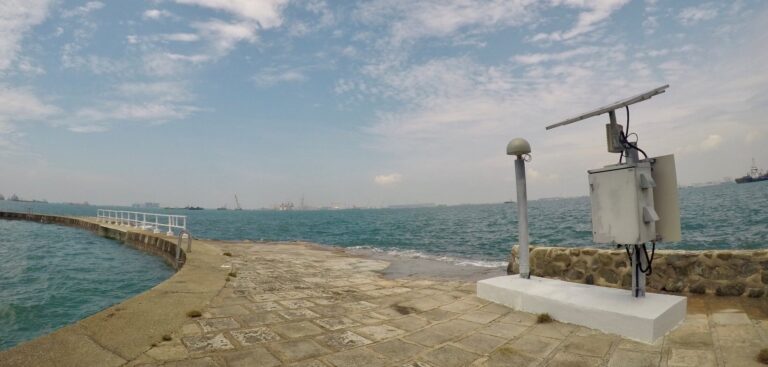
Meteorological Service Singapore (MSS) routinely collects a range of observational data such as temperature, wind and moisture from ground-based and airborne sensors. At MSS’s Upper Air Observatory (UAO), sensors attached to a weather balloon are routinely released twice a day to obtain measurements of these weather elements at different heights of the atmosphere. In 2019, MSS installed a GNSS reference station at UAO to derive continuous estimates of moisture in a column of the atmosphere, known as the integrated precipitable water vapor, to supplement the sounding data obtained from the weather balloon.

Under the MoU, MSS’s GNSS station will be integrated into SLA’s Singapore Satellite Reference Network (SiReNT), enabling MSS to obtain island-wide, continuous and near-real-time atmospheric moisture readings. This non-conventional moisture data will augment MSS’s existing observation network data, providing higher resolution and more frequent observation data, which allows for investigative studies into potential applications for weather forecasting.

The collaboration will also expand SLA’s SiReNT station network, which currently comprises nine reference stations spread across Singapore. With the addition of NEA’s GNSS base receiver station at UAO that will be incorporated into SiReNT, together with two upcoming additional coastal SiReNT reference stations, the network will be expanded to 12 stations with additional receivable data. The SiReNT technology supports innovation in diverse industries such as autonomous vehicles, construction automation and logistics, and monitoring of land height and sea-level changes in Singapore. The expansion of stations by the end of 2022 will improve stability for services and applications in various key industries currently supported by SiReNT.

Luke Goh, CEO of NEA, said, “The collaboration between NEA and SLA highlights our commitment to achieve synergies and tap into enablers across the public sector. This partnership provides a platform for NEA to utilize SLA’s expertise in GNSS data collection and processing, enabling NEA to explore non-traditional methods to enhance our weather monitoring and forecasting capabilities.”

Colin Low, CEO of SLA, said, “This collaboration with NEA is part of SLA’s continuous effort to work with parties from the private and public sectors to unlock diverse uses for SiReNT and SLA’s many geospatial products. We believe that by pooling expertise from various parties we can spark more innovation and uncover practicable solutions that can benefit Singapore and our industries. We are excited to work with NEA to study the novel use of SiReNT data for enhanced weather monitoring and investigative studies in weather forecasting and climate change. The many experiences shared and gained from this collaboration will be a building block for future innovations in this field.”

Previous ArticleNational Geographic team installs highest weather station in the tropical Andes
Next Article NASA unveils new round of opportunities as part of its CubeSat Launch Initiative Partnership

Read Similar Stories

Space Weather

Northumbria University secures £4m to study Earth’s radiation belts

April 16, 20262 Mins Read
Extreme Weather

AI model improves real-time prediction of wildfire spread

April 16, 20263 Mins Read
Satellites

AI tool uses weather satellite data to map ocean currents in near real time

April 14, 20263 Mins Read
Latest News

WMO signals increasing likelihood of El Niño developing in 2026

April 24, 2026

Alabama partners with Climavision to expand weather radar coverage statewide

April 24, 2026

Extreme heat posing significant risks to ecosystems and agriculture, FAO-WMO report warns

April 22, 2026

Receive breaking stories and features in your inbox each week, for free


Enter your email address:


Supplier Spotlights
  • ROTRONIC AG
Getting in Touch
  • Contact Us / Advertise
  • Meet the Editors
  • Media Pack
  • Free Weekly E-Newsletter
Our Social Channels
  • Facebook
  • LinkedIn
© 2026 UKi Media & Events a division of UKIP Media & Events Ltd
  • Cookie Policy
  • Privacy Policy
  • Terms and Conditions
  • Notice and Takedown Policy

Type above and press Enter to search. Press Esc to cancel.