


Close Menu
Meteorological Technology International
  • News
    • A-E
      • Agriculture
      • Artificial Intelligence
      • Automated Weather Stations
      • Aviation
      • Climate Measurement
      • Data
      • Developing Countries
      • Digital Applications
      • Early Warning Systems
      • Extreme Weather
    • G-P
      • Hydrology
      • Lidar
      • Lightning Detection
      • New Appointments
      • Nowcasting
      • Numerical Weather Prediction
      • Polar Weather
    • R-S
      • Radar
      • Rainfall
      • Remote Sensing
      • Renewable Energy
      • Satellites
      • Solar
      • Space Weather
      • Supercomputers
    • T-Z
      • Training
      • Transport
      • Weather Instruments
      • Wind
      • World Meteorological Organization
      • Meteorological Technology World Expo
  • Features
  • Online Magazines
    • September 2026
    • January 2026
    • April 2025
    • January 2025
    • September 2024
    • April 2024
    • Archive Issues
    • Subscribe Free!
  • Opinion
  • Videos
  • Supplier Spotlight
  • Expo
LinkedIn X (Twitter) Facebook
  • Sign-up for Free Weekly E-Newsletter
  • Meet the Editors
  • Contact Us
  • Media Pack
LinkedIn Facebook
Subscribe
Meteorological Technology International
  • News
      • Agriculture
      • Artificial Intelligence
      • Automated Weather Stations
      • Aviation
      • Climate Measurement
      • Data
      • Developing Countries
      • Digital Applications
      • Early Warning Systems
      • Extreme Weather
      • Hydrology
      • Lidar
      • Lightning Detection
      • New Appointments
      • Nowcasting
      • Numerical Weather Prediction
      • Polar Weather
      • Radar
      • Rainfall
      • Remote Sensing
      • Renewable Energy
      • Satellites
      • Solar
      • Space Weather
      • Supercomputers
      • Training
      • Transport
      • Weather Instruments
      • Wind
      • World Meteorological Organization
      • Meteorological Technology World Expo
  • Features
  • Online Magazines
    1. September 2026
    2. April 2026
    3. January 2026
    4. September 2025
    5. April 2025
    6. January 2025
    7. September 2024
    8. April 2024
    9. January 2024
    10. Archive Issues
    11. Subscribe Free!
    Featured
    August 4, 2026

    In this Issue – September 2026

    By Web TeamAugust 4, 2026
    Recent

    In this Issue – September 2026

    August 4, 2026

    In this Issue – April 2026

    May 5, 2026

    In this Issue – January 2026

    November 27, 2025
  • Opinion
  • Videos
  • Supplier Spotlight
  • Expo
Facebook LinkedIn
Subscribe
Meteorological Technology International
Satellites

Solar arrays deployed on NOAA’s GOES-T weather satellite following successful launch

Dan SymondsBy Dan SymondsMarch 2, 20224 Mins Read
Share LinkedIn Facebook Twitter Email
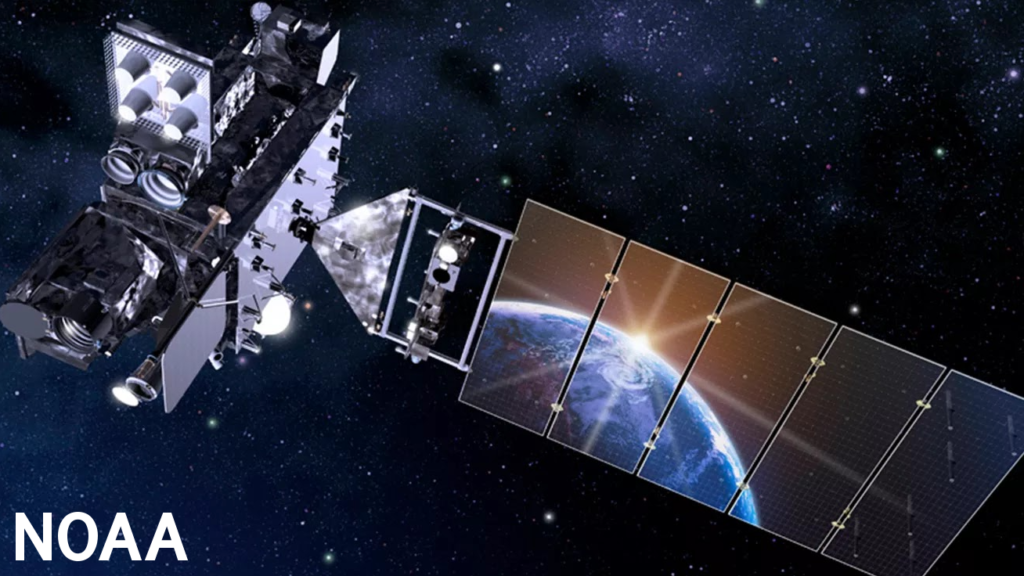
Artist rendering of GOES-18 - credit: NOAA
Share
LinkedIn Facebook Twitter Email

US space agency NASA has successfully launched NOAA’s latest next-generation weather satellite GOES-T from Cape Canaveral in Florida.

GOES-T is the third in a series of four advanced Geostationary Operational Environmental Satellites (GOES) to be launched by NASA on behalf of NOAA, and was blasted into orbit aboard a United Launch Alliance (ULA) Atlas V 541 rocket at 4.38pm ET on March 1, 2022.

Mission managers confirmed that the satellite’s solar arrays have deployed and that the satellite is currently operating on its own power. After approximately two weeks, once GOES-T is positioned in a geostationary orbit 22,300 miles above the Earth, it will be renamed GOES-18. After undergoing a full checkout and validating its six high-tech instruments, the new satellite will move to the GOES-West position and replace GOES-17 in early 2023.

GOES-T will track destructive wildfires, lightning, Pacific Ocean-based storms, dense fog and other hazards that threaten the US West Coast, Hawaii and Alaska. It will also monitor solar activity and space weather to provide early warnings of disruptions to power grids, communications and navigation systems.
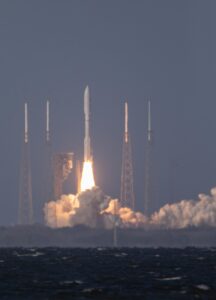
Credit: NASA/Kim Shiflett

Rick Spinrad, NOAA Administrator, said, “GOES-T joins the suite of advanced technology providing critical data and imagery to forecasters and researchers tracking hazardous weather and working toward building a climate ready nation.”

Pam Melroy, NASA deputy administrator, said, “We at NASA are proud to support our joint agency partner, NOAA, and their mission to provide critical data and imagery to forecasters and researchers tracking hazardous weather. While the GOES-R series satellites’ main job is to help with weather prediction, these satellites produce observations that also help with NASA science. Our agencies’ collaboration brings great benefits toward understanding our planet.”

Once positioned, GOES-T will constantly provide advanced imagery and atmospheric measurements. Observations from GOES-18 will be fed into NOAA’s National Weather Service’s computer models used by meteorologists to develop forecasts and help predict the formation, growth, intensity and movement of hazardous weather systems.

Additionally, the GOES-18 lightning mapper’s robust and continuous data over the ocean and in mountainous and rural areas not covered by radar will assist in making tropical, aviation and marine forecasts. The lightning data will provide alerts to the potential ignition of a wildfire and its imager will help pinpoint the initial location of a wildfire — crucial for emergency response teams fighting the fires and initiating evacuations. GOES-18 will also help forecasters track and predict the formation and dissipation of fog, which can disrupt airport operations.

GOES-18 will work in tandem with GOES-16, the first satellite in NOAA’s new geostationary series, in the GOES-East position. Together, the satellites will observe more than half the globe — from the west coast of Africa to New Zealand and from Alaska to Antarctica.

NASA’s Goddard Space Flight Center in Greenbelt, Maryland, oversees the acquisition of the GOES-R spacecraft and instruments and built the Magnetometer instrument for GOES-T, as well as for the future GOES-U satellite. NASA’s Launch Services Program, based at the agency’s Kennedy Space Center in Florida, provided launch management for the mission. NOAA oversees the GOES-R Series Program through an integrated NOAA-NASA office, managing the ground system, operating the satellites and distributing their data to users worldwide. Lockheed Martin designs, builds and tests the GOES-R series satellites. L3Harris Technologies provides the main instrument payload, the Advanced Baseline Imager, along with the ground system, which includes the antenna system for data reception.

Looking forward, NOAA is working with NASA on the next-generation geostationary satellite mission called GeoXO, which will bring new capabilities in support of US weather, ocean and climate operations in the 2030s. NASA will manage the development of the GeoXO satellites and launch them for NOAA.

To view the launch video and mission rundown from United Launch Alliance, click here.

Previous ArticleWindow ‘rapidly closing’ to avoid irreversible impacts from global warming, warns latest IPCC report
Next Article NASA using fixed-wing drones to measure snow depth over sea ice in Arctic regions

Read Similar Stories

Satellites

Tomorrow.io reveals five-instrument design for DeepSky weather satellites

September 11, 20263 Mins Read
Climate Measurement

August 2026 was joint warmest month on record, Copernicus reports

September 10, 20263 Mins Read
Climate Measurement

WMO bulletin warns rising wildfire and heatwave pollution threatens air quality gains

September 9, 20263 Mins Read
Latest News

Tomorrow.io reveals five-instrument design for DeepSky weather satellites

September 11, 2026

Climavision opens radar network and forecasting platform to AI data centers ahead of 2027 grid deadline

September 10, 2026

August 2026 was joint warmest month on record, Copernicus reports

September 10, 2026

Receive breaking stories and features in your inbox each week, for free


Enter your email address:


Supplier Spotlights
  • Baron
Getting in Touch
  • Contact Us / Advertise
  • Meet the Editors
  • Media Pack
  • Free Weekly E-Newsletter
Our Social Channels
  • Facebook
  • LinkedIn
© 2026 UKi Media & Events a division of UKIP Media & Events Ltd
  • Cookie Policy
  • Privacy Policy
  • Terms and Conditions
  • Notice and Takedown Policy

Type above and press Enter to search. Press Esc to cancel.