


Close Menu
Meteorological Technology International
  • News
    • A-E
      • Agriculture
      • Automated Weather Stations
      • Aviation
      • Climate Measurement
      • Data
      • Developing Countries
      • Digital Applications
      • Early Warning Systems
      • Extreme Weather
    • G-P
      • Hydrology
      • Lidar
      • Lightning Detection
      • New Appointments
      • Nowcasting
      • Numerical Weather Prediction
      • Polar Weather
    • R-S
      • Radar
      • Rainfall
      • Remote Sensing
      • Renewable Energy
      • Satellites
      • Solar
      • Space Weather
      • Supercomputers
    • T-Z
      • Training
      • Transport
      • Weather Instruments
      • Wind
      • World Meteorological Organization
      • Meteorological Technology World Expo
  • Features
  • Online Magazines
    • January 2026
    • April 2025
    • January 2025
    • September 2024
    • April 2024
    • Archive Issues
    • Subscribe Free!
  • Opinion
  • Videos
  • Supplier Spotlight
  • Expo
LinkedIn X (Twitter) Facebook
  • Sign-up for Free Weekly E-Newsletter
  • Meet the Editors
  • Contact Us
  • Media Pack
LinkedIn Facebook
Subscribe
Meteorological Technology International
  • News
      • Agriculture
      • Automated Weather Stations
      • Aviation
      • Climate Measurement
      • Data
      • Developing Countries
      • Digital Applications
      • Early Warning Systems
      • Extreme Weather
      • Hydrology
      • Lidar
      • Lightning Detection
      • New Appointments
      • Nowcasting
      • Numerical Weather Prediction
      • Polar Weather
      • Radar
      • Rainfall
      • Remote Sensing
      • Renewable Energy
      • Satellites
      • Solar
      • Space Weather
      • Supercomputers
      • Training
      • Transport
      • Weather Instruments
      • Wind
      • World Meteorological Organization
      • Meteorological Technology World Expo
  • Features
  • Online Magazines
    1. January 2026
    2. September 2025
    3. April 2025
    4. January 2025
    5. September 2024
    6. April 2024
    7. January 2024
    8. September 2023
    9. April 2023
    10. Archive Issues
    11. Subscribe Free!
    Featured
    November 27, 2025

    In this Issue – January 2026

    By Hazel KingNovember 27, 2025
    Recent

    In this Issue – January 2026

    November 27, 2025

    In this Issue – September 2025

    August 11, 2025

    In this Issue – April 2025

    April 15, 2025
  • Opinion
  • Videos
  • Supplier Spotlight
  • Expo
Facebook LinkedIn
Subscribe
Meteorological Technology International
Climate Measurement

Solar variability linked to El Nino and La Nina events

Helen NormanBy Helen NormanApril 7, 20213 Mins Read
Share LinkedIn Facebook Twitter Email
El Nino
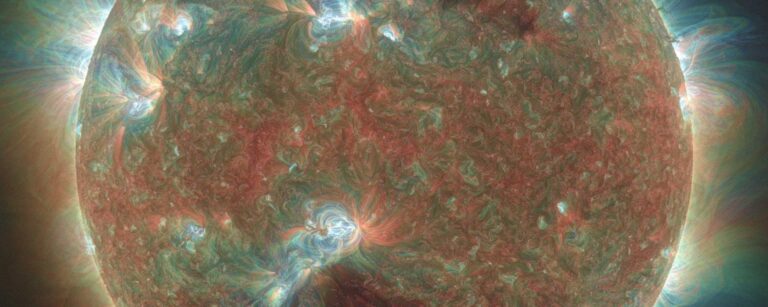
An image of a terminator event on the Sun in 2011. The three different colors (added by researchers) represent three temperatures. Image: NASA Solar Dynamics Observatory
Share
LinkedIn Facebook Twitter Email

New research from the University of Maryland and the National Center for Atmospheric Research (NCAR) has found a correlation between the end of solar cycles and a switch from El Nino to La Nina conditions in the Pacific Ocean.

The research, funded by the National Science Foundation – NCAR’s sponsor – and the NASA Living With a Star program, suggests that solar variability can drive seasonal weather variability on Earth.

The study, which was outlined in the Earth and Space Science journal, was led by Robert Leamon at the University of Maryland, Baltimore County, and co-authored by Daniel Marsh, senior scientist at NCAR.

The correlation found in the study could help to improve the predictability of the largest El Nino and La Nina events, which have a number of seasonal climate effects over land.

“Energy from the Sun is the major driver of our entire Earth system and makes life on Earth possible,” said Scott McIntosh, a scientist at NCAR and co-author of the paper. “Even so, the scientific community has been unclear on the role that solar variability plays in influencing weather and climate events here on Earth. This study shows there’s reason to believe it absolutely does and why the connection may have been missed in the past.”

According to NCAR, as part of the study researchers looked at a 22-year ‘clock’ for solar activity derived from the Sun’s magnetic polarity cycle, which they outlined as a more regular alternative to the 11-year solar cycle in several companion studies published recently in peer-reviewed journals.

The 22-year cycle begins when oppositely charged magnetic bands that wrap the Sun appear near the star’s polar latitudes, according to their recent studies. Over the cycle, these bands migrate toward the equator, causing sunspots to appear as they travel across the mid-latitudes. The cycle ends when the bands meet in the middle, mutually annihilating one another in what the research team calls a terminator event. These terminators provide precise guideposts for the end of one cycle and the beginning of the next.

The researchers imposed these terminator events over sea surface temperatures in the tropical Pacific stretching back to 1960. They found that the five terminator events that occurred between that time and 2010-11 all coincided with a flip from an El Nino to a La Nina. The end of the most recent solar cycle, which is unfolding now, is also coinciding with the beginning of a La Nina event.

“We are not the first scientists to study how solar variability may drive changes to the Earth system,” Leamon said. “But we are the first to apply the 22-year solar clock. The result – five consecutive terminators lining up with a switch in the El Nino oscillation – is not likely to be a coincidence.”

Read the full paper here: Termination of Solar Cycle and Correlated Tropospheric Variability


Previous ArticleWere bad weather conditions to blame for the grounding of the Ever Given?
Next Article WMO releases whitepaper on the future of climate forecasting

Read Similar Stories

Climate Measurement

WMO signals increasing likelihood of El Niño developing in 2026

April 24, 20263 Mins Read
Radar

Alabama partners with Climavision to expand weather radar coverage statewide

April 24, 20262 Mins Read
Climate Measurement

China completes Antarctic meteorological research mission with Xuelong icebreaker

April 21, 20262 Mins Read
Latest News

WMO signals increasing likelihood of El Niño developing in 2026

April 24, 2026

Alabama partners with Climavision to expand weather radar coverage statewide

April 24, 2026

Extreme heat posing significant risks to ecosystems and agriculture, FAO-WMO report warns

April 22, 2026

Receive breaking stories and features in your inbox each week, for free


Enter your email address:


Supplier Spotlights
  • AIRMAR Technology Corporation
Getting in Touch
  • Contact Us / Advertise
  • Meet the Editors
  • Media Pack
  • Free Weekly E-Newsletter
Our Social Channels
  • Facebook
  • LinkedIn
© 2026 UKi Media & Events a division of UKIP Media & Events Ltd
  • Cookie Policy
  • Privacy Policy
  • Terms and Conditions
  • Notice and Takedown Policy

Type above and press Enter to search. Press Esc to cancel.