


Close Menu
Meteorological Technology International
  • News
    • A-E
      • Agriculture
      • Automated Weather Stations
      • Aviation
      • Climate Measurement
      • Data
      • Developing Countries
      • Digital Applications
      • Early Warning Systems
      • Extreme Weather
    • G-P
      • Hydrology
      • Lidar
      • Lightning Detection
      • New Appointments
      • Nowcasting
      • Numerical Weather Prediction
      • Polar Weather
    • R-S
      • Radar
      • Rainfall
      • Remote Sensing
      • Renewable Energy
      • Satellites
      • Solar
      • Space Weather
      • Supercomputers
    • T-Z
      • Training
      • Transport
      • Weather Instruments
      • Wind
      • World Meteorological Organization
      • Meteorological Technology World Expo
  • Features
  • Online Magazines
    • January 2026
    • April 2025
    • January 2025
    • September 2024
    • April 2024
    • Archive Issues
    • Subscribe Free!
  • Opinion
  • Videos
  • Supplier Spotlight
  • Expo
LinkedIn X (Twitter) Facebook
  • Sign-up for Free Weekly E-Newsletter
  • Meet the Editors
  • Contact Us
  • Media Pack
LinkedIn Facebook
Subscribe
Meteorological Technology International
  • News
      • Agriculture
      • Automated Weather Stations
      • Aviation
      • Climate Measurement
      • Data
      • Developing Countries
      • Digital Applications
      • Early Warning Systems
      • Extreme Weather
      • Hydrology
      • Lidar
      • Lightning Detection
      • New Appointments
      • Nowcasting
      • Numerical Weather Prediction
      • Polar Weather
      • Radar
      • Rainfall
      • Remote Sensing
      • Renewable Energy
      • Satellites
      • Solar
      • Space Weather
      • Supercomputers
      • Training
      • Transport
      • Weather Instruments
      • Wind
      • World Meteorological Organization
      • Meteorological Technology World Expo
  • Features
  • Online Magazines
    1. January 2026
    2. September 2025
    3. April 2025
    4. January 2025
    5. September 2024
    6. April 2024
    7. January 2024
    8. September 2023
    9. April 2023
    10. Archive Issues
    11. Subscribe Free!
    Featured
    November 27, 2025

    In this Issue – January 2026

    By Hazel KingNovember 27, 2025
    Recent

    In this Issue – January 2026

    November 27, 2025

    In this Issue – September 2025

    August 11, 2025

    In this Issue – April 2025

    April 15, 2025
  • Opinion
  • Videos
  • Supplier Spotlight
  • Expo
Facebook LinkedIn
Subscribe
Meteorological Technology International
Space Weather

Ball Aerospace completes critical design review of NOAA space weather satellite

Dan SymondsBy Dan SymondsJune 20, 20222 Mins Read
Share LinkedIn Facebook Twitter Email
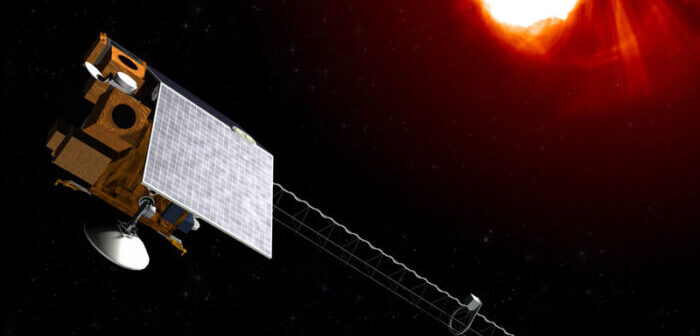
Rendering of Space Weather Follow On-Lagrange 1 (SWFO-L1) spacecraft that will launch in 2025 to collect solar wind data and coronal imagery - credit: Ball/NASA-SOHO
Share
LinkedIn Facebook Twitter Email

US technology developer Ball Aerospace has completed the critical design review (CDR) for the National Oceanic and Atmospheric Administration’s (NOAA’s) Space Weather Follow On-Lagrange 1 (SWFO-L1) spacecraft.

Expected to launch in 2025, SWFO-L1 will collect solar wind data and coronal imagery to meet NOAA’s operational requirements to monitor and forecast impacts of solar storm activity.

Dr Makenzie Lystrup, vice president and general manager of civil space at Ball Aerospace, said, “The impacts of solar events such as coronal mass ejections can be significant, from knocking out communications satellites to disrupting the power grid. SWFO will be an important tool in NOAA’s mission to monitor space weather, provide timely and accurate warnings, and help minimize the impact of these events on our infrastructure and economy.”

Ball Aerospace was selected by NASA to design, build and integrate the small satellite for NOAA’s SWFO-L1 mission in partnership with the NASA Goddard Space Flight Center. Ball will also perform satellite-level testing, help train the flight operations team, check out the satellite in orbit and support mission operations. The SWFO-L1 mission builds on the success of Ball’s spacecraft buses designed for operational weather missions like NOAA-20 and Suomi NPP, as well as high-performing small-satellite missions like STPSats-2 and 3 and the Green Propellant Infusion Mission (GPIM).

Ball Aerospace is also building an operational environmental satellite for the US Space Force Space and Missile Systems Center, called the Weather System Follow-on – Microwave (WSF-M). WSF-M will host its own Energetic Charged Particle space weather sensor in addition to its primary instrument to measure ocean surface vector winds and tropical cyclone intensity.

Previous ArticleSpace agencies celebrate 50 years of collaboration on meteorological satellites
Next Article NERC to invest in sensor network to improve UK flood and drought resilience

Read Similar Stories

Space Weather

Northumbria University secures £4m to study Earth’s radiation belts

April 16, 20262 Mins Read
Extreme Weather

AI model improves real-time prediction of wildfire spread

April 16, 20263 Mins Read
Satellites

AI tool uses weather satellite data to map ocean currents in near real time

April 14, 20263 Mins Read
Latest News

WMO signals increasing likelihood of El Niño developing in 2026

April 24, 2026

Alabama partners with Climavision to expand weather radar coverage statewide

April 24, 2026

Extreme heat posing significant risks to ecosystems and agriculture, FAO-WMO report warns

April 22, 2026

Receive breaking stories and features in your inbox each week, for free


Enter your email address:


Supplier Spotlights
  • ZOGLAB Microsystem Co., Ltd
Getting in Touch
  • Contact Us / Advertise
  • Meet the Editors
  • Media Pack
  • Free Weekly E-Newsletter
Our Social Channels
  • Facebook
  • LinkedIn
© 2026 UKi Media & Events a division of UKIP Media & Events Ltd
  • Cookie Policy
  • Privacy Policy
  • Terms and Conditions
  • Notice and Takedown Policy

Type above and press Enter to search. Press Esc to cancel.