

Close Menu
Meteorological Technology International
  • News
    • A-E
      • Agriculture
      • Automated Weather Stations
      • Aviation
      • Climate Measurement
      • Data
      • Developing Countries
      • Digital Applications
      • Early Warning Systems
      • Extreme Weather
    • G-P
      • Hydrology
      • Lidar
      • Lightning Detection
      • New Appointments
      • Nowcasting
      • Numerical Weather Prediction
      • Polar Weather
    • R-S
      • Radar
      • Rainfall
      • Remote Sensing
      • Renewable Energy
      • Satellites
      • Solar
      • Space Weather
      • Supercomputers
    • T-Z
      • Training
      • Transport
      • Weather Instruments
      • Wind
      • World Meteorological Organization
      • Meteorological Technology World Expo
  • Features
  • Online Magazines
    • January 2026
    • April 2025
    • January 2025
    • September 2024
    • April 2024
    • Archive Issues
    • Subscribe Free!
  • Opinion
  • Videos
  • Supplier Spotlight
  • Expo
LinkedIn X (Twitter) Facebook
  • Sign-up for Free Weekly E-Newsletter
  • Meet the Editors
  • Contact Us
  • Media Pack
LinkedIn Facebook
Subscribe
Meteorological Technology International
  • News
      • Agriculture
      • Automated Weather Stations
      • Aviation
      • Climate Measurement
      • Data
      • Developing Countries
      • Digital Applications
      • Early Warning Systems
      • Extreme Weather
      • Hydrology
      • Lidar
      • Lightning Detection
      • New Appointments
      • Nowcasting
      • Numerical Weather Prediction
      • Polar Weather
      • Radar
      • Rainfall
      • Remote Sensing
      • Renewable Energy
      • Satellites
      • Solar
      • Space Weather
      • Supercomputers
      • Training
      • Transport
      • Weather Instruments
      • Wind
      • World Meteorological Organization
      • Meteorological Technology World Expo
  • Features
  • Online Magazines
    1. January 2026
    2. September 2025
    3. April 2025
    4. January 2025
    5. September 2024
    6. April 2024
    7. January 2024
    8. September 2023
    9. April 2023
    10. Archive Issues
    11. Subscribe Free!
    Featured
    November 27, 2025

    In this Issue – January 2026

    By Hazel KingNovember 27, 2025
    Recent

    In this Issue – January 2026

    November 27, 2025

    In this Issue – September 2025

    August 11, 2025

    In this Issue – April 2025

    April 15, 2025
  • Opinion
  • Videos
  • Supplier Spotlight
  • Expo
Facebook LinkedIn
Subscribe
Meteorological Technology International
Agriculture

Farmers could help sequester carbon dioxide with crushed basalt, finds study

William AtkinsonBy William AtkinsonAugust 16, 20233 Mins Read
Share LinkedIn Facebook Twitter Email
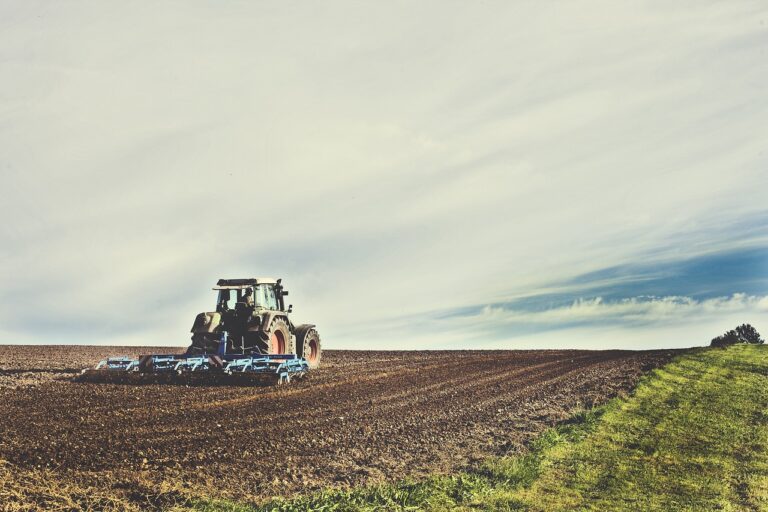
Photo credit: Pixabay
Share
LinkedIn Facebook Twitter Email

Researchers have reported that farmers around the world could help the planet reach a key carbon removal goal set by the Intergovernmental Panel on Climate Change (IPCC) by mixing crushed basalt rock into their fields. The study provides one of the first global estimates of the potential carbon dioxide drawdown from basalt application on agricultural fields worldwide.

This type of climate intervention is called enhanced rock weathering. It takes advantage of the weathering process, which naturally sequesters carbon dioxide in carbonate minerals. When used in parallel with emissions reductions, it can help slow the pace of climate change.

“Enhanced rock weathering poses fewer risks compared with other climate interventions,” said S Hun Baek, a climate scientist at Yale University who led the study. “It also provides some key benefits, like rejuvenating depleted soils and countering ocean acidification, that may make it more socially desirable.”

“There’s tremendous potential here,” said Noah Planavsky, a geochemist at Yale University who co-authored the study. “Although we still have things to learn from a basic science perspective, there is promise, and we need to focus on what we can do from market and finance perspectives.”

The researchers used a new biogeochemical model to simulate how applying crushed basalt to global croplands would draw down carbon dioxide, to test the sensitivity of enhanced rock weathering to climate and to pinpoint the areas where the method could be most effective.

The model simulated enhanced rock weathering on 1,000 agricultural sites around the world under two emissions scenarios from 2006 to 2080. They found that in the 75-year study period, those agricultural sites would draw down 64 gigatons of carbon dioxide. Extrapolating that to all agricultural fields, representing the world’s total potential application of this strategy, up to 217 gigatons of carbon could be sequestered in that period.

“The latest IPCC report said we need to remove 100-1,000 gigatons of carbon by 2100 in addition to steeply reducing emissions to keep global temperature from rising more than 1.5°C,” said Baek. “The estimates of carbon removal we found are roughly comparable to the lower end of that range.”

The study highlights that because weathering progresses more quickly in hot and wet environments, enhanced rock weathering would work more quickly in tropical regions than in higher latitudes. Farmers and companies looking to invest in carbon drawdown solutions make cost- and carbon-efficient choices by targeting basalt application in tropical fields.

The model also revealed that enhanced rock weathering works just as well, if not a little better, in warmer temperatures. “Enhanced rock weathering is surprisingly resilient to climate change,” Baek said. “Our results show that it’s relatively insensitive to climate change and works about the same under moderate and severe global warming scenarios. This gives us confidence in its potential as a long-term strategy.”

Farmers already apply millions of tons of limestone to their fields to deliver nutrients and control soil acidity, so gradually changing the rock type could mean a smooth transition to implementing enhanced rock weathering at scale.

To view the complete study published in the AGU’s journal Earth’s Future, click here.

Previous ArticleChina launches Fengyun-3F meteorological satellite
Next Article NASA records July 2023 as hottest month on record

Read Similar Stories

Agriculture

Kentucky Mesonet opens weather station in Clay County

February 24, 20262 Mins Read
Hydrology

Researchers develop model to track drought effects in real time with satellites

February 27, 20253 Mins Read
Agriculture

Researchers receive US$5m to create digital twin for agricultural decision-making

October 29, 20245 Mins Read
Latest News

Atmospheric G2 secures Japan weather forecasting license

April 21, 2026

China completes Antarctic meteorological research mission with Xuelong icebreaker

April 21, 2026

EWR Radar Systems wins US Air Force contract for portable Doppler radar support

April 20, 2026

Receive breaking stories and features in your inbox each week, for free


Enter your email address:


Supplier Spotlights
  • LCJ Capteurs
Getting in Touch
  • Contact Us / Advertise
  • Meet the Editors
  • Media Pack
  • Free Weekly E-Newsletter
Our Social Channels
  • Facebook
  • LinkedIn
© 2026 UKi Media & Events a division of UKIP Media & Events Ltd
  • Cookie Policy
  • Privacy Policy
  • Terms and Conditions
  • Notice and Takedown Policy

Type above and press Enter to search. Press Esc to cancel.