

Close Menu
Meteorological Technology International
  • News
    • A-E
      • Agriculture
      • Automated Weather Stations
      • Aviation
      • Climate Measurement
      • Data
      • Developing Countries
      • Digital Applications
      • Early Warning Systems
      • Extreme Weather
    • G-P
      • Hydrology
      • Lidar
      • Lightning Detection
      • New Appointments
      • Nowcasting
      • Numerical Weather Prediction
      • Polar Weather
    • R-S
      • Radar
      • Rainfall
      • Remote Sensing
      • Renewable Energy
      • Satellites
      • Solar
      • Space Weather
      • Supercomputers
    • T-Z
      • Training
      • Transport
      • Weather Instruments
      • Wind
      • World Meteorological Organization
      • Meteorological Technology World Expo
  • Features
  • Online Magazines
    • January 2026
    • April 2025
    • January 2025
    • September 2024
    • April 2024
    • Archive Issues
    • Subscribe Free!
  • Opinion
  • Videos
  • Supplier Spotlight
  • Expo
LinkedIn X (Twitter) Facebook
  • Sign-up for Free Weekly E-Newsletter
  • Meet the Editors
  • Contact Us
  • Media Pack
LinkedIn Facebook
Subscribe
Meteorological Technology International
  • News
      • Agriculture
      • Automated Weather Stations
      • Aviation
      • Climate Measurement
      • Data
      • Developing Countries
      • Digital Applications
      • Early Warning Systems
      • Extreme Weather
      • Hydrology
      • Lidar
      • Lightning Detection
      • New Appointments
      • Nowcasting
      • Numerical Weather Prediction
      • Polar Weather
      • Radar
      • Rainfall
      • Remote Sensing
      • Renewable Energy
      • Satellites
      • Solar
      • Space Weather
      • Supercomputers
      • Training
      • Transport
      • Weather Instruments
      • Wind
      • World Meteorological Organization
      • Meteorological Technology World Expo
  • Features
  • Online Magazines
    1. April 2026
    2. January 2026
    3. September 2025
    4. April 2025
    5. January 2025
    6. September 2024
    7. April 2024
    8. January 2024
    9. Archive Issues
    10. Subscribe Free!
    Featured
    May 5, 2026

    In this Issue – April 2026

    By Web TeamMay 5, 2026
    Recent

    In this Issue – April 2026

    May 5, 2026

    In this Issue – January 2026

    November 27, 2025

    In this Issue – September 2025

    August 11, 2025
  • Opinion
  • Videos
  • Supplier Spotlight
  • Expo
Facebook LinkedIn
Subscribe
Meteorological Technology International
Climate Measurement

Caribbean study to shed light on clouds’ role in global warming

Paul WillisBy Paul WillisJanuary 24, 20202 Mins Read
Share LinkedIn Facebook Twitter Email
cloud cover
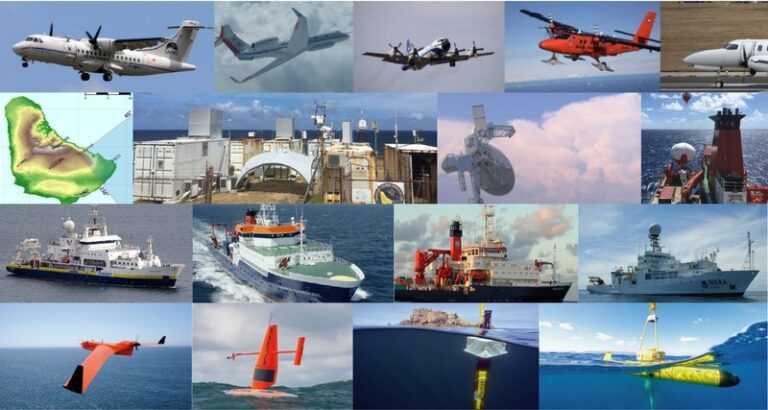
Observing platforms utilized in EUREC4A field campaign (Image: EUREC4A )
Share
LinkedIn Facebook Twitter Email

A major study has just begun in Barbados aimed at understanding the role cloud cover plays in climate change.

The European-led team will spend a month observing cloud circulation with a field operation based out of the Caribbean island.

Known as EUREC4A (Elucidating the role of clouds-circulation coupling in climate) it is the first field study to test whether changes in cloudiness act to amplify global warming. This positive feedback hypothesis, which was reached through several rounds of international climate model intercomparison studies, could have implications for Earth’s climate sensitivity. The field study will also test the validity of models that show a reduction in cloudiness increasing warming from CO2.

The EUREC4A research will help support work already done in this area by NOAA’s Atlantic Tradewind Ocean-Atmosphere Mesoscale Interaction Campaign (ATOMIC).

Both studies are being undertaken under the auspices of the World Climate Research Programme’s Grand Challenge on Clouds, Circulation and Climate Sensitivity.

More than 30 international agencies will contribute to the study, which will involve four research planes, four research ships, ground-based remote sensing technology, a new generation of autonomous measurement systems, satellites and state-of-the-art turbulence-resolving modeling.

The UK portion of the study will look at the aerosol and cloud processes in the lifecycle of shallow trade cumulus clouds and the two-way interactions between the cloud processes and the large-scale dynamics, the UK Met Office said. Led by Professor Alan Blyth of the University of Leeds and the National Centre for Atmospheric Science (NCAS), the cloud measurements will be taken with a Twin Otter aircraft belonging to the British Antarctic Survey, the agency added.

Previous ArticleIrrigation can offset heat extremes caused by climate change, say scientists
Next Article Naval Research Laboratory to study atmospheric rivers

Read Similar Stories

Climate Measurement

Record-level global temperatures expected to persist over next five years

May 28, 20263 Mins Read
Climate Measurement

Cloud measurement campaign targets improved climate model accuracy

May 20, 20263 Mins Read
Videos

VIDEO: Meteosat-12 imagery over Europe and Africa made available via YouTube streams

May 19, 20262 Mins Read
Latest News

Fiji launches $15.4m initiative to expand early warning systems to vulnerable communities

May 28, 2026

Record-level global temperatures expected to persist over next five years

May 28, 2026

FEATURE: Turning contrail science into flight plans

May 27, 2026

Receive breaking stories and features in your inbox each week, for free


Enter your email address:


Supplier Spotlights
  • Meteorage
Getting in Touch
  • Contact Us / Advertise
  • Meet the Editors
  • Media Pack
  • Free Weekly E-Newsletter
Our Social Channels
  • Facebook
  • LinkedIn
© 2026 UKi Media & Events a division of UKIP Media & Events Ltd
  • Cookie Policy
  • Privacy Policy
  • Terms and Conditions
  • Notice and Takedown Policy

Type above and press Enter to search. Press Esc to cancel.