


Close Menu
Meteorological Technology International
  • News
    • A-E
      • Agriculture
      • Automated Weather Stations
      • Aviation
      • Climate Measurement
      • Data
      • Developing Countries
      • Digital Applications
      • Early Warning Systems
      • Extreme Weather
    • G-P
      • Hydrology
      • Lidar
      • Lightning Detection
      • New Appointments
      • Nowcasting
      • Numerical Weather Prediction
      • Polar Weather
    • R-S
      • Radar
      • Rainfall
      • Remote Sensing
      • Renewable Energy
      • Satellites
      • Solar
      • Space Weather
      • Supercomputers
    • T-Z
      • Training
      • Transport
      • Weather Instruments
      • Wind
      • World Meteorological Organization
      • Meteorological Technology World Expo
  • Features
  • Online Magazines
    • January 2026
    • April 2025
    • January 2025
    • September 2024
    • April 2024
    • Archive Issues
    • Subscribe Free!
  • Opinion
  • Videos
  • Supplier Spotlight
  • Expo
LinkedIn X (Twitter) Facebook
  • Sign-up for Free Weekly E-Newsletter
  • Meet the Editors
  • Contact Us
  • Media Pack
LinkedIn Facebook
Subscribe
Meteorological Technology International
  • News
      • Agriculture
      • Automated Weather Stations
      • Aviation
      • Climate Measurement
      • Data
      • Developing Countries
      • Digital Applications
      • Early Warning Systems
      • Extreme Weather
      • Hydrology
      • Lidar
      • Lightning Detection
      • New Appointments
      • Nowcasting
      • Numerical Weather Prediction
      • Polar Weather
      • Radar
      • Rainfall
      • Remote Sensing
      • Renewable Energy
      • Satellites
      • Solar
      • Space Weather
      • Supercomputers
      • Training
      • Transport
      • Weather Instruments
      • Wind
      • World Meteorological Organization
      • Meteorological Technology World Expo
  • Features
  • Online Magazines
    1. January 2026
    2. September 2025
    3. April 2025
    4. January 2025
    5. September 2024
    6. April 2024
    7. January 2024
    8. September 2023
    9. April 2023
    10. Archive Issues
    11. Subscribe Free!
    Featured
    November 27, 2025

    In this Issue – January 2026

    By Hazel KingNovember 27, 2025
    Recent

    In this Issue – January 2026

    November 27, 2025

    In this Issue – September 2025

    August 11, 2025

    In this Issue – April 2025

    April 15, 2025
  • Opinion
  • Videos
  • Supplier Spotlight
  • Expo
Facebook LinkedIn
Subscribe
Meteorological Technology International
Extreme Weather

Disaster risk reduction efforts have “stalled and, in some cases, reversed”, finds UN report

Dan SymondsBy Dan SymondsApril 6, 20233 Mins Read
Share LinkedIn Facebook Twitter Email
Credit - Pixabay
Share
LinkedIn Facebook Twitter Email

A report initiated by the United Nations Office for Disaster Risk Reduction (UNDRR) has found that more people are being affected by larger, ever more complex and more expensive disasters because decision makers are failing to put people first and prevent risks from becoming disasters.

Mandated by the UN General Assembly, the report looks at how countries are implementing the Sendai Framework for Disaster Risk Reduction, which is an international agreement with seven targets that was adopted in 2015 by 187 countries to reduce disaster losses by the year 2030.

Eight years into its implementation, many of the past disaster lessons seem to have been ignored as the report found that “progress has stalled and, in some cases, reversed”.

Among the troubling reversals is that there has been an 80% increase in the number of people affected by disasters since 2015. Moreover, the costs of disasters remain high, with an average above US$330bn per year between 2015 and 2021, which is estimated to be significantly undervalued. At the same time, there has been no commensurate increase in funding for disaster risk reduction.

Mami Mizutori, special representative of the UN Secretary-General for Disaster Risk Reduction and head of UNDRR, said, “One doesn’t have to look hard to find examples of how disasters are becoming worse. The sad fact is that many of these disasters are preventable because they are caused by human decisions. The call to action of the Midterm Review is that countries need to reduce risk in every decision, action and investment they make.”

Many of these disasters are climate-related, and in light of the latest warnings from the Intergovernmental Panel on Climate Change, countries are likely to face even worse disasters if global temperatures continue to rise. The impacts of which are brutally unequal, with developing countries hit the hardest.

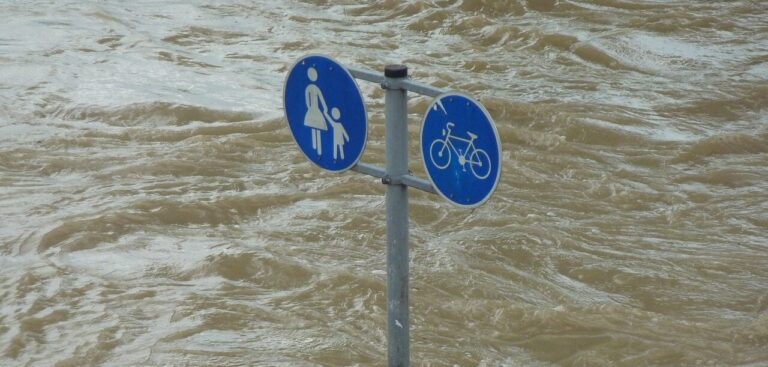
Flooding in Pakistan last year affected more than 33 million people and damaged 4.4 million acres of agricultural land, severely affecting food security and increasing pressure on global agricultural markets.

But the report does point to areas of progress, including on data quality and analysis, and how countries are organizing themselves to adopt a prevention-oriented approach through national disaster risk reduction strategies. These have a key objective of ensuring strong and inclusive governance systems to manage disaster risk and their potential to cause a cascade of dangerous effects. To date, 125 countries have reported developing such strategies.

Disaster preparedness has also advanced and is now more effective in saving lives. This is reflected through a decline in disaster-related mortality (barring Covid-19 impact) from 1.77 per 100,000 global population in the decade 2005-2014 to 0.84 in the decade 2012-2021.

The report’s recommendations will now be discussed on May 18-19, 2023, at a meeting of the UN General Assembly in New York.

To read the Report on the Findings and Recommendations of the Midterm Review of the Sendai Framework, click here.

Previous ArticleNASA awards US$68m Snow and Ice Distributed Active Archive Center contract
Next Article Research consortium to develop GHG dashboard for UK emissions

Read Similar Stories

Data

Atmospheric G2 secures Japan weather forecasting license

April 21, 20262 Mins Read
Climate Measurement

China completes Antarctic meteorological research mission with Xuelong icebreaker

April 21, 20262 Mins Read
Extreme Weather

AI model improves real-time prediction of wildfire spread

April 16, 20263 Mins Read
Latest News

Atmospheric G2 secures Japan weather forecasting license

April 21, 2026

China completes Antarctic meteorological research mission with Xuelong icebreaker

April 21, 2026

EWR Radar Systems wins US Air Force contract for portable Doppler radar support

April 20, 2026

Receive breaking stories and features in your inbox each week, for free


Enter your email address:


Supplier Spotlights
  • EUMETSAT
Getting in Touch
  • Contact Us / Advertise
  • Meet the Editors
  • Media Pack
  • Free Weekly E-Newsletter
Our Social Channels
  • Facebook
  • LinkedIn
© 2026 UKi Media & Events a division of UKIP Media & Events Ltd
  • Cookie Policy
  • Privacy Policy
  • Terms and Conditions
  • Notice and Takedown Policy

Type above and press Enter to search. Press Esc to cancel.