


Close Menu
Meteorological Technology International
  • News
    • A-E
      • Agriculture
      • Automated Weather Stations
      • Aviation
      • Climate Measurement
      • Data
      • Developing Countries
      • Digital Applications
      • Early Warning Systems
      • Extreme Weather
    • G-P
      • Hydrology
      • Lidar
      • Lightning Detection
      • New Appointments
      • Nowcasting
      • Numerical Weather Prediction
      • Polar Weather
    • R-S
      • Radar
      • Rainfall
      • Remote Sensing
      • Renewable Energy
      • Satellites
      • Solar
      • Space Weather
      • Supercomputers
    • T-Z
      • Training
      • Transport
      • Weather Instruments
      • Wind
      • World Meteorological Organization
      • Meteorological Technology World Expo
  • Features
  • Online Magazines
    • January 2026
    • April 2025
    • January 2025
    • September 2024
    • April 2024
    • Archive Issues
    • Subscribe Free!
  • Opinion
  • Videos
  • Supplier Spotlight
  • Expo
LinkedIn X (Twitter) Facebook
  • Sign-up for Free Weekly E-Newsletter
  • Meet the Editors
  • Contact Us
  • Media Pack
LinkedIn Facebook
Subscribe
Meteorological Technology International
  • News
      • Agriculture
      • Automated Weather Stations
      • Aviation
      • Climate Measurement
      • Data
      • Developing Countries
      • Digital Applications
      • Early Warning Systems
      • Extreme Weather
      • Hydrology
      • Lidar
      • Lightning Detection
      • New Appointments
      • Nowcasting
      • Numerical Weather Prediction
      • Polar Weather
      • Radar
      • Rainfall
      • Remote Sensing
      • Renewable Energy
      • Satellites
      • Solar
      • Space Weather
      • Supercomputers
      • Training
      • Transport
      • Weather Instruments
      • Wind
      • World Meteorological Organization
      • Meteorological Technology World Expo
  • Features
  • Online Magazines
    1. January 2026
    2. September 2025
    3. April 2025
    4. January 2025
    5. September 2024
    6. April 2024
    7. January 2024
    8. September 2023
    9. April 2023
    10. Archive Issues
    11. Subscribe Free!
    Featured
    November 27, 2025

    In this Issue – January 2026

    By Hazel KingNovember 27, 2025
    Recent

    In this Issue – January 2026

    November 27, 2025

    In this Issue – September 2025

    August 11, 2025

    In this Issue – April 2025

    April 15, 2025
  • Opinion
  • Videos
  • Supplier Spotlight
  • Expo
Facebook LinkedIn
Subscribe
Meteorological Technology International
Climate Measurement

IPCC publishes comprehensive report ​on the links between climate change and land degradation

Helen NormanBy Helen NormanSeptember 5, 20193 Mins Read
Share LinkedIn Facebook Twitter Email
Share
LinkedIn Facebook Twitter Email

A new comprehensive scientific assessment of the links between climate change and land degradation has been released as part of an international effort to curb greenhouse gas emissions, tackle the impacts of global warming, and protect food security.

Climate Change and Land is the latest special report by the Intergovernmental Panel on Climate Change (IPCC) and is the culmination of a two-year analysis by more than 100 scientists who provided their expertise as authors and reviewers.

“The special report on climate change and land is a highly important contribution to addressing the interplay between climate change, desertification, land degradation, sustainable land management, food security and greenhouse gas fluxes in terrestrial ecosystems,” said WMO secretary-general Petteri Taalas.

The IPCC, whose parent organizations include the WMO and UN Environment, assess a wide range of published scientific literature on climate systems, climate risks, the costs of inaction, and potential solutions.

The report underlines that agriculture, forestry and other types of land use account for 23% of greenhouse gas emissions caused directly or indirectly by human activities. It also notes that natural and managed land systems absorb carbon dioxide equivalent to almost one-third of carbon dioxide emissions from fossil fuels and industry.

Monitoring concentrations of the main greenhouse gases in the atmosphere is a core element of WMO’s work. Its Global Atmosphere Watch program provides data that helps to protect human health, agricultural productivity and food security.

WMO is now pioneering an Integrated Global Greenhouse Gas Information System, referred to as IG3IS, to provide a bridge between science and policy on greenhouse gas emissions, and the identification and quantification of ‘sinks’ that absorb such gases.

“Combined atmosphere, ocean, land and cryosphere predictive models are critical to the improved accuracy of forecasts and to enhance the full spectrum of services to support the protection of life, health, security of food production and water resources,” said Taalas.

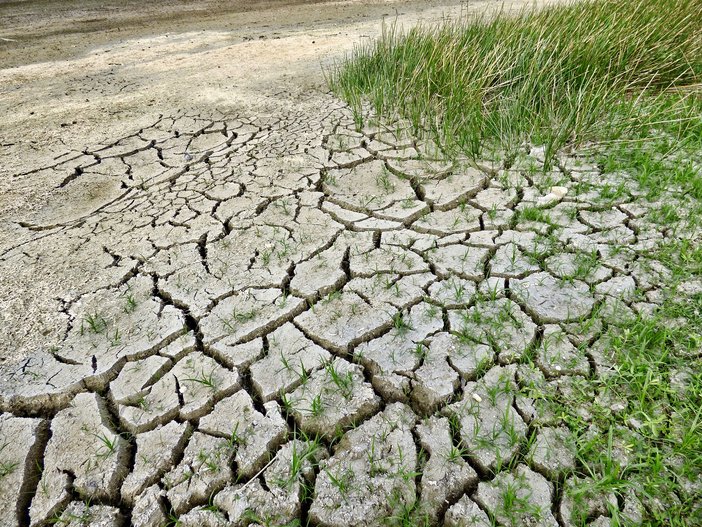
The new report highlights the fact that land is already undergoing human pressure and that climate change is adding to these pressures, meaning that better land management is essential. It says that keeping global warming under 2ºC – if not 1.5ºC, as set out in its special report issued last October – can only be achieved by reducing greenhouse gas emissions from all sectors, including land and food.

Land must remain productive to maintain food security as the population increases and the negative impacts of climate change on vegetation increase. This means there are limits to the contribution of land to addressing climate change, for instance through the cultivation of energy crops and afforestation. It also takes time for trees and soils to store carbon effectively. Bioenergy needs to be carefully managed to avoid risks to food security, biodiversity and land degradation.

Helping countries prepare for the growing risk of such natural hazards and cope with their impacts is a critical part of WMO’s work, through programs including the Sand and Dust Storm Warning Advisory and Assessment System, the Integrated Drought Management Program, and a range of other climate services tackling challenges for agriculture, water and health.

“In the wake of the IPCC’s special report on global warming of 1.5°C, at WMO we have been stepping up our work to help to fill knowledge gaps, to build the continuum of science that is needed, and to provide the advice required,” said Taalas.

Previous ArticleUS forecasters predict above-normal hurricane activity
Next Article FMI collaboration uses machine learning to predict storm damage

Read Similar Stories

Climate Measurement

WMO signals increasing likelihood of El Niño developing in 2026

April 24, 20263 Mins Read
Radar

Alabama partners with Climavision to expand weather radar coverage statewide

April 24, 20262 Mins Read
Climate Measurement

China completes Antarctic meteorological research mission with Xuelong icebreaker

April 21, 20262 Mins Read
Latest News

WMO signals increasing likelihood of El Niño developing in 2026

April 24, 2026

Alabama partners with Climavision to expand weather radar coverage statewide

April 24, 2026

Extreme heat posing significant risks to ecosystems and agriculture, FAO-WMO report warns

April 22, 2026

Receive breaking stories and features in your inbox each week, for free


Enter your email address:


Supplier Spotlights
  • LCJ Capteurs
Getting in Touch
  • Contact Us / Advertise
  • Meet the Editors
  • Media Pack
  • Free Weekly E-Newsletter
Our Social Channels
  • Facebook
  • LinkedIn
© 2026 UKi Media & Events a division of UKIP Media & Events Ltd
  • Cookie Policy
  • Privacy Policy
  • Terms and Conditions
  • Notice and Takedown Policy

Type above and press Enter to search. Press Esc to cancel.