


Weather intelligence company Climavision is opening its private radar network and forecasting platform to AI data centers and the utilities and grid operators that serve them, as rising AI power demand and extreme weather put growing strain on the US grid.
The move follows a proposal from PJM, the largest US grid operator, that would require data centers and other large electricity users to secure their own power by June 2027. PJM has twice this year asked the US Department of Energy for emergency authority to curtail data centers rather than cut power to homes and businesses, and the Federal Energy Regulatory Commission has directed all six US grid operators to address how they connect large loads.
Under PJM’s proposal, data centers could avoid curtailment by securing their own qualifying capacity, including new generation, storage, demand response, capacity uprates or fuel-switching – options the company says are all weather-dependent, since renewable output depends on local conditions and gas turbine output is affected by temperature.
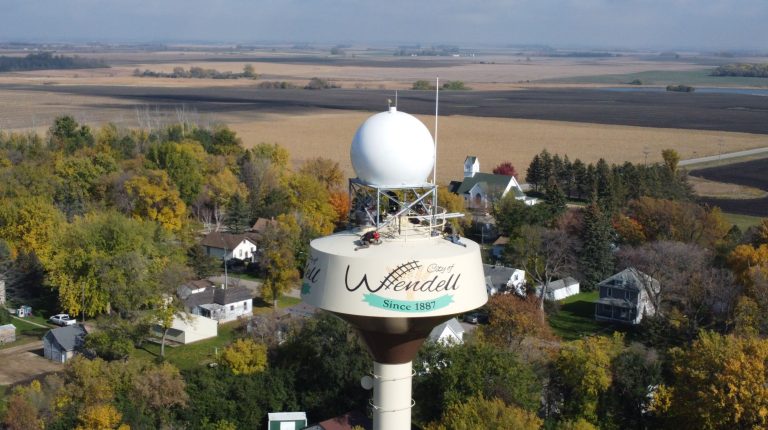
Climavision operates more than 30 radars across a 15-state footprint, focused on the lowest few thousand feet of the atmosphere, an area the company says the federal radar network covers less thoroughly. Its forecasting platform combines these radar observations with public datasets, commercial sources and customers’ own sensors to produce localized forecasts for specific wind farms, substations or data center campuses.
The company said its coverage includes Louisiana, Georgia and Mississippi – states seeing large data center investment from Meta, OpenAI and Amazon, respectively – as well as the PJM states of Kentucky, North Carolina, Pennsylvania and Tennessee. Its HailCast, TornadoCast and LightningCast products provide severe weather warnings up to 30 minutes ahead, intended to help protect grid infrastructure and data center facilities.
Existing customers include CenterPoint Energy, which selected Climavision in 2025 to integrate weather intelligence into its grid operations following damage from Hurricane Beryl in 2024, and Enverus, which uses Climavision forecasts for energy traders.
“AI has not just increased how much power the grid needs. It has made the grid far more sensitive to weather, because the supply being built to meet that demand is weather-driven and the demand itself never pauses,” said Chris Goode, co-founder and CEO of Climavision. “You cannot manage 21st century compute loads with 20th century weather infrastructure. In a renewable-heavy grid, forecast precision matters as much as generation capacity.”
Grid operators and data center operators can request coverage details for their service territories through Climavision’s website.
Related news, NOAA expands Mesonet contract to improve forecasting capabilities