


Close Menu
Meteorological Technology International
  • News
    • A-E
      • Agriculture
      • Artificial Intelligence
      • Automated Weather Stations
      • Aviation
      • Climate Measurement
      • Data
      • Developing Countries
      • Digital Applications
      • Early Warning Systems
      • Extreme Weather
    • G-P
      • Hydrology
      • Lidar
      • Lightning Detection
      • New Appointments
      • Nowcasting
      • Numerical Weather Prediction
      • Polar Weather
    • R-S
      • Radar
      • Rainfall
      • Remote Sensing
      • Renewable Energy
      • Satellites
      • Solar
      • Space Weather
      • Supercomputers
    • T-Z
      • Training
      • Transport
      • Weather Instruments
      • Wind
      • World Meteorological Organization
      • Meteorological Technology World Expo
  • Features
  • Online Magazines
    • September 2026
    • January 2026
    • April 2025
    • January 2025
    • September 2024
    • April 2024
    • Archive Issues
    • Subscribe Free!
  • Opinion
  • Videos
  • Supplier Spotlight
  • Expo
LinkedIn X (Twitter) Facebook
  • Sign-up for Free Weekly E-Newsletter
  • Meet the Editors
  • Contact Us
  • Media Pack
LinkedIn Facebook
Subscribe
Meteorological Technology International
  • News
      • Agriculture
      • Artificial Intelligence
      • Automated Weather Stations
      • Aviation
      • Climate Measurement
      • Data
      • Developing Countries
      • Digital Applications
      • Early Warning Systems
      • Extreme Weather
      • Hydrology
      • Lidar
      • Lightning Detection
      • New Appointments
      • Nowcasting
      • Numerical Weather Prediction
      • Polar Weather
      • Radar
      • Rainfall
      • Remote Sensing
      • Renewable Energy
      • Satellites
      • Solar
      • Space Weather
      • Supercomputers
      • Training
      • Transport
      • Weather Instruments
      • Wind
      • World Meteorological Organization
      • Meteorological Technology World Expo
  • Features
  • Online Magazines
    1. September 2026
    2. April 2026
    3. January 2026
    4. September 2025
    5. April 2025
    6. January 2025
    7. September 2024
    8. April 2024
    9. January 2024
    10. Archive Issues
    11. Subscribe Free!
    Featured
    August 4, 2026

    In this Issue – September 2026

    By Web TeamAugust 4, 2026
    Recent

    In this Issue – September 2026

    August 4, 2026

    In this Issue – April 2026

    May 5, 2026

    In this Issue – January 2026

    November 27, 2025
  • Opinion
  • Videos
  • Supplier Spotlight
  • Expo
Facebook LinkedIn
Subscribe
Meteorological Technology International
Climate Measurement

WMO bulletin warns rising wildfire and heatwave pollution threatens air quality gains

Alex PackBy Alex PackSeptember 9, 20263 Mins Read
Share LinkedIn Facebook Twitter Email
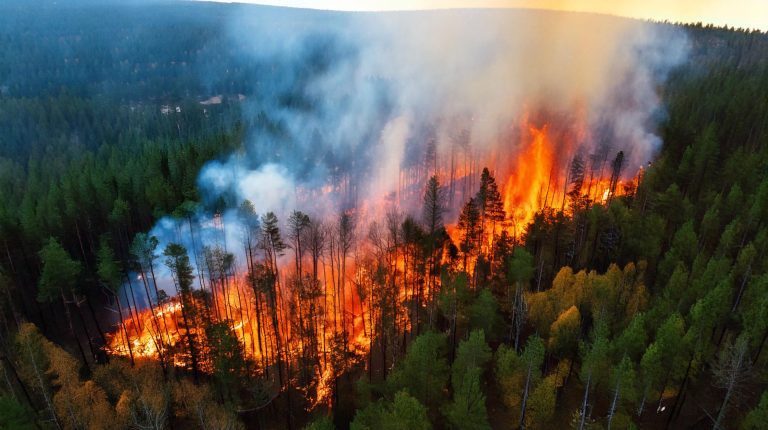
Aerial view of wildfire with a piece of forest land burning.
Share
LinkedIn Facebook Twitter Email

Increasing pollution from wildfires and heatwaves risks undermining international efforts to improve air quality and protect human and ecosystem health, according to a new report from the World Meteorological Organization (WMO).

The Air Quality and Climate Bulletin, released for International Day of Clean Air for Blue Skies on September 7, highlights the need for improved atmospheric observations of pollutants including fine particulate matter, ground-level ozone, black carbon and microplastics, which the WMO says remain insufficiently monitored despite being widespread and potentially harmful. The report is based on data from WMO’s Global Atmosphere Watch network and draws on articles from the scientific community that advises WMO on air quality.

In 2025, concentrations of PM2.5 – fine particulate matter that can penetrate deep into the lungs and bloodstream – remained above the long-term average in northern Canada, part of the Russian Federation, western-central Africa and northwestern Spain, driven by increased fire activity. Burning in South America’s Amazonia was relatively lower than in previous years. PM2.5 levels stayed below the long-term average in China, reflecting reduced emissions from human activity, while India continued to see above-average levels due to biomass burning and other pollution sources.

The bulletin cites a study indicating that extreme fire-smoke events have tripled globally since the 1990s, contributing to an estimated nearly 100,000 additional deaths per year between 2010 and 2018, a figure the report says may be an underestimate. It also notes that conventional risk models based on total PM2.5 concentrations may underestimate wildfire-attributable mortality by up to 93%, since they don’t account for the higher toxicity of fire-derived particles.

“Meeting the World Health Organization air quality guidelines will become progressively more difficult, since extreme fire weather is expected to increase in the future,” the bulletin says.

On ozone, the report links rising temperatures, stagnant atmospheric conditions, and intense solar radiation during heatwaves in the southeastern USA, Europe and China to increased ground-level ozone formation, which it says could lead to tens of thousands of additional premature deaths.

“Looking forward, ozone-related health risks are expected to intensify,” the bulletin warns.

The report also addresses aerosols including black carbon, which can accelerate snow and ice melt when deposited on those surfaces, and atmospheric microplastics, for which estimates vary widely due to insufficient monitoring.

“As plastic production and, critically, mismanaged plastic waste continues to increase, monitoring atmospheric pathways of deposition of microplastics to remote environments will be crucial toward understanding their overall impacts on the Earth system,” the bulletin says.

Related news, WMO forecasts very strong El Niño, with severe weather risks increasing into 2027

Previous ArticleBureau of Meteorology marine heatwave forecasts study wins Eureka Prize

Read Similar Stories

Climate Measurement

Bureau of Meteorology marine heatwave forecasts study wins Eureka Prize

September 7, 20262 Mins Read
Climate Measurement

WMO forecasts very strong El Niño, with severe weather risks increasing into 2027

September 3, 20262 Mins Read
Climate Measurement

Copernicus: daily global sea-surface temperature reaches highest level on record

August 27, 20262 Mins Read
Latest News

WMO bulletin warns rising wildfire and heatwave pollution threatens air quality gains

September 9, 2026

Bureau of Meteorology marine heatwave forecasts study wins Eureka Prize

September 7, 2026

NOAA expands Mesonet contract to improve forecasting capabilities

September 7, 2026

Receive breaking stories and features in your inbox each week, for free


Enter your email address:


Supplier Spotlights
  • MicroStep-MIS
Getting in Touch
  • Contact Us / Advertise
  • Meet the Editors
  • Media Pack
  • Free Weekly E-Newsletter
Our Social Channels
  • Facebook
  • LinkedIn
© 2026 UKi Media & Events a division of UKIP Media & Events Ltd
  • Cookie Policy
  • Privacy Policy
  • Terms and Conditions
  • Notice and Takedown Policy

Type above and press Enter to search. Press Esc to cancel.