


Close Menu
Meteorological Technology International
  • News
    • A-E
      • Agriculture
      • Automated Weather Stations
      • Aviation
      • Climate Measurement
      • Data
      • Developing Countries
      • Digital Applications
      • Early Warning Systems
      • Extreme Weather
    • G-P
      • Hydrology
      • Lidar
      • Lightning Detection
      • New Appointments
      • Nowcasting
      • Numerical Weather Prediction
      • Polar Weather
    • R-S
      • Radar
      • Rainfall
      • Remote Sensing
      • Renewable Energy
      • Satellites
      • Solar
      • Space Weather
      • Supercomputers
    • T-Z
      • Training
      • Transport
      • Weather Instruments
      • Wind
      • World Meteorological Organization
      • Meteorological Technology World Expo
  • Features
  • Online Magazines
    • January 2026
    • April 2025
    • January 2025
    • September 2024
    • April 2024
    • Archive Issues
    • Subscribe Free!
  • Opinion
  • Videos
  • Supplier Spotlight
  • Expo
LinkedIn X (Twitter) Facebook
  • Sign-up for Free Weekly E-Newsletter
  • Meet the Editors
  • Contact Us
  • Media Pack
LinkedIn Facebook
Subscribe
Meteorological Technology International
  • News
      • Agriculture
      • Automated Weather Stations
      • Aviation
      • Climate Measurement
      • Data
      • Developing Countries
      • Digital Applications
      • Early Warning Systems
      • Extreme Weather
      • Hydrology
      • Lidar
      • Lightning Detection
      • New Appointments
      • Nowcasting
      • Numerical Weather Prediction
      • Polar Weather
      • Radar
      • Rainfall
      • Remote Sensing
      • Renewable Energy
      • Satellites
      • Solar
      • Space Weather
      • Supercomputers
      • Training
      • Transport
      • Weather Instruments
      • Wind
      • World Meteorological Organization
      • Meteorological Technology World Expo
  • Features
  • Online Magazines
    1. April 2026
    2. January 2026
    3. September 2025
    4. April 2025
    5. January 2025
    6. September 2024
    7. April 2024
    8. January 2024
    9. Archive Issues
    10. Subscribe Free!
    Featured
    May 5, 2026

    In this Issue – April 2026

    By Web TeamMay 5, 2026
    Recent

    In this Issue – April 2026

    May 5, 2026

    In this Issue – January 2026

    November 27, 2025

    In this Issue – September 2025

    August 11, 2025
  • Opinion
  • Videos
  • Supplier Spotlight
  • Expo
Facebook LinkedIn
Subscribe
Meteorological Technology International
Climate Measurement

NCAS Airborne Laboratory to investigate impact of climate change on mixed-phase clouds

Dan SymondsBy Dan SymondsOctober 21, 20223 Mins Read
Share LinkedIn Facebook Twitter Email
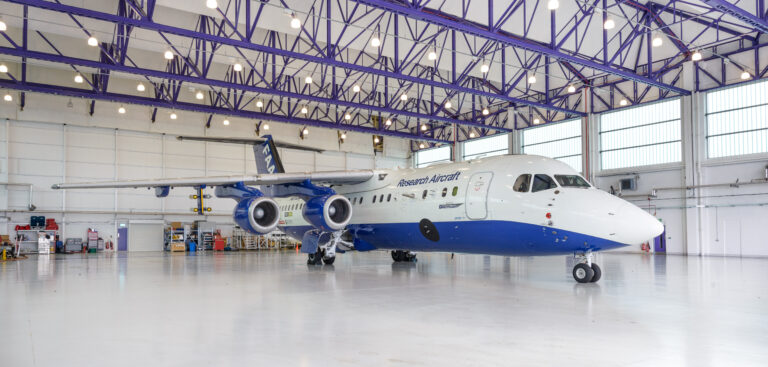
FAAM Airborne Laboratory aircraft
Share
LinkedIn Facebook Twitter Email

Researchers have embarked on a flight campaign over the Labrador Sea – an arm of the North Atlantic Ocean between the Labrador Peninsula and Greenland – to study how clouds form and develop in cold air.

The four-week campaign will deploy the Facility for Airborne Atmospheric Measurements (FAAM) Airborne Laboratory’s British Aerospace 146 aircraft (BAE 146) to look specifically at mixed-phase clouds (mixture of ice and water particles). The FAAM Airborne Laboratory is a world-class research facility managed by the UK’s National Centre for Atmospheric Science (NCAS) and funded by the Natural Environment Research Council (NERC).

The team will combine measurements of cloud properties, weather and airborne particles using a unique set of instrumentation fitted to the aircraft, to help unpick the nuances of how mixed-phase clouds will respond to climate change.

It is currently unclear how mixed-phase clouds will respond to climate changes such as rising sea surface temperatures and atmospheric aerosols. If the ratio of water and ice particles in these clouds changes, there could be a knock-on effect on the climate, although it is uncertain whether this would warm or cool the atmosphere.

Warmer temperatures may lead to more water in mixed-phase clouds, meaning they will reflect more solar radiation, causing a cooling effect. However, the picture is complicated by the role of aerosols. Warmer temperatures, hand in hand with deforestation, fossil fuel burning and industrial activity, may cause a rise in a special type of aerosol particles, known as ice nucleating particles. These particles trigger ice formation by providing a platform for ice crystals to grow on – and that may cause Earth to warm faster by reducing the reflectivity of clouds.

The collaborative research effort, known as M-Phase, will bring together scientists at the Universities of Leeds, Manchester and British Columbia, and is part of a larger ambition to reduce uncertainty in climate predictions due to clouds.

Researchers will take flight from Goose Bay on Canada’s east coast, attempting to pinpoint cold air outbreaks over the Labrador Sea, a frequent source of mixed-phase clouds.

Professor Benjamin Murray, lead researcher from the University of Leeds in the UK, said, “The Labrador Sea is a unique place for cloud formation. Clouds over the Labrador Sea form with air that has traveled across the archipelago in northern Canada – a source of dust.

“We think the dust may lead to ice production in these clouds, but there are very few measurements of dust or clouds over the Labrador Sea, so we’re excited to see what is really happening in the atmosphere.”

The research team onboard the FAAM Airborne Laboratory will fly two mission types. The first will involve profiling low-level stratus and small cumulus clouds; the second aims to profile upstream stratus clouds near Baffin Island.

According to Murray, the aircraft is one of the best for looking at interactions between aerosols and clouds anywhere in the world. “The FAAM Airborne Laboratory is wonderful,” he said. “The team are experts in what they do, and come hand in hand with a set of scientific instrumentation that can study both aerosols and clouds.”
Previous ArticleStormGeo to provide severe weather warnings for more than 60 onshore US wind farms
Next Article EUMETSAT sets out climate action plan and leads call for improved global climate observations

Read Similar Stories

Automated Weather Stations

University of Vermont launches first station in statewide weather monitoring network

May 8, 20262 Mins Read
Extreme Weather

Wildfires can create ‘burn scar heat islands’ that alter weather patterns, study finds

May 6, 20263 Mins Read
Extreme Weather

Researchers investigate links between air pollution, extreme weather and climate

May 1, 20262 Mins Read
Latest News

Ventusky adds fire monitoring to its weather maps

May 14, 2026

“For over a century, precipitation gauges have measured too low” – Vaisala addresses the measurement gap

May 13, 2026

UNESCO hands over nine automated weather stations to the Ghana Meteorological Agency

May 12, 2026

Receive breaking stories and features in your inbox each week, for free


Enter your email address:


Supplier Spotlights
  • ELDES S.r.l.
Getting in Touch
  • Contact Us / Advertise
  • Meet the Editors
  • Media Pack
  • Free Weekly E-Newsletter
Our Social Channels
  • Facebook
  • LinkedIn
© 2026 UKi Media & Events a division of UKIP Media & Events Ltd
  • Cookie Policy
  • Privacy Policy
  • Terms and Conditions
  • Notice and Takedown Policy

Type above and press Enter to search. Press Esc to cancel.