


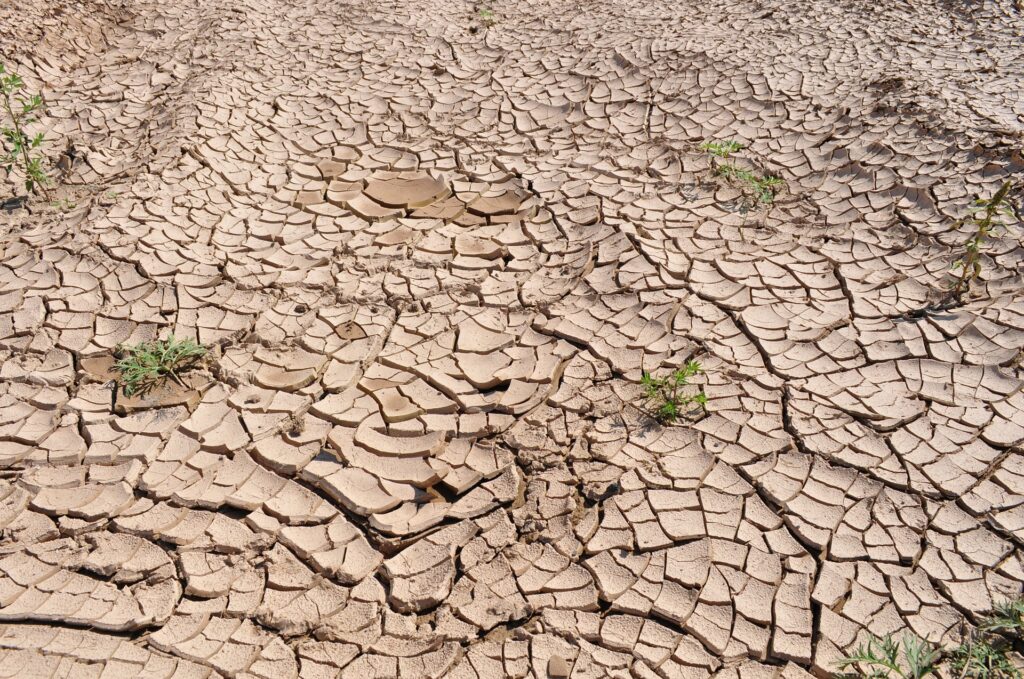
The World Meteorological Organization (WMO) has released its latest State of the Climate report for Latin America and the Caribbean, highlighting how mega-drought, extreme rainfall, glacier melt, and land and marine heatwaves have impacted the region.
Released during a WMO Regional Technical Conference for South American countries in Cartagena, Colombia, State of the Climate in Latin America and the Caribbean 2021 highlighted how extreme weather and climate change was felt in all regions, from the Amazon to the Andes, and from Pacific and Atlantic Ocean to Patagonia.
Some key analysis from the region found deforestation rates to be the highest since 2009, and that the Andean glaciers had lost more than 30% of their area in less than 50 years. It also stated that the “Central Chile Mega drought” is the longest in at least 1,000 years.
Prof. Petteri Taalas, WMO secretary-general, said, “The report shows that hydrometeorological hazards, including droughts, heatwaves, cold waves, tropical cyclones and floods, have unfortunately led to the loss of hundreds of lives, severe damages to crop production and infrastructure and human displacement.
“Increasing sea-level rise and ocean warming are expected to continue to affect coastal livelihoods, tourism, health, food, energy and water security, particularly in small islands and Central American countries. For many Andean cities, melting glaciers represent the loss of a significant source of freshwater currently used for domestic use, irrigation and hydroelectric power. In South America, the continued degradation of the Amazon rainforest is still being highlighted as a major concern for the region but also for global climate, considering the role of the forest in the carbon cycle,” he said.
This is the second year that WMO has produced the regional report, which provides decision-makers with more localized information to inform action. It is accompanied by an interactive story map.
Dr Mario Cimoli, acting executive secretary for the Economic Commission for Latin America and the Caribbean (ECLAC), said, “Worsening climate change and the compounding effects of the Covid-19 pandemic have not only impacted the biodiversity of the region, but have also stalled decades of progress against poverty, food insecurity and the reduction of inequality in the region.
“Addressing such interconnected challenges and their associated impacts will require an interconnected effort. No matter how it is taken, action must be informed by science. The State of the Climate in Latin America and the Caribbean report, the second of its kind, is a critical source of science-based information for climate policy and decision-making. ECLAC will continue to play an active role in this dissemination of weather and climate information to foster more partnerships, improved climate services and stronger climate policy across Latin America and the Caribbean,” he said.
Key findings from the report include:
Temperature: The warming trend continued in 2021 in Latin America and the Caribbean. The average rate temperature increase was around 0.2°C/decade between 1991 and 2021, compared to 0.1°C/decade between 1961 and 1990.
Glaciers in the tropical Andes have lost 30% and more of their area since the 1980s, with a negative mass balance trend of -0.97m water equivalent per year during the 1990-2020 monitoring period. Some glaciers in Peru have lost more than 50% of their area. Glacier retreat and the corresponding ice-mass loss has increased the risk of water scarcity for the Andean population and ecosystems.
Sea levels in the region continued to rise at a faster rate than globally, notably along the Atlantic coast of South America south of the equator (3.52 ± 0.0mm per year, from 1993 to 2021), and the subtropical North Atlantic and the Gulf of Mexico (3.48 ± 0.1mm per year, from 1993 to 1991). Sea level rise threatens a large proportion of the population, which is concentrated in coastal areas — by contaminating freshwater aquifers, eroding shorelines, inundating low-lying areas, and increasing the risks of storm surges.
The ‘Central Chile Mega Drought’ continued in 2021. At 13 years to date, this constitutes the longest drought in this region in at least 1,000 years, exacerbating a drying trend and putting Chile at the forefront of the region’s water crisis. Additionally, a multi-year drought in the Parana-La Plata Basin, the worst since 1944, affected central-southern Brazil and parts of Paraguay and Bolivia.
The Parana-La Plata basin drought-induced damages to agriculture reduced crop production, including soybean and corn, affecting global crop markets. In South America overall, drought conditions led to a decline of -2.6% in the 2020-2021 cereal harvest compared to the previous season.
The 2021 Atlantic Hurricane season had the third highest number of named storms on record, 21, including seven hurricanes, and was the sixth consecutive above-normal Atlantic hurricane season. Some of these storms directly impacted the region.
Extreme rainfall in 2021, with record values in many places, led to floods and landslides. There were substantial losses, including hundreds of fatalities, tens of thousands of homes destroyed or damaged, and hundreds of thousands of people displaced. Floods and landslides in the Brazilian states of Bahia and Minas Gerais led to an estimated loss of US$3.1bn.
Deforestation in the Brazilian Amazon rainforest doubled compared to the 2009‑2018 average, reaching its highest level since 2009; 22% more forest area was lost in 2021 compared to 2020.
A total of 7.7 million people, in Guatemala, El Salvador and Nicaragua, experienced high levels of food insecurity in 2021, with contributing factors including continuing impacts from hurricanes Eta and Iota in late 2020 and Covid-19 pandemic economic impacts.
The Andes, northeast Brazil and the northern countries in Central America are among the most sensitive regions to climatic-related migrations and displacements, a phenomenon that has increased in the last eight years. Migration and population displacement have multiple causes. Climate change and associated extreme events are amplifying factors, which exacerbate social, economic and environmental drivers.
South America is among the regions with the greatest documented need for strengthening of early warning systems. Multi-hazard early warning systems (MHEWS) are essential tools for effective adaptation in areas at risk from weather, water and climate extremes.
To view the full WMO report, click here.