


Close Menu
Meteorological Technology International
  • News
    • A-E
      • Agriculture
      • Artificial Intelligence
      • Automated Weather Stations
      • Aviation
      • Climate Measurement
      • Data
      • Developing Countries
      • Digital Applications
      • Early Warning Systems
      • Extreme Weather
    • G-P
      • Hydrology
      • Lidar
      • Lightning Detection
      • New Appointments
      • Nowcasting
      • Numerical Weather Prediction
      • Polar Weather
    • R-S
      • Radar
      • Rainfall
      • Remote Sensing
      • Renewable Energy
      • Satellites
      • Solar
      • Space Weather
      • Supercomputers
    • T-Z
      • Training
      • Transport
      • Weather Instruments
      • Wind
      • World Meteorological Organization
      • Meteorological Technology World Expo
  • Features
  • Online Magazines
    • September 2026
    • January 2026
    • April 2025
    • January 2025
    • September 2024
    • April 2024
    • Archive Issues
    • Subscribe Free!
  • Opinion
  • Videos
  • Supplier Spotlight
  • Expo
LinkedIn X (Twitter) Facebook
  • Sign-up for Free Weekly E-Newsletter
  • Meet the Editors
  • Contact Us
  • Media Pack
LinkedIn Facebook
Subscribe
Meteorological Technology International
  • News
      • Agriculture
      • Artificial Intelligence
      • Automated Weather Stations
      • Aviation
      • Climate Measurement
      • Data
      • Developing Countries
      • Digital Applications
      • Early Warning Systems
      • Extreme Weather
      • Hydrology
      • Lidar
      • Lightning Detection
      • New Appointments
      • Nowcasting
      • Numerical Weather Prediction
      • Polar Weather
      • Radar
      • Rainfall
      • Remote Sensing
      • Renewable Energy
      • Satellites
      • Solar
      • Space Weather
      • Supercomputers
      • Training
      • Transport
      • Weather Instruments
      • Wind
      • World Meteorological Organization
      • Meteorological Technology World Expo
  • Features
  • Online Magazines
    1. September 2026
    2. April 2026
    3. January 2026
    4. September 2025
    5. April 2025
    6. January 2025
    7. September 2024
    8. April 2024
    9. January 2024
    10. Archive Issues
    11. Subscribe Free!
    Featured
    August 4, 2026

    In this Issue – September 2026

    By Web TeamAugust 4, 2026
    Recent

    In this Issue – September 2026

    August 4, 2026

    In this Issue – April 2026

    May 5, 2026

    In this Issue – January 2026

    November 27, 2025
  • Opinion
  • Videos
  • Supplier Spotlight
  • Expo
Facebook LinkedIn
Subscribe
Meteorological Technology International
Data

NOAA expands Mesonet contract to improve forecasting capabilities

Hazel KingBy Hazel KingSeptember 7, 20263 Mins Read
Share LinkedIn Facebook Twitter Email
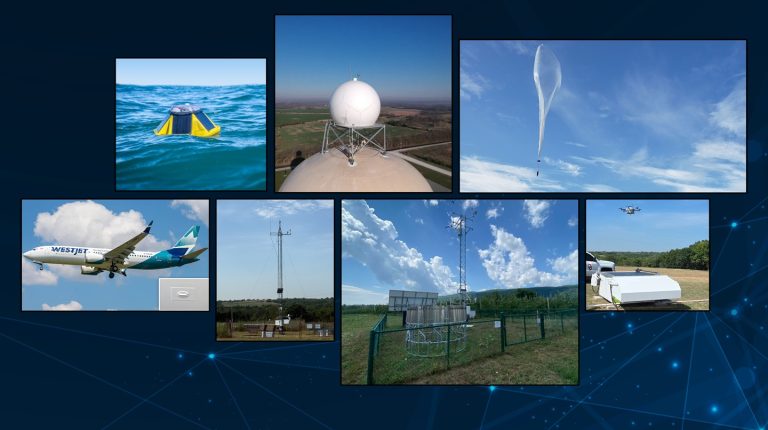
Collage of images of various different types of weather stations and observing systems.
Credit: NOAA
Share
LinkedIn Facebook Twitter Email

NOAA’s National Weather Service (NWS) has expanded the National Mesonet Program through a new contract that began on September 1, improving weather prediction and warnings across the USA.

Under the extended contract, existing primary contractor KBR will work with other private industry partners, about 70 in total, to provide services such as data recording, collection, aggregation, ingesting and processing into a format for use by NWS weather models and forecasters.

“NOAA gathers environmental information from a wide variety of sources, and a growing list of private industry partners have joined our agency to collect this vital data,” said Ken Graham, director, NOAA’s National Weather Service. “This agreement streamlines the process that turns raw data into the gold-standard forecasts that Americans depend on.”

Better forecasts through better observations

According to NOAA, its partnership with KBR is central to modernizing NWS’s weather data systems, largely reducing NOAA’s dependence on equipment owned and operated by the agency. It also enables NOAA to gain access to cutting-edge and emerging technologies as they arrive on the market.

“With this contract, NWS will gain access to a wide variety of cutting-edge commercial observations to greatly expand the reach of our observing systems in support of NWS’s forecast and warning mission,” said Curtis Marshall, PhD, director of National Weather Service’s Commercial Observations Program.

“The new contract will clear a path for future innovations in weather observation and forecasting by gathering weather observation data collected from sources outside of NOAA – on land, in the air and in the water – and placing it all under one roof.”

A dense, reliable network of weather observations is key to improving NOAA’s weather forecast models. Using KBR as a centralized prime contractor streamlines NOAA’s data procurement, removes redundancy, and aggregates data in one place. It’s a more efficient process yielding several benefits:

  • Data sources from new vendors are easier to incorporate as they become available;
  • Modern cloud-based architecture is more easily implemented;
  • A more robust observational network is created capable of capturing changes in weather conditions over geography and as they evolve over time;
  • A strong Mesonet supports NOAA’s goal to be the world leader in numerical weather prediction; and
  • Modernizing and reimagining NWS observational systems.

Expanded datasets

Beginning as a program to provide surface observations from networks operated by states, the NMP now includes a wide array of weather and other environmental data such as upper atmospheric conditions, soil moisture and temperature, wave heights, and ocean currents.

As the Mesonet program grew, NWS sought streamlined, efficient access to data sources from dozens of different companies capable of delivering high-quality data for mission-critical functions like maintaining situational awareness, predicting short-term weather features and running weather forecast models.

This new contract creates easier access and consolidates these datasets derived from ground-based stations, commercial balloons, detailed atmospheric information from drones, ocean-based buoys, commercial aircraft, ground-based radars, and others.

Related news, Synoptic Data to modernize EUMETNET weather observation hubs

Previous ArticleWMO forecasts very strong El Niño, with severe weather risks increasing into 2027

Read Similar Stories

Satellites

MTG-I2 launches, completing Europe’s three-satellite weather constellation

September 1, 20262 Mins Read
Data

EUMETSAT renews and expands Spire Global weather data contract to €4 million

August 26, 20262 Mins Read
Data

Synoptic Data to modernize EUMETNET weather observation hubs

August 17, 20262 Mins Read
Latest News

NOAA expands Mesonet contract to improve forecasting capabilities

September 7, 2026

WMO forecasts very strong El Niño, with severe weather risks increasing into 2027

September 3, 2026

One month to go until Meteorological Technology World Expo returns to Amsterdam

September 3, 2026

Receive breaking stories and features in your inbox each week, for free


Enter your email address:


Supplier Spotlights
  • Adolf Thies GmbH & Co. KG
Getting in Touch
  • Contact Us / Advertise
  • Meet the Editors
  • Media Pack
  • Free Weekly E-Newsletter
Our Social Channels
  • Facebook
  • LinkedIn
© 2026 UKi Media & Events a division of UKIP Media & Events Ltd
  • Cookie Policy
  • Privacy Policy
  • Terms and Conditions
  • Notice and Takedown Policy

Type above and press Enter to search. Press Esc to cancel.