
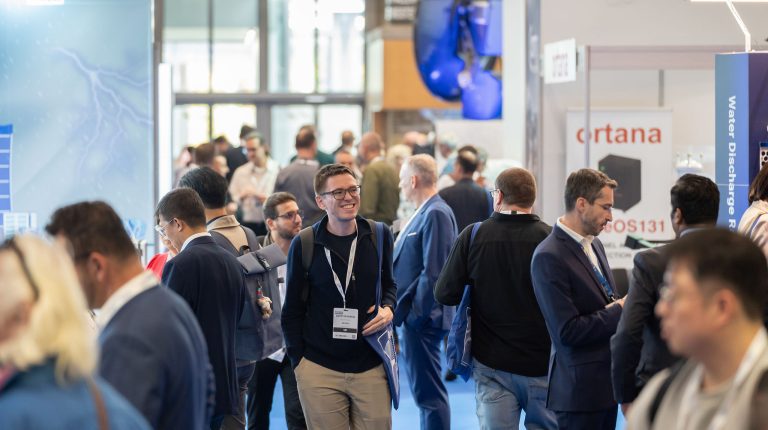
There is just one month to go until Meteorological Technology World Expo opens its doors at RAI Amsterdam (October 6-8), bringing together the global meteorological community for three days of innovation, technical discussion and collaboration. The event takes place alongside the World Meteorological Organization’s Technical Conference on Instruments and Methods of Observation (TECO-2026), running October 5-8, offering a unique opportunity to explore the technologies, research and operational developments shaping the future of weather and environmental observation.

Following record attendance in 2025, this year’s event is expected to welcome thousands of professionals from national meteorological and hydrological services, research institutions, academia, aviation, hydrology, environmental monitoring organizations and technology providers from around the world, with more than 150 exhibitors and over 2,000 visitors anticipated.
Register here for your expo pass.
Working in close collaboration with the WMO
Meteorological Technology World Expo is once again hosting TECO-2026 alongside the exhibition, bringing together experts from across the meteorological world to explore the latest developments in observation systems and measurement technologies. Key topics at this year’s conference will include emerging measurement technologies and integrated observing approaches, standardization and calibration, and the modernization of observing systems and capacity development.
Among the presentations standing out across TECO-2026’s four-day program are sessions on integrating UAS atmospheric profiling into the Oklahoma Mesonet, a high-altitude UAV observation experiment from China’s CMA, and a WMO Secretariat update titled ‘WIGOS Vision 2050.’ This year’s event will also feature a dedicated Exhibitor Showcase Theater, where organizations including Meteoblue, Meteomatics and Senseca will present the latest innovations and real-world applications driving advances in meteorology and environmental monitoring.
Product launches and exhibitor highlights

Vaisala is bringing two major launches to the show: the PRECICAP RM60, which the company describes as the world’s first truly maintenance-free precipitation sensor, and Release 8 of its IRIS Focus remote sensing software. The RM60 measures accumulation, intensity, type, drop size distribution and reflectivity without any cleaning, calibration, heating or wind shielding required, and the company says it has amassed more than 700,000 hours of field data across precipitation climates since 2020.
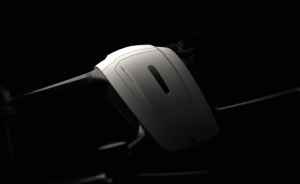
Meteomatics will unveil Strato, its next-generation Meteodrone, which the company says sets a new benchmark for weather drone technology by reaching higher altitudes and delivering more vertical data than existing systems. Strato sits alongside the rest of Meteomatics’ forecasting stack on show at the booth, spanning observation, high-resolution numerical modeling, data access and AI-assisted analysis. Strato will be revealed at 11:00 on Day 1 at the Meteomatics booth.
Campbell Scientific will debut the latest installment of its Extreme Application Series, focused on capturing hurricane-force data, alongside two new products: the BaroVue 30 barometric pressure sensor, designed for stability in long-term measurements, and CampbellOn, a software platform for managing and scaling surface observation networks.
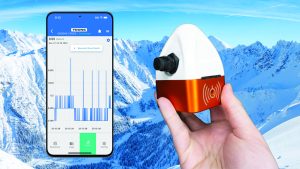
Elsewhere, Raymetrics will showcase its next-generation Vertical Temperature and Humidity Raman Lidar system, featuring enhanced laser stability and improved optical efficiency for high-resolution atmospheric profiling in meteorological, climate and aviation applications. R M Young will display its reengineered SNOdar, a lidar-based snow-depth sensor built to deliver accurate measurements even during active snowfall, when ultrasonic alternatives typically degrade.
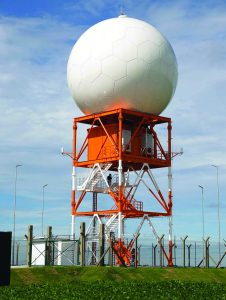
On the radar side, Brazilian company IACIT will present its RMT 0200, a dual-polarization S-band weather radar offering coverage of up to 643km, currently used by the Brazilian Air Force to monitor conditions in the Amazon Flight Information Region. EWR Radar Systems will showcase how it is helping customers modernize aging radar infrastructure, including the transition from legacy tube-based transmitters to solid-state transmitter technology.
In hydrology, Geolux will present its latest generation of non-contact radar instruments, the VX60, FX100 and FX200, designed for measuring surface water velocity, water level and discharge in rivers and open channels, while Sommer will exhibit its RQ-30, a non-contact radar sensor built for continuous monitoring of water discharge in rivers, streams and canals even during flood conditions.
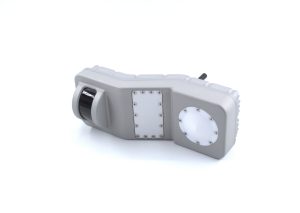
Meteorological Technology World Expo will take place at RAI Amsterdam, October 6-8. Click here to register for your free entry pass