


Close Menu
Meteorological Technology International
  • News
    • A-E
      • Agriculture
      • Automated Weather Stations
      • Aviation
      • Climate Measurement
      • Data
      • Developing Countries
      • Digital Applications
      • Early Warning Systems
      • Extreme Weather
    • G-P
      • Hydrology
      • Lidar
      • Lightning Detection
      • New Appointments
      • Nowcasting
      • Numerical Weather Prediction
      • Polar Weather
    • R-S
      • Radar
      • Rainfall
      • Remote Sensing
      • Renewable Energy
      • Satellites
      • Solar
      • Space Weather
      • Supercomputers
    • T-Z
      • Training
      • Transport
      • Weather Instruments
      • Wind
      • World Meteorological Organization
      • Meteorological Technology World Expo
  • Features
  • Online Magazines
    • January 2026
    • April 2025
    • January 2025
    • September 2024
    • April 2024
    • Archive Issues
    • Subscribe Free!
  • Opinion
  • Videos
  • Supplier Spotlight
  • Expo
LinkedIn X (Twitter) Facebook
  • Sign-up for Free Weekly E-Newsletter
  • Meet the Editors
  • Contact Us
  • Media Pack
LinkedIn Facebook
Subscribe
Meteorological Technology International
  • News
      • Agriculture
      • Automated Weather Stations
      • Aviation
      • Climate Measurement
      • Data
      • Developing Countries
      • Digital Applications
      • Early Warning Systems
      • Extreme Weather
      • Hydrology
      • Lidar
      • Lightning Detection
      • New Appointments
      • Nowcasting
      • Numerical Weather Prediction
      • Polar Weather
      • Radar
      • Rainfall
      • Remote Sensing
      • Renewable Energy
      • Satellites
      • Solar
      • Space Weather
      • Supercomputers
      • Training
      • Transport
      • Weather Instruments
      • Wind
      • World Meteorological Organization
      • Meteorological Technology World Expo
  • Features
  • Online Magazines
    1. April 2026
    2. January 2026
    3. September 2025
    4. April 2025
    5. January 2025
    6. September 2024
    7. April 2024
    8. January 2024
    9. Archive Issues
    10. Subscribe Free!
    Featured
    May 5, 2026

    In this Issue – April 2026

    By Web TeamMay 5, 2026
    Recent

    In this Issue – April 2026

    May 5, 2026

    In this Issue – January 2026

    November 27, 2025

    In this Issue – September 2025

    August 11, 2025
  • Opinion
  • Videos
  • Supplier Spotlight
  • Expo
Facebook LinkedIn
Subscribe
Meteorological Technology International
Early Warning Systems

University of Alabama research to enhance flood resilience of coastal communities

Helen NormanBy Helen NormanJune 14, 20212 Mins Read
Share LinkedIn Facebook Twitter Email
Flood
Share
LinkedIn Facebook Twitter Email

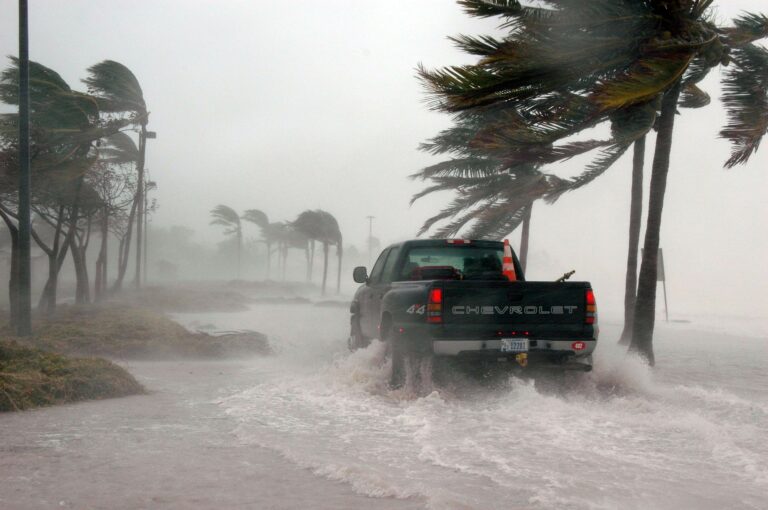
Researchers at The University of Alabama (UA) are working to develop advanced computational earth science and coastal models that help coastal communities prepare for flooding from tropical storms and hurricanes.

Funded by a US$2.84m grant from the US Army Corps of Engineers Research and Development Center, the work by researchers in the UA Center for Complex Hydrosystems Research (CCHR) will identify flooding hot spots along the southeastern US coastline and provide a way for emergency responders and local decision makers to better prepare for flooding from tropical cyclones.

Dr Hamid Moradkhani, director of CCHR and Alton N Scott Professor of Civil and Environmental Engineering, said, “Employing state-of-the-art data assimilation, machine learning and integrated modeling while utilizing massive socio-economic and remotely sensed hydroclimate data, we have developed a robust framework that creates an opportunity to forecast hurricane-driven flooding on a near real-time basis which has various emergency response implications.”

Moradkhani leads an interdisciplinary team with expertise in physically based hydrologic modeling, data assimilation, coastal dynamics modeling, remote sensing and social sciences to ensure simulations are representative of the actual phenomenon.

“We have recently shown that the current system of hurricane categorization that is wind-based only and does not take flooding into account can yield miscommunication of hazards and risks,” Moradkhani added.

This research project will produce flood hazard maps and flood forecasting tools that emergency management personnel can use to prepare coastal communities ahead of a storm and best deploy resources to mitigate risks. Along with broader scientific knowledge to further this area, the project’s products will be shared with those responsible for forecasting and preparing communities for tropical cyclones.

Previous ArticleNASA machine learning model doubles accuracy of global landslide nowcasts
Next Article Vaisala and FMI to deliver turnkey meteorological infrastructure project in Ethiopia

Read Similar Stories

Nowcasting

Colorado State University and Nvidia partner to extend severe storm prediction lead times

June 2, 20262 Mins Read
Climate Measurement

WMO warns El Niño is developing with 80% certainty, urges preparation

June 2, 20263 Mins Read
Developing Countries

Tropical cyclones threaten energy security in Bangladesh, study finds

May 29, 20262 Mins Read
Latest News

Global warming reached 1.37°C in 2025 as heat accumulation hits record rate

June 12, 2026

NSF NCAR researchers develop advanced model for neighborhood-scale low-altitude wind prediction

June 11, 2026

Cambridge AI tool converts satellite archives into accessible Earth intelligence

June 10, 2026

Receive breaking stories and features in your inbox each week, for free


Enter your email address:


Supplier Spotlights
  • AIRMAR Technology Corporation
Getting in Touch
  • Contact Us / Advertise
  • Meet the Editors
  • Media Pack
  • Free Weekly E-Newsletter
Our Social Channels
  • Facebook
  • LinkedIn
© 2026 UKi Media & Events a division of UKIP Media & Events Ltd
  • Cookie Policy
  • Privacy Policy
  • Terms and Conditions
  • Notice and Takedown Policy

Type above and press Enter to search. Press Esc to cancel.