


Close Menu
Meteorological Technology International
  • News
    • A-E
      • Agriculture
      • Automated Weather Stations
      • Aviation
      • Climate Measurement
      • Data
      • Developing Countries
      • Digital Applications
      • Early Warning Systems
      • Extreme Weather
    • G-P
      • Hydrology
      • Lidar
      • Lightning Detection
      • New Appointments
      • Nowcasting
      • Numerical Weather Prediction
      • Polar Weather
    • R-S
      • Radar
      • Rainfall
      • Remote Sensing
      • Renewable Energy
      • Satellites
      • Solar
      • Space Weather
      • Supercomputers
    • T-Z
      • Training
      • Transport
      • Weather Instruments
      • Wind
      • World Meteorological Organization
      • Meteorological Technology World Expo
  • Features
  • Online Magazines
    • January 2026
    • April 2025
    • January 2025
    • September 2024
    • April 2024
    • Archive Issues
    • Subscribe Free!
  • Opinion
  • Videos
  • Supplier Spotlight
  • Expo
LinkedIn X (Twitter) Facebook
  • Sign-up for Free Weekly E-Newsletter
  • Meet the Editors
  • Contact Us
  • Media Pack
LinkedIn Facebook
Subscribe
Meteorological Technology International
  • News
      • Agriculture
      • Automated Weather Stations
      • Aviation
      • Climate Measurement
      • Data
      • Developing Countries
      • Digital Applications
      • Early Warning Systems
      • Extreme Weather
      • Hydrology
      • Lidar
      • Lightning Detection
      • New Appointments
      • Nowcasting
      • Numerical Weather Prediction
      • Polar Weather
      • Radar
      • Rainfall
      • Remote Sensing
      • Renewable Energy
      • Satellites
      • Solar
      • Space Weather
      • Supercomputers
      • Training
      • Transport
      • Weather Instruments
      • Wind
      • World Meteorological Organization
      • Meteorological Technology World Expo
  • Features
  • Online Magazines
    1. April 2026
    2. January 2026
    3. September 2025
    4. April 2025
    5. January 2025
    6. September 2024
    7. April 2024
    8. January 2024
    9. Archive Issues
    10. Subscribe Free!
    Featured
    May 5, 2026

    In this Issue – April 2026

    By Web TeamMay 5, 2026
    Recent

    In this Issue – April 2026

    May 5, 2026

    In this Issue – January 2026

    November 27, 2025

    In this Issue – September 2025

    August 11, 2025
  • Opinion
  • Videos
  • Supplier Spotlight
  • Expo
Facebook LinkedIn
Subscribe
Meteorological Technology International
News

NASA machine learning model doubles accuracy of global landslide nowcasts

Helen NormanBy Helen NormanJune 14, 20213 Mins Read
Share LinkedIn Facebook Twitter Email
NASA
Share
LinkedIn Facebook Twitter Email

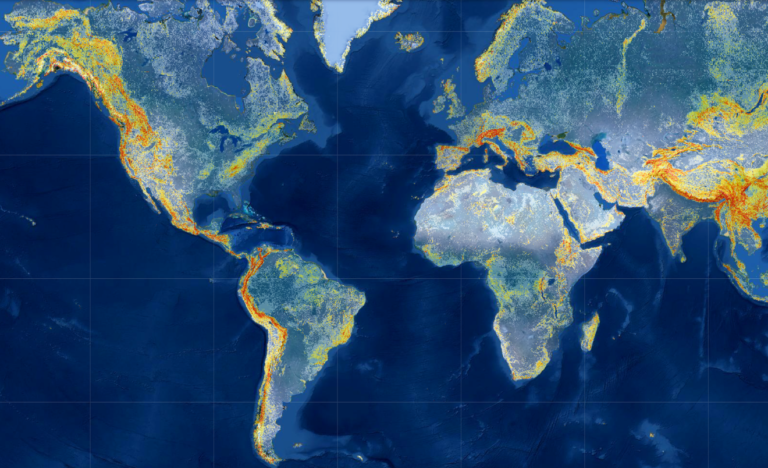
NASA has released an upgraded version of its Global Landslide Hazard Assessment (LHASA) model and mapping tool, which identifies potential landslide activity anywhere between the poles in near real time.

LHASA Version 2 is a machine-learning-based model that analyzes a collection of individual variables and satellite-derived datasets to produce customizable nowcasts. These nowcasts are estimates of potential landslide activity in near real time for each 1km2 area between the poles.

The model factors in the slope of the land, distance to geologic faults, the makeup of rock, past and present rainfall, and satellite-derived soil moisture and snow mass data.

“The model processes all of this data and outputs a probabilistic estimate of landslide hazard in the form of an interactive map,” said Thomas Stanley, Universities Space Research Association scientist at NASA’s Goddard Space Flight Center in Greenbelt, Maryland. “This is valuable because it provides a relative scale of landslide hazard, rather than just saying there is or is not landslide risk. Users can define their area of interest and adjust the categories and probability threshold to suit their needs.”

To teach the model, researchers input a table with all of the relevant landslide variables and many locations that have recorded landslides in the past. The machine learning algorithm takes the table and tests out different possible scenarios and outcomes; when it finds the one that fits the data most accurately, it outputs a decision tree. It then identifies the errors in the decision tree and calculates another tree that fixes those errors. This process continues until the model has learned and improved 300 times.

“The result is that this version of the model is roughly twice as accurate as the first version of the model, making it the most accurate global nowcasting tool available,” said Stanley. “While the accuracy is highest – often 100% – for major landslide events triggered by tropical cyclones, it improved significantly across all inventories.”

Version 1, released in 2018, was not a machine learning model. It combined satellite precipitation data with a global landslide susceptibility map to produce its nowcasts. It made its predictions using one decision tree largely based on rainfall data from the preceding week and categorized each grid cell as low, moderate or high risk.

LHASA Version 2 also adds a new exposure feature that analyzes the distribution of roads and population in each grid cell to calculate the number of people or infrastructure exposed to landslide hazards.

Previous ArticleESA selects EnVision for mission to study atmosphere and geology of Venus
Next Article University of Alabama research to enhance flood resilience of coastal communities

Read Similar Stories

Solar

India partners on hybrid solar forecasting project for large solar parks

February 5, 20262 Mins Read
Digital Applications

Nvidia launches open Earth-2 model family for AI weather forecasting

January 26, 20263 Mins Read
Data

China develops deep diffusion model to extend severe convective weather nowcasting to four hours

January 6, 20263 Mins Read
Latest News

In this Issue – April 2026

May 5, 2026

AI models lag behind traditional systems in predicting extreme weather

May 5, 2026

Researchers investigate links between air pollution, extreme weather and climate

May 1, 2026

Receive breaking stories and features in your inbox each week, for free


Enter your email address:


Supplier Spotlights
  • Baron
Getting in Touch
  • Contact Us / Advertise
  • Meet the Editors
  • Media Pack
  • Free Weekly E-Newsletter
Our Social Channels
  • Facebook
  • LinkedIn
© 2026 UKi Media & Events a division of UKIP Media & Events Ltd
  • Cookie Policy
  • Privacy Policy
  • Terms and Conditions
  • Notice and Takedown Policy

Type above and press Enter to search. Press Esc to cancel.