

Close Menu
Meteorological Technology International
  • News
    • A-E
      • Agriculture
      • Automated Weather Stations
      • Aviation
      • Climate Measurement
      • Data
      • Developing Countries
      • Digital Applications
      • Early Warning Systems
      • Extreme Weather
    • G-P
      • Hydrology
      • Lidar
      • Lightning Detection
      • New Appointments
      • Nowcasting
      • Numerical Weather Prediction
      • Polar Weather
    • R-S
      • Radar
      • Rainfall
      • Remote Sensing
      • Renewable Energy
      • Satellites
      • Solar
      • Space Weather
      • Supercomputers
    • T-Z
      • Training
      • Transport
      • Weather Instruments
      • Wind
      • World Meteorological Organization
      • Meteorological Technology World Expo
  • Features
  • Online Magazines
    • January 2026
    • April 2025
    • January 2025
    • September 2024
    • April 2024
    • Archive Issues
    • Subscribe Free!
  • Opinion
  • Videos
  • Supplier Spotlight
  • Expo
LinkedIn X (Twitter) Facebook
  • Sign-up for Free Weekly E-Newsletter
  • Meet the Editors
  • Contact Us
  • Media Pack
LinkedIn Facebook
Subscribe
Meteorological Technology International
  • News
      • Agriculture
      • Automated Weather Stations
      • Aviation
      • Climate Measurement
      • Data
      • Developing Countries
      • Digital Applications
      • Early Warning Systems
      • Extreme Weather
      • Hydrology
      • Lidar
      • Lightning Detection
      • New Appointments
      • Nowcasting
      • Numerical Weather Prediction
      • Polar Weather
      • Radar
      • Rainfall
      • Remote Sensing
      • Renewable Energy
      • Satellites
      • Solar
      • Space Weather
      • Supercomputers
      • Training
      • Transport
      • Weather Instruments
      • Wind
      • World Meteorological Organization
      • Meteorological Technology World Expo
  • Features
  • Online Magazines
    1. April 2026
    2. January 2026
    3. September 2025
    4. April 2025
    5. January 2025
    6. September 2024
    7. April 2024
    8. January 2024
    9. Archive Issues
    10. Subscribe Free!
    Featured
    May 5, 2026

    In this Issue – April 2026

    By Web TeamMay 5, 2026
    Recent

    In this Issue – April 2026

    May 5, 2026

    In this Issue – January 2026

    November 27, 2025

    In this Issue – September 2025

    August 11, 2025
  • Opinion
  • Videos
  • Supplier Spotlight
  • Expo
Facebook LinkedIn
Subscribe
Meteorological Technology International
Extreme Weather

Australia wildfires give rise to ‘fire-breathing dragon of clouds’

Paul WillisBy Paul WillisJanuary 9, 20202 Mins Read
Share LinkedIn Facebook Twitter Email
Pic: Twitter @merxplat
Share
LinkedIn Facebook Twitter Email

The bushfires blazing in Australia since early November have been unprecedented in their level of destruction, turning an area of more than 23,000 square miles into scorched earth.

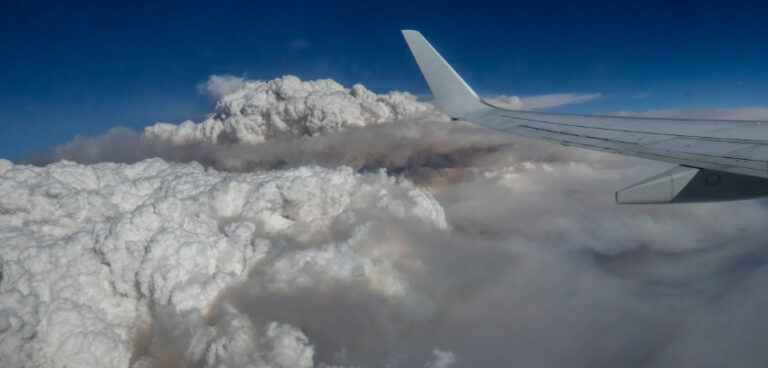
They have also given rise to a rare meteorological phenomenon that the US space agency NASA has dubbed “the fire-breathing dragon of clouds”.

Known as pyrocumulonimbus, it is one of two types of clouds caused by large wildfires – the other is pyrocumulus.

The pyrocumulus clouds can form over wildfires because of the rising heat. If they grow big enough they transform into pyrocumulonimbus clouds, which are similar to cumulonimbus, the clouds most often associated with thunderstorms.

Pyrocumulonimbus can also cause thunderstorms and can even produce rain. According to meteorologists they can exacerbate the dangers posed by wildfires by generating lightning which in turn can lead to new blazes being started. Satellite images have captured these huge clouds forming along the coast of New South Wales and Victoria.

Nor are they the only weather phenomenon associated with Australia’s bushfires. Fire whirls, also known as fire devils, are whirlwinds composed of flame or ash. They are caused when intense rising heat and turbulent wind conditions combine to form whirling eddies of air.

One such fire whirl caused a bushfire on Kangaroo Island in South Australia to jump containment lines, leading to further evacuations.

Previous ArticleSales of monitoring devices boost outlook for weather technology market
Next Article Atlantic current that regulates European weather ‘could briefly stop in next century’

Read Similar Stories

Early Warning Systems

Study reveals sharp rise in intensity of global heat stress

June 23, 20262 Mins Read
Extreme Weather

Met Office issues rare Red Extreme Heat Warning as UK June temperature record set to be broken

June 22, 20262 Mins Read
Early Warning Systems

Extreme weather affected 13 million people in Africa in 2025, says WMO

June 18, 20263 Mins Read
Latest News

Study reveals sharp rise in intensity of global heat stress

June 23, 2026

Met Office issues rare Red Extreme Heat Warning as UK June temperature record set to be broken

June 22, 2026

ECMWF appoints two deputy director-generals to lead science, operations and digital infrastructure

June 19, 2026

Receive breaking stories and features in your inbox each week, for free


Enter your email address:


Supplier Spotlights
  • RAYMETRICS SA
Getting in Touch
  • Contact Us / Advertise
  • Meet the Editors
  • Media Pack
  • Free Weekly E-Newsletter
Our Social Channels
  • Facebook
  • LinkedIn
© 2026 UKi Media & Events a division of UKIP Media & Events Ltd
  • Cookie Policy
  • Privacy Policy
  • Terms and Conditions
  • Notice and Takedown Policy

Type above and press Enter to search. Press Esc to cancel.