


Close Menu
Meteorological Technology International
  • News
    • A-E
      • Agriculture
      • Artificial Intelligence
      • Automated Weather Stations
      • Aviation
      • Climate Measurement
      • Data
      • Developing Countries
      • Digital Applications
      • Early Warning Systems
      • Extreme Weather
    • G-P
      • Hydrology
      • Lidar
      • Lightning Detection
      • New Appointments
      • Nowcasting
      • Numerical Weather Prediction
      • Polar Weather
    • R-S
      • Radar
      • Rainfall
      • Remote Sensing
      • Renewable Energy
      • Satellites
      • Solar
      • Space Weather
      • Supercomputers
    • T-Z
      • Training
      • Transport
      • Weather Instruments
      • Wind
      • World Meteorological Organization
      • Meteorological Technology World Expo
  • Features
  • Online Magazines
    • September 2026
    • January 2026
    • April 2025
    • January 2025
    • September 2024
    • April 2024
    • Archive Issues
    • Subscribe Free!
  • Opinion
  • Videos
  • Supplier Spotlight
  • Expo
LinkedIn X (Twitter) Facebook
  • Sign-up for Free Weekly E-Newsletter
  • Meet the Editors
  • Contact Us
  • Media Pack
LinkedIn Facebook
Subscribe
Meteorological Technology International
  • News
      • Agriculture
      • Artificial Intelligence
      • Automated Weather Stations
      • Aviation
      • Climate Measurement
      • Data
      • Developing Countries
      • Digital Applications
      • Early Warning Systems
      • Extreme Weather
      • Hydrology
      • Lidar
      • Lightning Detection
      • New Appointments
      • Nowcasting
      • Numerical Weather Prediction
      • Polar Weather
      • Radar
      • Rainfall
      • Remote Sensing
      • Renewable Energy
      • Satellites
      • Solar
      • Space Weather
      • Supercomputers
      • Training
      • Transport
      • Weather Instruments
      • Wind
      • World Meteorological Organization
      • Meteorological Technology World Expo
  • Features
  • Online Magazines
    1. September 2026
    2. April 2026
    3. January 2026
    4. September 2025
    5. April 2025
    6. January 2025
    7. September 2024
    8. April 2024
    9. January 2024
    10. Archive Issues
    11. Subscribe Free!
    Featured
    August 4, 2026

    In this Issue – September 2026

    By Web TeamAugust 4, 2026
    Recent

    In this Issue – September 2026

    August 4, 2026

    In this Issue – April 2026

    May 5, 2026

    In this Issue – January 2026

    November 27, 2025
  • Opinion
  • Videos
  • Supplier Spotlight
  • Expo
Facebook LinkedIn
Subscribe
Meteorological Technology International
Extreme Weather

Climate change to increase danger of heat stress during Arba’een pilgrimage

Dan SymondsBy Dan SymondsOctober 24, 20222 Mins Read
Share LinkedIn Facebook Twitter Email
Photo credit: Pixabay / Mostafa Meraji
Share
LinkedIn Facebook Twitter Email

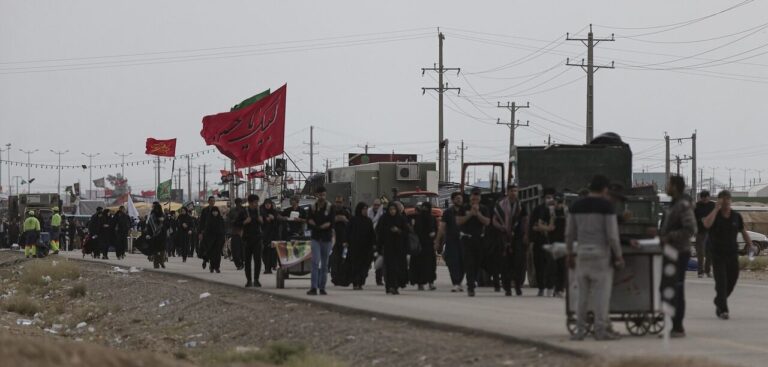
Researchers have projected that climate change will make dangerous temperatures more common during the Arba’een pilgrimage by the end of the 21st century, threatening participants with an increased risk of heat-related illness. Around 20 million Shia Muslims participate in Arba’een, which is one of the world’s largest religious gatherings.

Pilgrims are exposed to the elements while traveling on foot to Karbala, Iraq, where they commemorate the martyrdom of Al-Hussain ibn Ali, the grandson of the Prophet Muhammad. On one popular route, pilgrims travel around 80km from Najaf, Iraq, and typically reach Karbala within one to three days. However, other routes can be as long as 500km.

Arba’een is scheduled according to the Islamic calendar, which is based on the lunar cycles, so it occurs 11 days earlier on the solar calendar each year, progressing through the seasons. Wintertime temperatures during Arba’een should remain tolerable, but when Arba’een occurs in the summer, heat stress is likely to reach dangerous levels by the end of the 21st century, according to a new study.

The study’s authors, Yeon-Woo Choi and Elfatih Eltahir, used regional climate models to predict how future climate change could threaten the health of Arba’een pilgrims. Their models forecasted future wet-bulb temperature, the lowest temperature to which evaporating water can cool air based on the local air temperature and humidity. Wet-bulb temperatures exceeding 24°C become dangerous because sweat cannot sufficiently prevent the body from heating up.

In high greenhouse gas emission scenarios, the study predicts that average summertime temperatures could cross this danger threshold between 2050-2060. The authors say that increasing night-time temperatures may also prove problematic as they prevent pilgrims from adequately recovering from exposure to the day’s heat.

As climate change increases the region’s temperatures, it could put additional strain on healthcare systems already challenged by heat waves. Daytime temperatures during this year’s pilgrimage, which began ahead of the start of Arba’een on September 16, were a challenge. According to news channel Aljazeera, some pilgrims fainted when temperatures reached 41°C. The study suggests that such extreme heat events will become more common if Iraqi summers continue to warm.

To view the complete study published in the AGU journal Geophysical Research Letters, click here.

Previous ArticleGuidelines published for implementing coastal flooding early warning systems
Next Article Slight decrease recorded in Antarctic ozone hole compared with 2021

Read Similar Stories

Climate Measurement

August 2026 was joint warmest month on record, Copernicus reports

September 10, 20263 Mins Read
Climate Measurement

WMO bulletin warns rising wildfire and heatwave pollution threatens air quality gains

September 9, 20263 Mins Read
Radar

Bureau of Meteorology’s radar technology restores flood monitoring gauge in Cairns

August 18, 20262 Mins Read
Latest News

Tomorrow.io reveals five-instrument design for DeepSky weather satellites

September 11, 2026

Climavision opens radar network and forecasting platform to AI data centers ahead of 2027 grid deadline

September 10, 2026

August 2026 was joint warmest month on record, Copernicus reports

September 10, 2026

Receive breaking stories and features in your inbox each week, for free


Enter your email address:


Supplier Spotlights
  • REMTECH
Getting in Touch
  • Contact Us / Advertise
  • Meet the Editors
  • Media Pack
  • Free Weekly E-Newsletter
Our Social Channels
  • Facebook
  • LinkedIn
© 2026 UKi Media & Events a division of UKIP Media & Events Ltd
  • Cookie Policy
  • Privacy Policy
  • Terms and Conditions
  • Notice and Takedown Policy

Type above and press Enter to search. Press Esc to cancel.