

Close Menu
Meteorological Technology International
  • News
    • A-E
      • Agriculture
      • Automated Weather Stations
      • Aviation
      • Climate Measurement
      • Data
      • Developing Countries
      • Digital Applications
      • Early Warning Systems
      • Extreme Weather
    • G-P
      • Hydrology
      • Lidar
      • Lightning Detection
      • New Appointments
      • Nowcasting
      • Numerical Weather Prediction
      • Polar Weather
    • R-S
      • Radar
      • Rainfall
      • Remote Sensing
      • Renewable Energy
      • Satellites
      • Solar
      • Space Weather
      • Supercomputers
    • T-Z
      • Training
      • Transport
      • Weather Instruments
      • Wind
      • World Meteorological Organization
      • Meteorological Technology World Expo
  • Features
  • Online Magazines
    • January 2026
    • April 2025
    • January 2025
    • September 2024
    • April 2024
    • Archive Issues
    • Subscribe Free!
  • Opinion
  • Videos
  • Supplier Spotlight
  • Expo
LinkedIn X (Twitter) Facebook
  • Sign-up for Free Weekly E-Newsletter
  • Meet the Editors
  • Contact Us
  • Media Pack
LinkedIn Facebook
Subscribe
Meteorological Technology International
  • News
      • Agriculture
      • Automated Weather Stations
      • Aviation
      • Climate Measurement
      • Data
      • Developing Countries
      • Digital Applications
      • Early Warning Systems
      • Extreme Weather
      • Hydrology
      • Lidar
      • Lightning Detection
      • New Appointments
      • Nowcasting
      • Numerical Weather Prediction
      • Polar Weather
      • Radar
      • Rainfall
      • Remote Sensing
      • Renewable Energy
      • Satellites
      • Solar
      • Space Weather
      • Supercomputers
      • Training
      • Transport
      • Weather Instruments
      • Wind
      • World Meteorological Organization
      • Meteorological Technology World Expo
  • Features
  • Online Magazines
    1. April 2026
    2. January 2026
    3. September 2025
    4. April 2025
    5. January 2025
    6. September 2024
    7. April 2024
    8. January 2024
    9. Archive Issues
    10. Subscribe Free!
    Featured
    May 5, 2026

    In this Issue – April 2026

    By Web TeamMay 5, 2026
    Recent

    In this Issue – April 2026

    May 5, 2026

    In this Issue – January 2026

    November 27, 2025

    In this Issue – September 2025

    August 11, 2025
  • Opinion
  • Videos
  • Supplier Spotlight
  • Expo
Facebook LinkedIn
Subscribe
Meteorological Technology International
Extreme Weather

Extreme heat is the worst climate hazard for the world’s cities, CDP finds

William AtkinsonBy William AtkinsonSeptember 7, 20233 Mins Read
Share LinkedIn Facebook Twitter Email
Photo credit: Pixabay
Share
LinkedIn Facebook Twitter Email

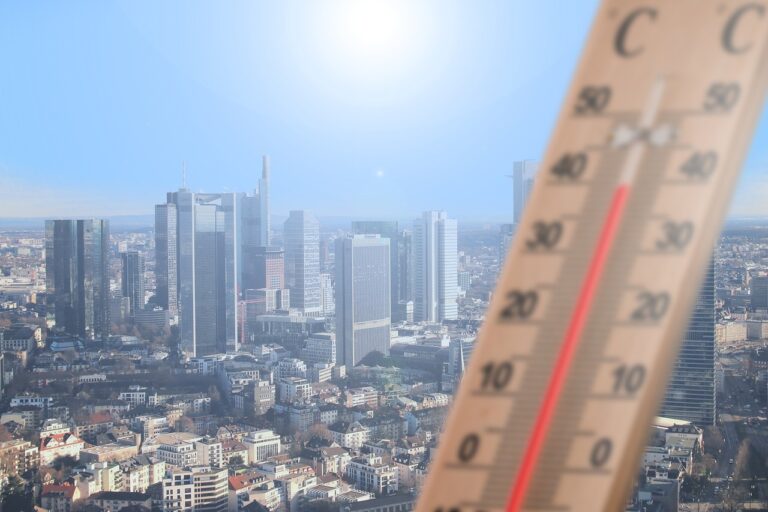
CDP – the non-profit that runs the world’s environmental disclosure system for companies, cities, states and regions – has reported that extreme heat is the most widespread climate hazard facing the world’s cities.

Eighty percent of the 1,090 cities that reported their environmental data through CDP-ICLEI Track in 2022 said they face significant climate hazards, with 70% already being affected. Moreover, 70% of cities expect these hazards to be more intense in the future and 58% expect them to increase in frequency.

Fifty-one percent of the reporting cities reported extreme heat as a hazard, making it the most widely reported climate hazard facing the world’s cities. Other heat-related hazards reported by cities to CDP-ICLEI Track include drought (35% of cities) and the risk of wildfires (19%).

As seen in July of this year, when Earth saw its hottest month on record – and in an estimated 120,000 years – when wildfires ravaged parts of the planet from Hawaii to Portugal to China, extreme heat is affecting every part of the globe. Of cities that reported climate hazards, 81% (179 cities) in North America reported extreme heat as a climate hazard, followed by 79% (153 cities) in Europe and the UK, 58% (86 cities) in Asia-Pacific, 49% (31 cities) in Africa and the Middle East, and 43% (108 cities) in Latin America. These include New York, Vancouver, São Paolo, Athens, London, Tel Aviv, Abuja, Delhi and Melbourne.

CDP’s analysis also examines the stark impact of extreme heat on the world’s population, finding that the elderly (reported by 88% of cities), low-income households (67%), children and youth (63%) and marginalized communities (45%) are the groups most affected. The analysis also shows that for 143 cities, almost their entire population is affected by extreme heat.

Maia Kutner, CDP global director for cities, states and regions, said, “The last few weeks have given us an uncomfortable insight into what the future holds for our planet through the lens of just one of many climate hazards – extreme heat. Fire after fire after fire devouring homes, livelihoods and nature, from Hawaii to China; the single hottest month ever recorded in human history; and the warmest reported ocean temperature. All of which, in years to come, will seem unremarkable.

“The consequences of the actions and policies that have led us to the point where the world is literally on fire are as clear as the blankets of smoke seen from space. Reporting environmental data through CDP-ICLEI Track is a city’s first step on the road to meaningful and tangible climate action, as what gets measured then gets managed. We urge all cities, large and small, to do the measuring now so that they can get on with the managing to build the sustainable future we, and our planet, so desperately need.”

For more on extreme weather, please click here.

Previous ArticleMet Office collaborates with FLYHT and Loganair to improve aviation weather intelligence
Next Article Flash Weather AI and SmartSky to bring predictive lightning data to aviation

Read Similar Stories

Nowcasting

Colorado State University and Nvidia partner to extend severe storm prediction lead times

June 2, 20262 Mins Read
Climate Measurement

WMO warns El Niño is developing with 80% certainty, urges preparation

June 2, 20263 Mins Read
Developing Countries

Tropical cyclones threaten energy security in Bangladesh, study finds

May 29, 20262 Mins Read
Latest News

Global warming reached 1.37°C in 2025 as heat accumulation hits record rate

June 12, 2026

NSF NCAR researchers develop advanced model for neighborhood-scale low-altitude wind prediction

June 11, 2026

Cambridge AI tool converts satellite archives into accessible Earth intelligence

June 10, 2026

Receive breaking stories and features in your inbox each week, for free


Enter your email address:


Supplier Spotlights
  • Reuniwatt
Getting in Touch
  • Contact Us / Advertise
  • Meet the Editors
  • Media Pack
  • Free Weekly E-Newsletter
Our Social Channels
  • Facebook
  • LinkedIn
© 2026 UKi Media & Events a division of UKIP Media & Events Ltd
  • Cookie Policy
  • Privacy Policy
  • Terms and Conditions
  • Notice and Takedown Policy

Type above and press Enter to search. Press Esc to cancel.