


Close Menu
Meteorological Technology International
  • News
    • A-E
      • Agriculture
      • Automated Weather Stations
      • Aviation
      • Climate Measurement
      • Data
      • Developing Countries
      • Digital Applications
      • Early Warning Systems
      • Extreme Weather
    • G-P
      • Hydrology
      • Lidar
      • Lightning Detection
      • New Appointments
      • Nowcasting
      • Numerical Weather Prediction
      • Polar Weather
    • R-S
      • Radar
      • Rainfall
      • Remote Sensing
      • Renewable Energy
      • Satellites
      • Solar
      • Space Weather
      • Supercomputers
    • T-Z
      • Training
      • Transport
      • Weather Instruments
      • Wind
      • World Meteorological Organization
      • Meteorological Technology World Expo
  • Features
  • Online Magazines
    • January 2026
    • April 2025
    • January 2025
    • September 2024
    • April 2024
    • Archive Issues
    • Subscribe Free!
  • Opinion
  • Videos
  • Supplier Spotlight
  • Expo
LinkedIn X (Twitter) Facebook
  • Sign-up for Free Weekly E-Newsletter
  • Meet the Editors
  • Contact Us
  • Media Pack
LinkedIn Facebook
Subscribe
Meteorological Technology International
  • News
      • Agriculture
      • Automated Weather Stations
      • Aviation
      • Climate Measurement
      • Data
      • Developing Countries
      • Digital Applications
      • Early Warning Systems
      • Extreme Weather
      • Hydrology
      • Lidar
      • Lightning Detection
      • New Appointments
      • Nowcasting
      • Numerical Weather Prediction
      • Polar Weather
      • Radar
      • Rainfall
      • Remote Sensing
      • Renewable Energy
      • Satellites
      • Solar
      • Space Weather
      • Supercomputers
      • Training
      • Transport
      • Weather Instruments
      • Wind
      • World Meteorological Organization
      • Meteorological Technology World Expo
  • Features
  • Online Magazines
    1. April 2026
    2. January 2026
    3. September 2025
    4. April 2025
    5. January 2025
    6. September 2024
    7. April 2024
    8. January 2024
    9. Archive Issues
    10. Subscribe Free!
    Featured
    May 5, 2026

    In this Issue – April 2026

    By Web TeamMay 5, 2026
    Recent

    In this Issue – April 2026

    May 5, 2026

    In this Issue – January 2026

    November 27, 2025

    In this Issue – September 2025

    August 11, 2025
  • Opinion
  • Videos
  • Supplier Spotlight
  • Expo
Facebook LinkedIn
Subscribe
Meteorological Technology International
Hydrology

WMO discusses hydrological monitoring system for India’s GBM river basin

Dan SymondsBy Dan SymondsDecember 2, 20213 Mins Read
Share LinkedIn Facebook Twitter Email
Share
LinkedIn Facebook Twitter Email

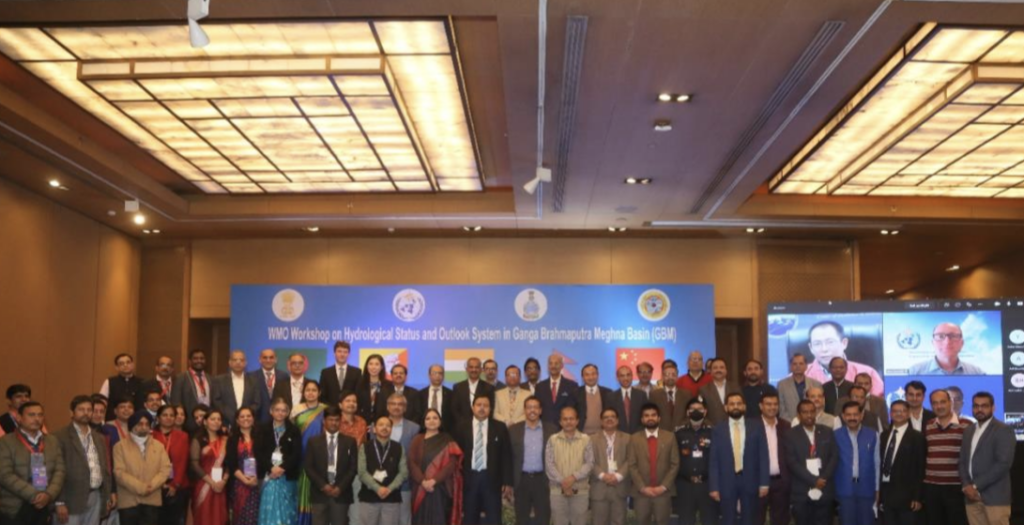
The WMO has met with the India Meteorological Department (IMD) to hold a regional workshop to discuss the application of its Hydrological Status and Outlook System (HydroSOS) in the Ganga Brahmaputra Meghna (GBM) river basin.

Shared by Bhutan, Bangladesh, India and Nepal, the GBM Basin is spread over 1.7 million square kilometers. It has a population of more than 500 million, making it one of the most populated river basins in the world. According to the WMO, the basin faces many challenges, leading to inadequate water resources management. Floods and droughts are common, with environmental, social and economic consequences.

The HydroSOS will aim to provide an operational system capable of assessing the current hydrological status of the basin and its likely near-future outlook.

WMO believes that the development and implementation of a free, open-source, sustainable HydroSOS would be a major step forward for water management and disaster risk reduction in the basin. Specifically, it would boost the operational capabilities of national meteorological and hydrological services, water managers and institutions responsible for flood and drought monitoring, forecasting and warnings.

Dr M Ravichandran, secretary of the Government of India’s Ministry of Earth Science, said, “HydroSOS will enhance the capabilities of subseasonal to seasonal prediction and the impact-based climate and weather forecasting modeling system for predicting available water status and its outlook. We appreciate the effort of WMO in building such programs across the countries for improving the forecasting of riverine basins. The initiative of HydroSOS calls us to work together.”

Dr Johannes Cullmann, WMO director of water and cryosphere, highlighted the importance of multi-stakeholder involvement and scientific tools and products as the basis of solutions and services for climate change adaptation and sustainable development. He said that HydroSOS embodies this approach and would bring major benefits not only in the GBM basin but also in other basins of the world.

HydroSOS is being developed by WMO and partners as a global operational system capable of assessing the current and forecast status of surface and groundwater hydrological systems.

Although the system’s information and products will be global, they will also be provided at regional and national scales. The operational system will support the activities of national meteorological and hydrological services and provide easily accessible hydrological information and products that can be made accessible to government bodies, regional and international aid agencies, and the general public.

The HydroSOS project pre-concept for the GBM basin will be finalized and submitted to the Adaptation Fund during January 2022 for funding.

Previous ArticleFMI installs enhanced satellite data reception system at Arctic Space Centre
Next Article EUMETSAT initiates deorbiting process for Metop-A

Read Similar Stories

Climate Measurement

Sonardyne provides navigation support to BAS GIANT climate mission studying Greenland’s glaciers

July 16, 20263 Mins Read
Climate Measurement

WMO reports record dust storms in China and USA-Mexico border in 2025

July 13, 20263 Mins Read
Climate Measurement

Copernicus reports hottest June on record for Western Europe

July 9, 20262 Mins Read
Latest News

Machine learning opens new possibilities for global atmospheric reanalysis

July 22, 2026

North Sea marine heatwave intensified impacts of Storm Babet by 9-20%

July 21, 2026

FEATURE: UAH study tracks post-wildfire weather shifts

July 21, 2026

Receive breaking stories and features in your inbox each week, for free


Enter your email address:


Supplier Spotlights
  • Senseca
Getting in Touch
  • Contact Us / Advertise
  • Meet the Editors
  • Media Pack
  • Free Weekly E-Newsletter
Our Social Channels
  • Facebook
  • LinkedIn
© 2026 UKi Media & Events a division of UKIP Media & Events Ltd
  • Cookie Policy
  • Privacy Policy
  • Terms and Conditions
  • Notice and Takedown Policy

Type above and press Enter to search. Press Esc to cancel.