

Close Menu
Meteorological Technology International
  • News
    • A-E
      • Agriculture
      • Automated Weather Stations
      • Aviation
      • Climate Measurement
      • Data
      • Developing Countries
      • Digital Applications
      • Early Warning Systems
      • Extreme Weather
    • G-P
      • Hydrology
      • Lidar
      • Lightning Detection
      • New Appointments
      • Nowcasting
      • Numerical Weather Prediction
      • Polar Weather
    • R-S
      • Radar
      • Rainfall
      • Remote Sensing
      • Renewable Energy
      • Satellites
      • Solar
      • Space Weather
      • Supercomputers
    • T-Z
      • Training
      • Transport
      • Weather Instruments
      • Wind
      • World Meteorological Organization
      • Meteorological Technology World Expo
  • Features
  • Online Magazines
    • January 2026
    • April 2025
    • January 2025
    • September 2024
    • April 2024
    • Archive Issues
    • Subscribe Free!
  • Opinion
  • Videos
  • Supplier Spotlight
  • Expo
LinkedIn X (Twitter) Facebook
  • Sign-up for Free Weekly E-Newsletter
  • Meet the Editors
  • Contact Us
  • Media Pack
LinkedIn Facebook
Subscribe
Meteorological Technology International
  • News
      • Agriculture
      • Automated Weather Stations
      • Aviation
      • Climate Measurement
      • Data
      • Developing Countries
      • Digital Applications
      • Early Warning Systems
      • Extreme Weather
      • Hydrology
      • Lidar
      • Lightning Detection
      • New Appointments
      • Nowcasting
      • Numerical Weather Prediction
      • Polar Weather
      • Radar
      • Rainfall
      • Remote Sensing
      • Renewable Energy
      • Satellites
      • Solar
      • Space Weather
      • Supercomputers
      • Training
      • Transport
      • Weather Instruments
      • Wind
      • World Meteorological Organization
      • Meteorological Technology World Expo
  • Features
  • Online Magazines
    1. April 2026
    2. January 2026
    3. September 2025
    4. April 2025
    5. January 2025
    6. September 2024
    7. April 2024
    8. January 2024
    9. Archive Issues
    10. Subscribe Free!
    Featured
    May 5, 2026

    In this Issue – April 2026

    By Web TeamMay 5, 2026
    Recent

    In this Issue – April 2026

    May 5, 2026

    In this Issue – January 2026

    November 27, 2025

    In this Issue – September 2025

    August 11, 2025
  • Opinion
  • Videos
  • Supplier Spotlight
  • Expo
Facebook LinkedIn
Subscribe
Meteorological Technology International
Extreme Weather

US scientists deploy AI for nowcasting of hurricanes

Paul WillisBy Paul WillisSeptember 17, 20193 Mins Read
Share LinkedIn Facebook Twitter Email
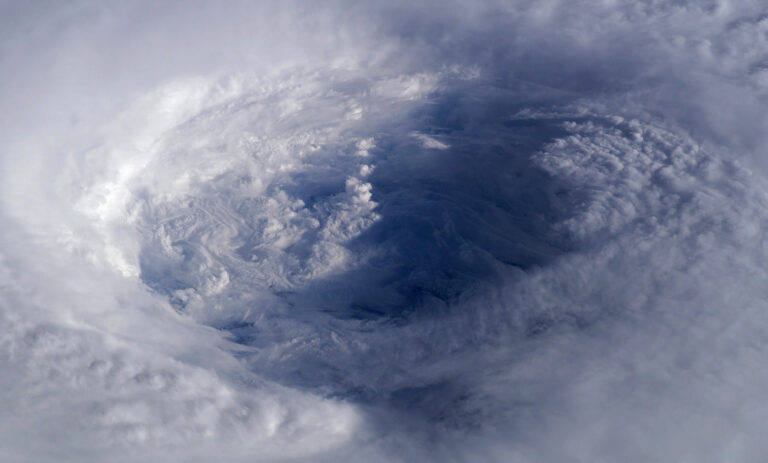
The eye of Hurricane Isabel. Image credit: NASA
Share
LinkedIn Facebook Twitter Email

Scientists have demonstrated how artificial intelligence (AI) can be used for the short-term forecasting – or nowcasting – of hurricane intensity.

The latest research was undertaken by meteorology scientists at the University of Wisconsin with a deep-learning model they developed known as DeepMicroNet. In a paper published in the academic journal Monthly Weather Review, the researchers describe how the model leveraged weather satellite data to estimate hurricane strength.

The particular dataset they were interested in was measurements in the microwave range of the electromagnetic spectrum, which can be used to extrapolate information on a hurricane’s structure. The researchers fed in 30 years of microwave data, allowing the model to estimate with increasing accuracy a tropical cyclone’s intensity.

“The results from the study show a lot of promise, not just for the model’s nowcasting accuracy, but also because these results came from data not typically used to estimate hurricane intensity,” commented lead scientist Anthony Wimmers.

Deep-learning is a branch of machine-learning capable of finding patterns in data that is unstructured or unlabeled. Wimmers’ deep-learning model is capable of processing more than 50,000 hurricane images in less than two hours.

“The reason deep learning systems have grown so much in satellite meteorology is that they are ready made for these types of applications, where you have tens of thousands of images available for training a model,” said Wimmers. “It also applies to situations where you need an answer rapidly.”

As well as delivering rapid results, DeepMicroNet was also able to forecast with a high degree of accuracy relative to current methodologies. When predicting a hurricane’s maximum sustained winds, the model’s results differed from historical records by between 11.5 and 16mph. By comparison, current forecasting models typically have an accuracy level of within approximately 10mph.

The Wisconsin team are not the only researchers leveraging machine-learning technology to predict storms. For example, computer scientists at Aalto University, Helsinki, and the Finnish Meteorological Institute (FMI) recently deployed a machine-learning tool that uses historical data on power outages to help categorize the strength of predicted storms. Read more here.

Although the predictive capabilities of machine-learning hold a lot of promise for meteorology, the technology has one major flaw, the difficulty of retracing the path the AI model took to reach its conclusion. This leads to a lack of transparency in the system, according to Wimmers.

“On one hand, an image-processing deep-learning model can tell you quite a bit about itself based on its performance, or where it focused its efforts and which areas of an image were of highest consequence,” said Wimmers. “But on the other, we don’t have a good system for translating all that information into its basic physics and interpreting it to tell us what is happening in the natural world.”

Previous ArticleESA weather satellite’s near miss warns of dangers to come
Next Article International coalition set up to tackle sand and dust storms

Read Similar Stories

Nowcasting

Colorado State University and Nvidia partner to extend severe storm prediction lead times

June 2, 20262 Mins Read
Climate Measurement

WMO warns El Niño is developing with 80% certainty, urges preparation

June 2, 20263 Mins Read
Developing Countries

Tropical cyclones threaten energy security in Bangladesh, study finds

May 29, 20262 Mins Read
Latest News

VIDEO: Sentinel-6 satellite detects El Niño precursor in Pacific

June 4, 2026

New forecasting framework targets solar-limb flare blind spot

June 4, 2026

Colorado State University and Nvidia partner to extend severe storm prediction lead times

June 2, 2026

Receive breaking stories and features in your inbox each week, for free


Enter your email address:


Supplier Spotlights
  • GAMIC GmbH
Getting in Touch
  • Contact Us / Advertise
  • Meet the Editors
  • Media Pack
  • Free Weekly E-Newsletter
Our Social Channels
  • Facebook
  • LinkedIn
© 2026 UKi Media & Events a division of UKIP Media & Events Ltd
  • Cookie Policy
  • Privacy Policy
  • Terms and Conditions
  • Notice and Takedown Policy

Type above and press Enter to search. Press Esc to cancel.