


Close Menu
Meteorological Technology International
  • News
    • A-E
      • Agriculture
      • Automated Weather Stations
      • Aviation
      • Climate Measurement
      • Data
      • Developing Countries
      • Digital Applications
      • Early Warning Systems
      • Extreme Weather
    • G-P
      • Hydrology
      • Lidar
      • Lightning Detection
      • New Appointments
      • Nowcasting
      • Numerical Weather Prediction
      • Polar Weather
    • R-S
      • Radar
      • Rainfall
      • Remote Sensing
      • Renewable Energy
      • Satellites
      • Solar
      • Space Weather
      • Supercomputers
    • T-Z
      • Training
      • Transport
      • Weather Instruments
      • Wind
      • World Meteorological Organization
      • Meteorological Technology World Expo
  • Features
  • Online Magazines
    • January 2026
    • April 2025
    • January 2025
    • September 2024
    • April 2024
    • Archive Issues
    • Subscribe Free!
  • Opinion
  • Videos
  • Supplier Spotlight
  • Expo
LinkedIn X (Twitter) Facebook
  • Sign-up for Free Weekly E-Newsletter
  • Meet the Editors
  • Contact Us
  • Media Pack
LinkedIn Facebook
Subscribe
Meteorological Technology International
  • News
      • Agriculture
      • Automated Weather Stations
      • Aviation
      • Climate Measurement
      • Data
      • Developing Countries
      • Digital Applications
      • Early Warning Systems
      • Extreme Weather
      • Hydrology
      • Lidar
      • Lightning Detection
      • New Appointments
      • Nowcasting
      • Numerical Weather Prediction
      • Polar Weather
      • Radar
      • Rainfall
      • Remote Sensing
      • Renewable Energy
      • Satellites
      • Solar
      • Space Weather
      • Supercomputers
      • Training
      • Transport
      • Weather Instruments
      • Wind
      • World Meteorological Organization
      • Meteorological Technology World Expo
  • Features
  • Online Magazines
    1. April 2026
    2. January 2026
    3. September 2025
    4. April 2025
    5. January 2025
    6. September 2024
    7. April 2024
    8. January 2024
    9. Archive Issues
    10. Subscribe Free!
    Featured
    May 5, 2026

    In this Issue – April 2026

    By Web TeamMay 5, 2026
    Recent

    In this Issue – April 2026

    May 5, 2026

    In this Issue – January 2026

    November 27, 2025

    In this Issue – September 2025

    August 11, 2025
  • Opinion
  • Videos
  • Supplier Spotlight
  • Expo
Facebook LinkedIn
Subscribe
Meteorological Technology International
Oceans

Baron to provide innovative ocean weather modeling system for Indonesia

Dan SymondsBy Dan SymondsNovember 12, 20213 Mins Read
Share LinkedIn Facebook Twitter Email
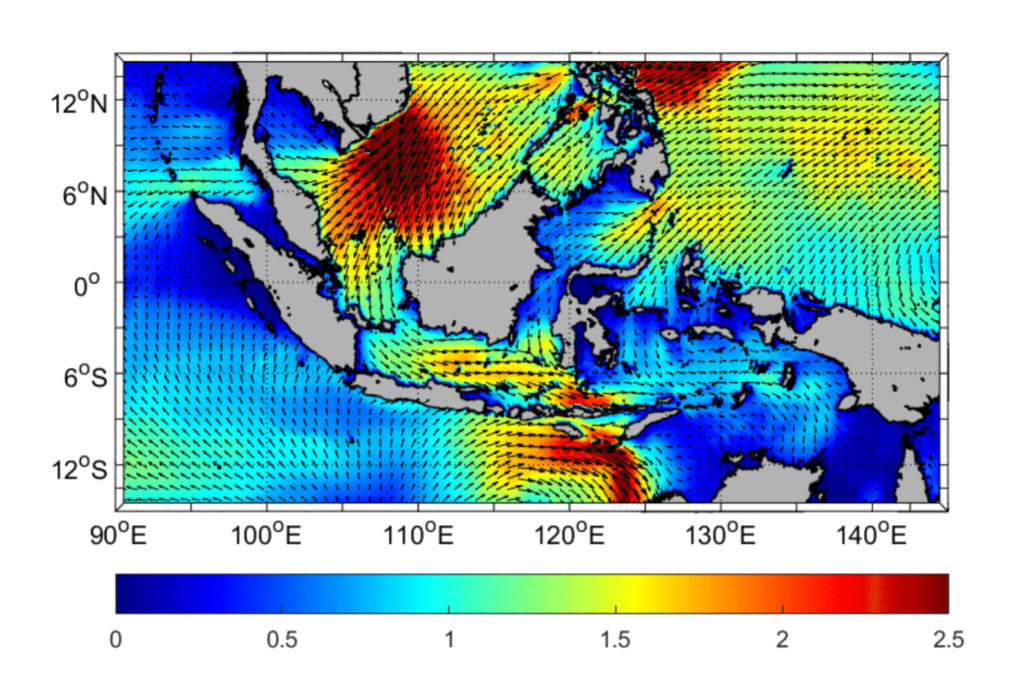
Marine Meteorology System graphic depicting wave height and direction - credit: Baron
Share
LinkedIn Facebook Twitter Email

Weather intelligence provider Baron has been chosen to provide a Coupled Atmospheric Water and Ocean (CAWO) modeling system to the Indonesian Agency for Meteorology, Climatology and Geophysics (BMKG).

The modeling system is a new emerging technology in the field of ‘metocean’ prediction and provides a greater degree of accuracy for forecasts of the atmosphere above the ocean’s surface, waves at the surface, and ocean currents.

CAWO combines an atmospheric numerical weather prediction (NWP) model with a sea surface wave model and a deep ocean circulation model, providing improved fidelity at the atmosphere/ocean interface. The result is a 10-day forecast for waves, swell, wind, currents, temperature, salinity and water level.

The project will serve as a blueprint for other nations looking to improve the safety of their coastal industries and populations. The coupled marine model is a key component in Indonesia’s Marine Meteorology System (MMS), a program designed to maximize its maritime economy by increasing weather awareness and safety on the seas and shorelines. Baron was appointed as sub-contractor on the project by CLS Group, a subsidiary of the French Space Agency and Belgian investment company Compagnie Nationale à Portefeuille (CNP).

John McHenry, chief scientist at Baron, said, “By dynamically computing ocean wave characteristics and circulation as they exchange information on-the-fly with the atmospheric model, precipitation forecasting in the maritime environment improves along with the ability to track and forecast tropical cyclones. It absolutely provides more accurate and complete forecast information than a non-coupled model that relies on approximations or static data to represent conditions at the lower or upper model boundaries.”

CAWO will update four times daily and run at 3km resolution. It will cover all the Indonesian and adjacent maritime areas. This is the first model to produce forecasts for such a large domain at such high resolutions. The model will be installed on a high-powered computer at BMKG headquarters in Jakarta.

Baron will work with BMKG over the course of several years to evaluate the model and provide updates to maximize accuracy. As part of the MMS1 project, 200 meteorological instruments will be deployed, including drifting buoys, tide gauges and oceanographic floats.

Indonesia consists of more than 17,000 islands and more than 75% of the nation’s territory is water. Analysis and forecast data from the model will be used to create a more effective early warning system to alert citizens of dangerous weather at sea or on the coastline.

Previous ArticleWMO backs Global Methane Pledge announced at COP26
Next Article Number of people affected by heat stress would increase 15-fold at 2°C warming, warns Met Office

Read Similar Stories

Oceans

VIDEO: Sentinel-6 satellite detects El Niño precursor in Pacific

June 4, 20262 Mins Read
Nowcasting

Colorado State University and Nvidia partner to extend severe storm prediction lead times

June 2, 20262 Mins Read
Climate Measurement

WMO warns El Niño is developing with 80% certainty, urges preparation

June 2, 20263 Mins Read
Latest News

VIDEO: Sentinel-6 satellite detects El Niño precursor in Pacific

June 4, 2026

New forecasting framework targets solar-limb flare blind spot

June 4, 2026

Colorado State University and Nvidia partner to extend severe storm prediction lead times

June 2, 2026

Receive breaking stories and features in your inbox each week, for free


Enter your email address:


Supplier Spotlights
  • Senseca
Getting in Touch
  • Contact Us / Advertise
  • Meet the Editors
  • Media Pack
  • Free Weekly E-Newsletter
Our Social Channels
  • Facebook
  • LinkedIn
© 2026 UKi Media & Events a division of UKIP Media & Events Ltd
  • Cookie Policy
  • Privacy Policy
  • Terms and Conditions
  • Notice and Takedown Policy

Type above and press Enter to search. Press Esc to cancel.