


Close Menu
Meteorological Technology International
  • News
    • A-E
      • Agriculture
      • Automated Weather Stations
      • Aviation
      • Climate Measurement
      • Data
      • Developing Countries
      • Digital Applications
      • Early Warning Systems
      • Extreme Weather
    • G-P
      • Hydrology
      • Lidar
      • Lightning Detection
      • New Appointments
      • Nowcasting
      • Numerical Weather Prediction
      • Polar Weather
    • R-S
      • Radar
      • Rainfall
      • Remote Sensing
      • Renewable Energy
      • Satellites
      • Solar
      • Space Weather
      • Supercomputers
    • T-Z
      • Training
      • Transport
      • Weather Instruments
      • Wind
      • World Meteorological Organization
      • Meteorological Technology World Expo
  • Features
  • Online Magazines
    • January 2026
    • April 2025
    • January 2025
    • September 2024
    • April 2024
    • Archive Issues
    • Subscribe Free!
  • Opinion
  • Videos
  • Supplier Spotlight
  • Expo
LinkedIn X (Twitter) Facebook
  • Sign-up for Free Weekly E-Newsletter
  • Meet the Editors
  • Contact Us
  • Media Pack
LinkedIn Facebook
Subscribe
Meteorological Technology International
  • News
      • Agriculture
      • Automated Weather Stations
      • Aviation
      • Climate Measurement
      • Data
      • Developing Countries
      • Digital Applications
      • Early Warning Systems
      • Extreme Weather
      • Hydrology
      • Lidar
      • Lightning Detection
      • New Appointments
      • Nowcasting
      • Numerical Weather Prediction
      • Polar Weather
      • Radar
      • Rainfall
      • Remote Sensing
      • Renewable Energy
      • Satellites
      • Solar
      • Space Weather
      • Supercomputers
      • Training
      • Transport
      • Weather Instruments
      • Wind
      • World Meteorological Organization
      • Meteorological Technology World Expo
  • Features
  • Online Magazines
    1. April 2026
    2. January 2026
    3. September 2025
    4. April 2025
    5. January 2025
    6. September 2024
    7. April 2024
    8. January 2024
    9. Archive Issues
    10. Subscribe Free!
    Featured
    May 5, 2026

    In this Issue – April 2026

    By Web TeamMay 5, 2026
    Recent

    In this Issue – April 2026

    May 5, 2026

    In this Issue – January 2026

    November 27, 2025

    In this Issue – September 2025

    August 11, 2025
  • Opinion
  • Videos
  • Supplier Spotlight
  • Expo
Facebook LinkedIn
Subscribe
Meteorological Technology International
News

NOAA launches first-of-its-kind US rip current forecast model

Helen NormanBy Helen NormanJune 4, 20212 Mins Read
Share LinkedIn Facebook Twitter Email
NOAA rip
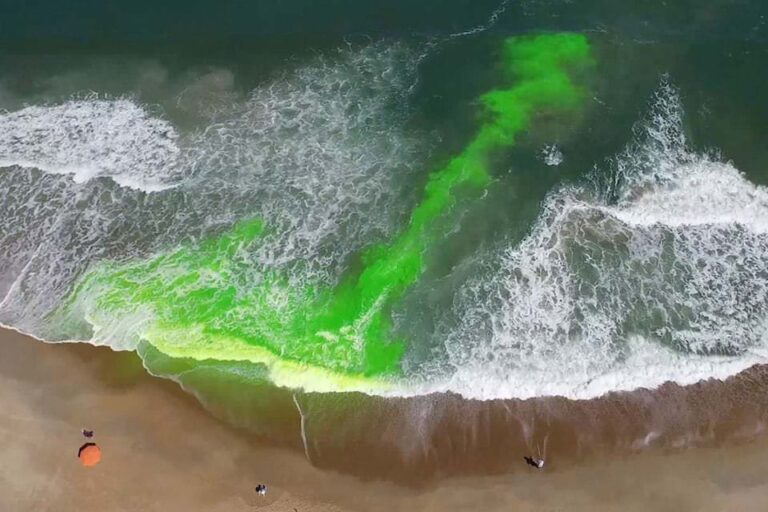
This image shows a rip current using a harmless green dye. Moving at speeds of up to eight feet per second, rip currents can move faster than an Olympic swimmer
Share
LinkedIn Facebook Twitter Email

NOAA has revealed a new national rip current forecast model, aimed at saving lives of beach-goers around the USA. The new model can predict the hourly probability of rip currents along US beaches up to six days ahead.

NOAA’s National Ocean Service and National Weather Service collaboratively developed and implemented the model, which leverages wave and water level information from the recently upgraded National Weather Service’s Nearshore Wave Prediction System.

Similar to predicting weather or precipitation, the model predicts the likelihood of dangerous seaward currents on a sliding scale – from 0 to 100%. The forecast model covers a majority of the US East and Gulf Coast and portions of California, Hawaii, Guam and Puerto Rico. Additional coastline coverage will be expanded in the future.

“Safety for beach-goers and boaters is taking a major leap forward with the launch of this new NOAA model,” said Nicole LeBoeuf, acting director of NOAA’s National Ocean Service. “Extending forecasting capabilities for dangerous rip currents out to six days provides forecasters and local authorities greater time to inform residents about the presence of this deadly beach hazard, thereby saving lives and protecting communities.”

“Improved model resolution will enable forecasters to issue more accurate and detailed rip current forecasts further into the future,” added Allison Allen, chief, Marine, Tropical, and Tsunami Services Branch, NOAA’s National Weather Service. “This information enables public safety personnel to better prepare for hazardous beach conditions and inform the public of potential for danger before they head to the beach.”

“Rip currents account for an estimated 100 deaths in the United States each year,” said Gregory Dusek, NOAA scientist who developed the model. “Before this, forecasters were manually predicting rip currents on a large section of the ocean twice a day and only a day or two into the future. The earlier prediction has potential to substantially increase awareness and reduce drownings.”

Further improvements are on the horizon, according to NOAA, and the application of webcam imagery and AI identification of rip currents is showing promise across the research community. Partners in this work include the Southeast Coastal Ocean Observing Regional Association (SECOORA), the United States Geological Survey (USGS), the United States Lifesaving Association (USLA) and academia.

Previous ArticleClimavision receives US$100m investment for growth of high-resolution weather platform
Next Article NCAR uses AI to tackle the persistent challenge of predicting hail and tornadoes

Read Similar Stories

Climate Measurement

Windracers ULTRA drones to be deployed in Greenland on glacier surveying mission

March 12, 20263 Mins Read
Early Warning Systems

Water cycle instability drove global water-related disasters in 2025

January 20, 20263 Mins Read
Oceans

Oceans absorb record heat, driving extreme weather, according to international study led by Chinese Academy of Sciences

January 12, 20262 Mins Read
Latest News

Tropical cyclones threaten energy security in Bangladesh, study finds

May 29, 2026

Fiji launches $15.4m initiative to expand early warning systems to vulnerable communities

May 28, 2026

Record-level global temperatures expected to persist over next five years

May 28, 2026

Receive breaking stories and features in your inbox each week, for free


Enter your email address:


Supplier Spotlights
  • Adolf Thies GmbH & Co. KG
Getting in Touch
  • Contact Us / Advertise
  • Meet the Editors
  • Media Pack
  • Free Weekly E-Newsletter
Our Social Channels
  • Facebook
  • LinkedIn
© 2026 UKi Media & Events a division of UKIP Media & Events Ltd
  • Cookie Policy
  • Privacy Policy
  • Terms and Conditions
  • Notice and Takedown Policy

Type above and press Enter to search. Press Esc to cancel.