


Close Menu
Meteorological Technology International
  • News
    • A-E
      • Agriculture
      • Automated Weather Stations
      • Aviation
      • Climate Measurement
      • Data
      • Developing Countries
      • Digital Applications
      • Early Warning Systems
      • Extreme Weather
    • G-P
      • Hydrology
      • Lidar
      • Lightning Detection
      • New Appointments
      • Nowcasting
      • Numerical Weather Prediction
      • Polar Weather
    • R-S
      • Radar
      • Rainfall
      • Remote Sensing
      • Renewable Energy
      • Satellites
      • Solar
      • Space Weather
      • Supercomputers
    • T-Z
      • Training
      • Transport
      • Weather Instruments
      • Wind
      • World Meteorological Organization
      • Meteorological Technology World Expo
  • Features
  • Online Magazines
    • January 2026
    • April 2025
    • January 2025
    • September 2024
    • April 2024
    • Archive Issues
    • Subscribe Free!
  • Opinion
  • Videos
  • Supplier Spotlight
  • Expo
LinkedIn X (Twitter) Facebook
  • Sign-up for Free Weekly E-Newsletter
  • Meet the Editors
  • Contact Us
  • Media Pack
LinkedIn Facebook
Subscribe
Meteorological Technology International
  • News
      • Agriculture
      • Automated Weather Stations
      • Aviation
      • Climate Measurement
      • Data
      • Developing Countries
      • Digital Applications
      • Early Warning Systems
      • Extreme Weather
      • Hydrology
      • Lidar
      • Lightning Detection
      • New Appointments
      • Nowcasting
      • Numerical Weather Prediction
      • Polar Weather
      • Radar
      • Rainfall
      • Remote Sensing
      • Renewable Energy
      • Satellites
      • Solar
      • Space Weather
      • Supercomputers
      • Training
      • Transport
      • Weather Instruments
      • Wind
      • World Meteorological Organization
      • Meteorological Technology World Expo
  • Features
  • Online Magazines
    1. January 2026
    2. September 2025
    3. April 2025
    4. January 2025
    5. September 2024
    6. April 2024
    7. January 2024
    8. September 2023
    9. April 2023
    10. Archive Issues
    11. Subscribe Free!
    Featured
    November 27, 2025

    In this Issue – January 2026

    By Hazel KingNovember 27, 2025
    Recent

    In this Issue – January 2026

    November 27, 2025

    In this Issue – September 2025

    August 11, 2025

    In this Issue – April 2025

    April 15, 2025
  • Opinion
  • Videos
  • Supplier Spotlight
  • Expo
Facebook LinkedIn
Subscribe
Meteorological Technology International
Climate Measurement

Scientific sailing expedition to deploy Argo floats in remote Atlantic locations

Dan SymondsBy Dan SymondsNovember 17, 20213 Mins Read
Share LinkedIn Facebook Twitter Email
Credit: Blue Observer/WMO
Share
LinkedIn Facebook Twitter Email

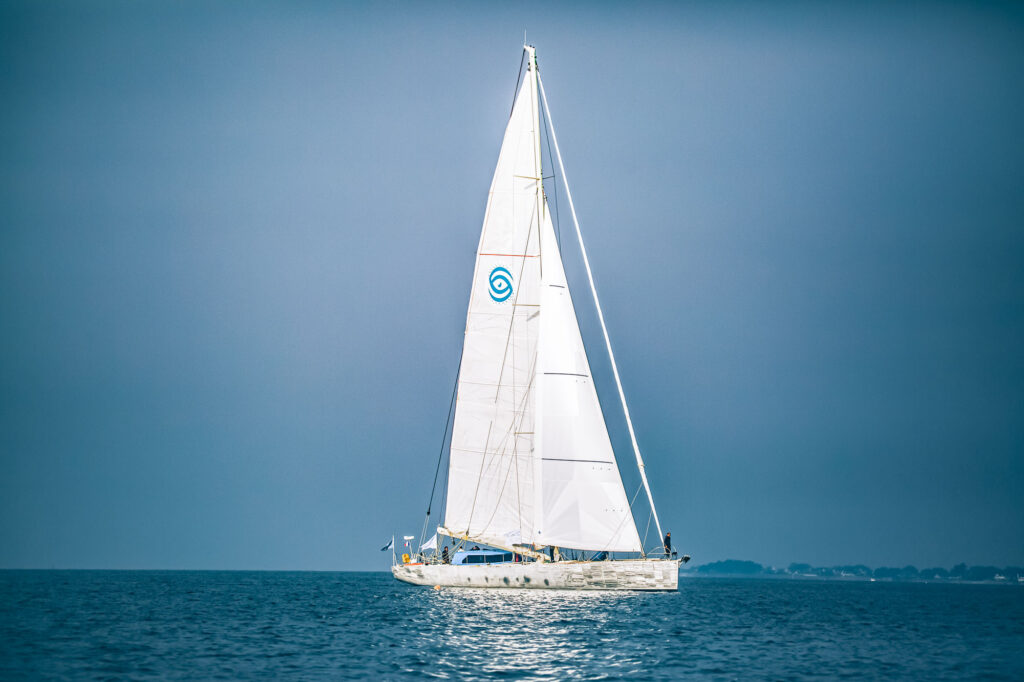
Scientific maritime operator Blue Observer has launched a yacht sailing from Brittany, France, to Connecticut in the USA to deploy Argo profiling floats in hard-to-reach locations across the Atlantic Ocean.

Argo floats are autonomous instruments that measure the temperature and salinity in the upper 2,000m of the ocean as part of the Global Ocean Observing System program. These instruments are veritable climate sentinels, which support climate science and feed atmospheric forecasting models.

The French Blue Observer team will deploy a total of 100 Argo floats over a 12-week period in remote parts of the Atlantic which are seldom visited by ships. The R/V Iris is being operated under the coordination of OceanOPS, which is co-sponsored by WMO and the Intergovernmental Oceanographic Commission (IOC) of UNESCO.

The Blue Observer collaboration was created during the Covid-19 pandemic, when the deployment of Argo floats and other oceanographic instruments by research vessels was severely impacted by restrictions.

Mathieu Belbéoch, manager of OceanOPS, said, “About 1,000 Argo profiling floats must be deployed every year to sustain the Global Ocean Observing System. Often, they are deployed opportunistically by research ships, but these are very costly, and their trajectories are tied to specific missions and are not able to fill all the gaps or work in all seasons. Collaborations with citizens allows us to reach remote and not yet well-sampled areas of the ocean, filling critical observational gaps.”

Dominique Berod, head of the Earth Monitoring Division at WMO, said, “Observations are key to our understanding of how the complex Earth system – the atmosphere, oceans, freshwater bodies, land, and the biosphere – shapes our weather, climate and hydrology. Data are the start of all our knowledge, and ocean observations are crucial to support essential services needed by all sectors of society, as they face challenges, such as climate change and increasing frequency and impact of extreme weather.”

Sarah Grimes, head of marine services at WMO, added, “In the face of a changing climate, and on the wave of COP-26 in Glasgow, now more than ever, ocean observations are needed for improving the understanding and predictions of weather, climate and ocean conditions. The WMO thanks all those involved in this expedition – wonderful example of international collaboration in science for sustainable development.”

The ship is currently loaded with 17 European Argo floats, provided by the Ifremer Institute in France, the Royal Meteorological Institute (KNMI) in the Netherlands, and the Federal Maritime and Hydrographic Agency (BSH) in Germany.

After approximately two weeks of transatlantic navigation, the R/V Iris will reach Woods Hole, Connecticut, in the USA. There, it will be reloaded with an additional 83 US and Canadian floats, for deployment in under-sampled areas of the south Atlantic Ocean, toward the island of St Helena.

Previous ArticleVaisala launches digital toolkit to highlight potential lightning damage
Next Article NASA backs Earth science mission to study tropical storm behavior

Read Similar Stories

Data

Atmospheric G2 secures Japan weather forecasting license

April 21, 20262 Mins Read
Climate Measurement

China completes Antarctic meteorological research mission with Xuelong icebreaker

April 21, 20262 Mins Read
Climate Measurement

Study identifies atmospheric trigger behind flash droughts in Puerto Rico

April 15, 20263 Mins Read
Latest News

Extreme heat posing significant risks to ecosystems and agriculture, FAO-WMO report warns

April 22, 2026

Atmospheric G2 secures Japan weather forecasting license

April 21, 2026

China completes Antarctic meteorological research mission with Xuelong icebreaker

April 21, 2026

Receive breaking stories and features in your inbox each week, for free


Enter your email address:


Supplier Spotlights
  • Raymetrics
Getting in Touch
  • Contact Us / Advertise
  • Meet the Editors
  • Media Pack
  • Free Weekly E-Newsletter
Our Social Channels
  • Facebook
  • LinkedIn
© 2026 UKi Media & Events a division of UKIP Media & Events Ltd
  • Cookie Policy
  • Privacy Policy
  • Terms and Conditions
  • Notice and Takedown Policy

Type above and press Enter to search. Press Esc to cancel.