


Close Menu
Meteorological Technology International
  • News
    • A-E
      • Agriculture
      • Automated Weather Stations
      • Aviation
      • Climate Measurement
      • Data
      • Developing Countries
      • Digital Applications
      • Early Warning Systems
      • Extreme Weather
    • G-P
      • Hydrology
      • Lidar
      • Lightning Detection
      • New Appointments
      • Nowcasting
      • Numerical Weather Prediction
      • Polar Weather
    • R-S
      • Radar
      • Rainfall
      • Remote Sensing
      • Renewable Energy
      • Satellites
      • Solar
      • Space Weather
      • Supercomputers
    • T-Z
      • Training
      • Transport
      • Weather Instruments
      • Wind
      • World Meteorological Organization
      • Meteorological Technology World Expo
  • Features
  • Online Magazines
    • January 2026
    • April 2025
    • January 2025
    • September 2024
    • April 2024
    • Archive Issues
    • Subscribe Free!
  • Opinion
  • Videos
  • Supplier Spotlight
  • Expo
LinkedIn X (Twitter) Facebook
  • Sign-up for Free Weekly E-Newsletter
  • Meet the Editors
  • Contact Us
  • Media Pack
LinkedIn Facebook
Subscribe
Meteorological Technology International
  • News
      • Agriculture
      • Automated Weather Stations
      • Aviation
      • Climate Measurement
      • Data
      • Developing Countries
      • Digital Applications
      • Early Warning Systems
      • Extreme Weather
      • Hydrology
      • Lidar
      • Lightning Detection
      • New Appointments
      • Nowcasting
      • Numerical Weather Prediction
      • Polar Weather
      • Radar
      • Rainfall
      • Remote Sensing
      • Renewable Energy
      • Satellites
      • Solar
      • Space Weather
      • Supercomputers
      • Training
      • Transport
      • Weather Instruments
      • Wind
      • World Meteorological Organization
      • Meteorological Technology World Expo
  • Features
  • Online Magazines
    1. January 2026
    2. September 2025
    3. April 2025
    4. January 2025
    5. September 2024
    6. April 2024
    7. January 2024
    8. September 2023
    9. April 2023
    10. Archive Issues
    11. Subscribe Free!
    Featured
    November 27, 2025

    In this Issue – January 2026

    By Hazel KingNovember 27, 2025
    Recent

    In this Issue – January 2026

    November 27, 2025

    In this Issue – September 2025

    August 11, 2025

    In this Issue – April 2025

    April 15, 2025
  • Opinion
  • Videos
  • Supplier Spotlight
  • Expo
Facebook LinkedIn
Subscribe
Meteorological Technology International
Oceans

UK deploys first batch of robotic floats as part of Argo ocean observation program

Dan SymondsBy Dan SymondsMarch 9, 20223 Mins Read
Share LinkedIn Facebook Twitter Email
Credit: National Oceanography Centre
Share
LinkedIn Facebook Twitter Email

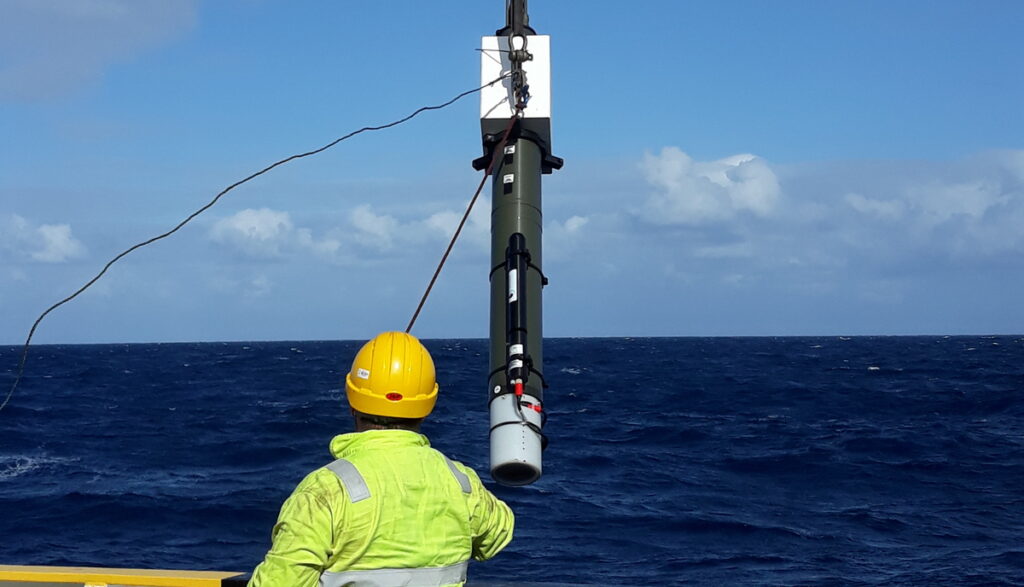
The UK’s National Oceanography Centre (NOC) has successfully deployed the first 15 Biogeochemical (BGC) Argo profiling floats that will form part of the international Argo program.

The fleet of 15 robotic floats makes up 50% of the UK’s contribution to BGC Argo and is a vital source of ocean data, transforming the understanding of oceanic processes at depths up to 2,000m.

The deployment is also part of NOC’s RAPID expedition to the Atlantic, where scientists are servicing a collection of moorings that help to measure ocean currents and examine the effects on short-term weather and long-term climate. The floats – which saw an investment from the Natural Environment Research Council (NERC) and NOC of £3.7m (US$4.9m) last year – have successfully performed several 24-hour cycles from the surface to depths of 2,000m.

In comparison to previous robotic floats, the new BGC Argo fleet have new sensors that will measure pressure, temperature, salt content, pH (ocean acidity), oxygen, nitrate (a nutrient), chlorophyll, particles suspended in the water and light levels. Data from the Argo float are made freely available in near real-time to allow scientists across the world to address fundamental questions about the role of the ocean in absorbing human carbon emissions and the processes responsible for decreasing levels of oxygen in the global ocean.

Nathan Briggs, ocean biochemist at NOC, said, “The ocean has absorbed more than 90% of the additional heat trapped by greenhouse gases, and a quarter of the anthropogenic carbon emissions. Argo floats have been taking the temperature of the top 2km of the ocean for the past 20 years, forming the beating heart of our system of ocean observations and revolutionizing the information we have to guide climate solutions for society. This new generation of BGC-Argo floats with their additional sensors will provide a step change in our understanding of how the ocean’s changing biology, chemistry and physics interact to drive the ocean carbon cycle, including the exchange of carbon between the atmosphere and the ocean.”

Dr Giorgio Dall’Olmo, merit scientist at Plymouth Marine Laboratory and lead scientist for the UK BGC-Argo program, added, “These new BGC-Argo floats are the first deployed by the UK that can measure all six BGC-Argo variables. This is a crucial step towards building the planned BGC-Argo array of 1000 six-variable BGC-Argo floats that, together with 2,500 core-Argo floats and 1,000 deep-Argo floats (measuring temperature and salinity down to 6,000m), will take the pulse of the global ocean. If we want to continue reaping the benefits afforded by these unique data, we now need to continue building the new Argo array and then ensure that it is sustained in the future.”

Following the successful trial, the new fleet will now be deployed at various locations across the Atlantic Ocean, drifting freely to collect observations between the surface and a depth of 2,000m and operating continuously for approximately five years. The next fleet, which will see an investment of an additional 15 Argo profiling floats, will complete the UK Atlantic Sector Biogeochemical Argo Network (ASBAN-UK), paving the way for researchers gaining new insights into how the ocean and climate are changing, improving forecasts for planning, resource management, policy development and restoring the health of the ocean.

Previous ArticleWater and Climate Coalition sets forth plans to establish Global Water Information System
Next Article WMO adds member profiles section to online community platform

Read Similar Stories

Data

Atmospheric G2 secures Japan weather forecasting license

April 21, 20262 Mins Read
Climate Measurement

China completes Antarctic meteorological research mission with Xuelong icebreaker

April 21, 20262 Mins Read
Climate Measurement

Study identifies atmospheric trigger behind flash droughts in Puerto Rico

April 15, 20263 Mins Read
Latest News

Extreme heat posing significant risks to ecosystems and agriculture, FAO-WMO report warns

April 22, 2026

Atmospheric G2 secures Japan weather forecasting license

April 21, 2026

China completes Antarctic meteorological research mission with Xuelong icebreaker

April 21, 2026

Receive breaking stories and features in your inbox each week, for free


Enter your email address:


Supplier Spotlights
  • Reuniwatt
Getting in Touch
  • Contact Us / Advertise
  • Meet the Editors
  • Media Pack
  • Free Weekly E-Newsletter
Our Social Channels
  • Facebook
  • LinkedIn
© 2026 UKi Media & Events a division of UKIP Media & Events Ltd
  • Cookie Policy
  • Privacy Policy
  • Terms and Conditions
  • Notice and Takedown Policy

Type above and press Enter to search. Press Esc to cancel.