


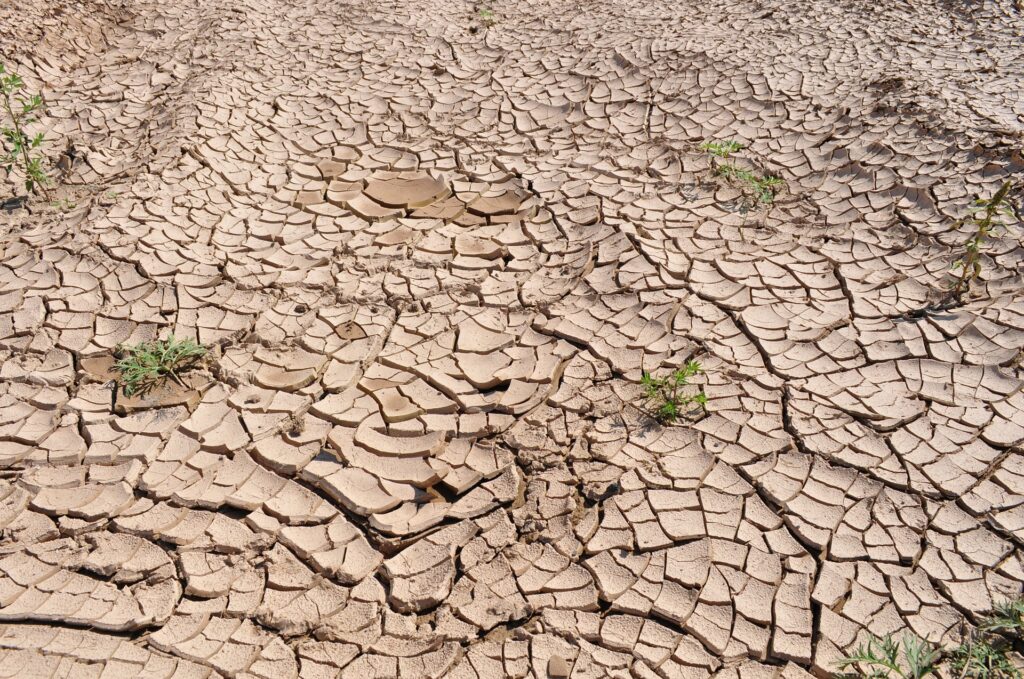
The UN-backed Water and Climate Coalition has issued a call for more urgent and united action to protect against the growing dual global threats of water-related hazards and diminishing freshwater availability.
Leaders of the Water and Climate Coalition issued the call to action following the latest alarming scientific evidence presented in the Intergovernmental Panel on Climate Change’s (IPCC) Working Group II report.
According to the coalition, roughly half of the world’s population currently experiences severe water scarcity for at least some part of the year and this is expected to worsen as climate change alters precipitation patterns with consequences for the entire water cycle. The impacts of hydrological changes from the retreat of glaciers and permafrost thaw are also approaching the point of no-return. Only 0.5% of water on Earth is useable and available as freshwater but in the past 20 years, terrestrial water storage – all water on the land surface and in the subsurface, including soil moisture, snow and ice – has dropped at a rate higher than total human water consumption per year. This has huge ramifications for future water security, given population increase and environmental degradation.
A statement by the Water and Climate Coalition said, “We lead the way in rethinking how our societies and economies best resist climate change. Improving how we use water is a pathway to develop food security, protect health and livelihoods, promote the just transition to clean energy, build water and climate smart cities, protect the environment, build resilient economies, help the world achieve the Sustainable Development Goals (SDGs), and meet global climate commitments.”
Recognizing that “we cannot manage what we don’t measure,” the Water and Climate Coalition leaders also pledged to set up a Global Water Information System to fill the gaps in reliable data and actionable information.
“We need data to understand how climate change is affecting our water systems; to understand where, how much, and in what quality water is and will be available. We need information to know where and how our actions can best support our access to the precious resource and protect us from water hazards and disasters. Data is also key for smart decision making. Yet there are major gaps; data is scattered, inconsistent, and incomplete,” said the coalition.
The Water and Climate Coalition leaders include top representatives of countries which are vulnerable to glacier melt, flooding and drought, as well as United Nations and development agencies, business, civil society and youth. The panel is tasked with providing strategic guidance on integrating the water and climate agendas and accelerating progress toward the UN’s SDGs.
IPCC findings
The new IPCC report Climate Change 2022: Impacts, Adaptation and Vulnerability unveiled the scale of the looming water crisis and the challenges for water management.
Water availability from snowmelt – a major source for irrigation in parts of the world – is set to decline, while projected global glacier mass loss will diminish water availability for agriculture, hydropower and human settlements in the mid- to long-term.
Changes to streamflow magnitude, timing and associated extremes are projected to adversely impact freshwater ecosystems in many watersheds. Direct flood damage will increase in magnitude with each fraction of a degree of temperature rise.
Adaptation to water-related risks and impacts make up the majority of all documented climate change adaptation policies, according to the IPCC report. But it warns of the risk that badly-managed adaptation measures might be counter-productive – for instance badly-managed irrigation projects might reduce drought risk but also accelerate depletion of groundwater and other water sources and increase soil salinization.
Call for action
In view of the increasing challenges and the urgent need for action, the Water and Climate leaders call for:
- An integrated water and climate approach: Recognizing the role of water for informed decision-making in climate change mitigation and adaptation action.
- International support to improve water data and information for a climate ready world: Working together to operationalize a Global Water Information System that provides status, assessment and outlook for smart climate and water-related decisions.
- Partners to join us in the implementation: Support solutions for sound decision making: a water and climate stock take, a cryosphere information mechanism, a new financing rationale, local engagement, and river basin cooperation.
- Recognizing the need to protect glaciers: Understanding the role of glaciers as one of the most critical sources of freshwater and uniting forces in preserving these resources through an International Year of Glacier Preservation 2025.